

Silver Swinging Handle Basket
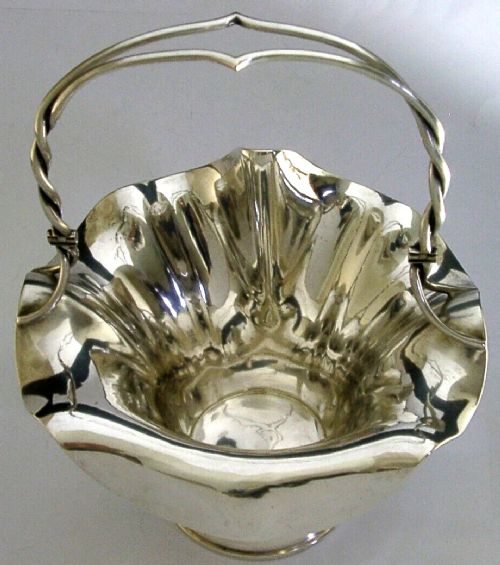
A silver swinging handle basket brings tactile elegance to a table, offering versatile service for fruit, sugar or bread with a characteristic mobile arch.
Silver Swinging Handle Basket
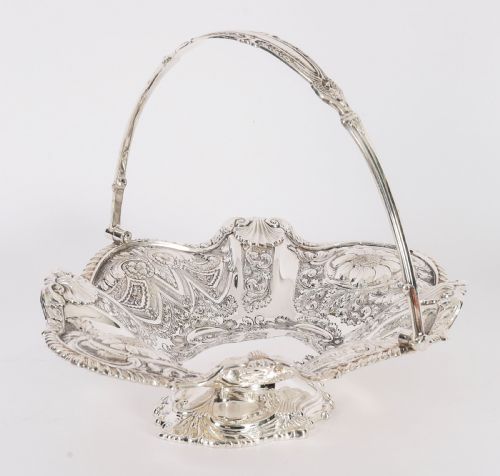
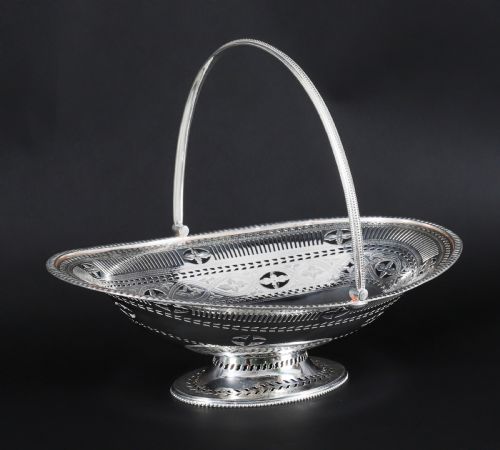
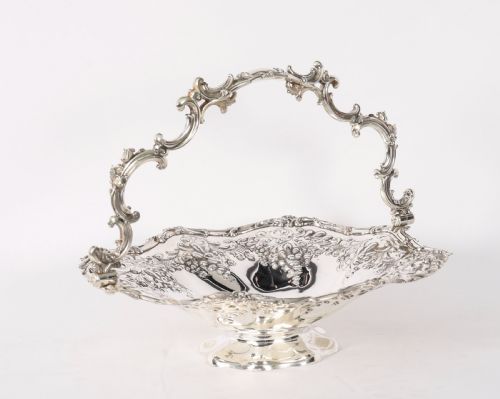
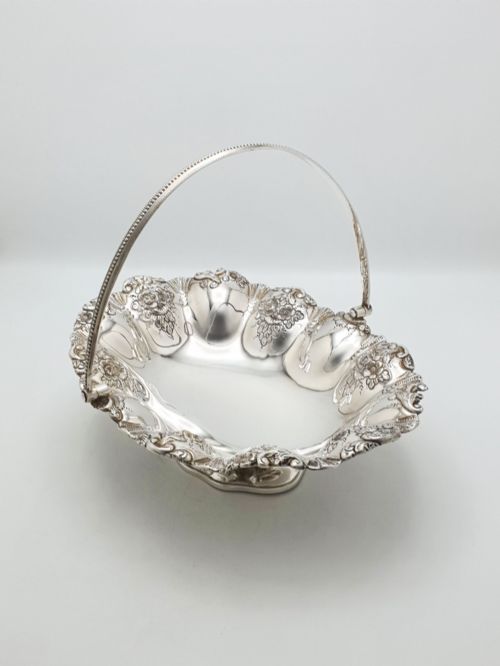
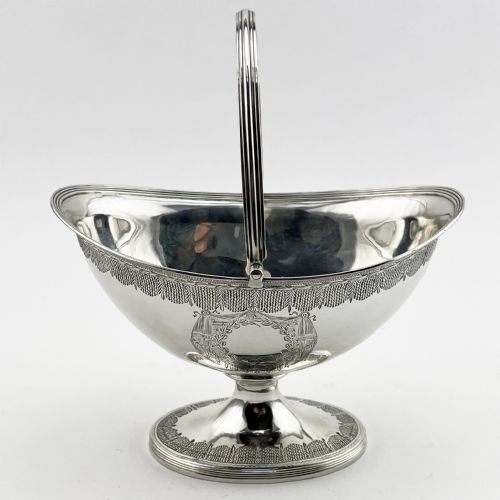
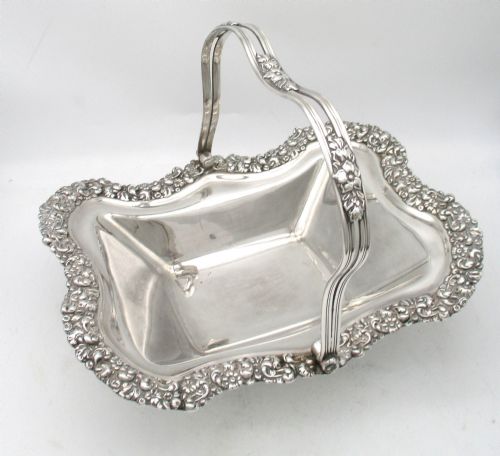
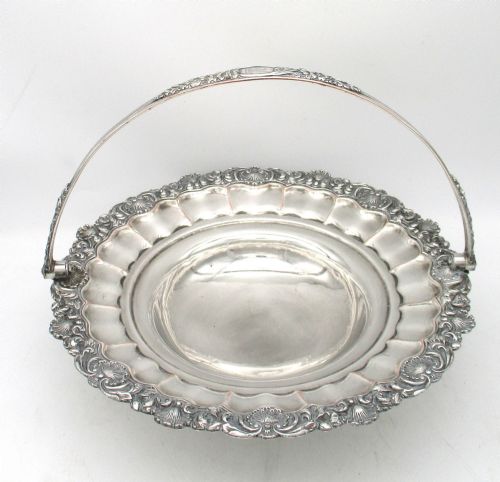
A silver swinging handle basket combines functional vessel forms with a movable arched bail, appearing across Georgian, Victorian and Edwardian periods in various serving capacities.
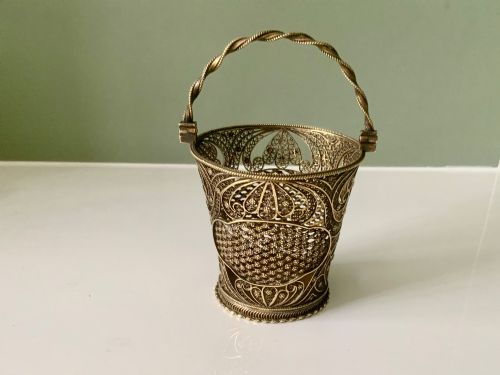
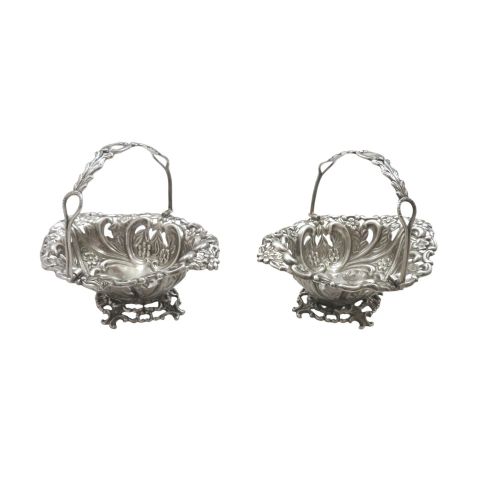
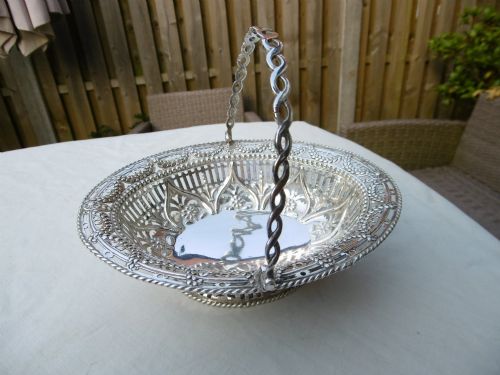
The selections on this page span diverse stylistic expressions from austere George III wirework to ornate Victorian rococo revival and sinuous Art Nouveau motifs.
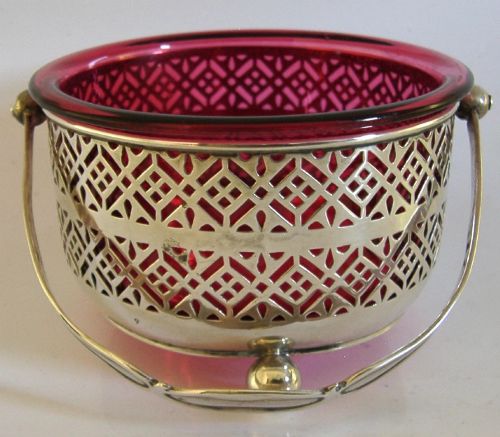
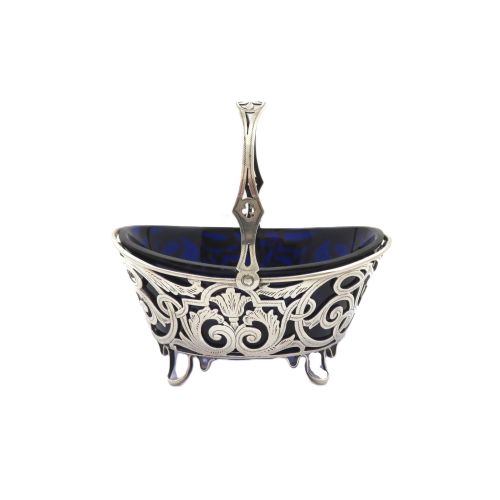
Forms range from intimate sugar baskets and cream pails with coloured glass liners to substantial fruit and cake baskets intended for central table display.
How They Were Made
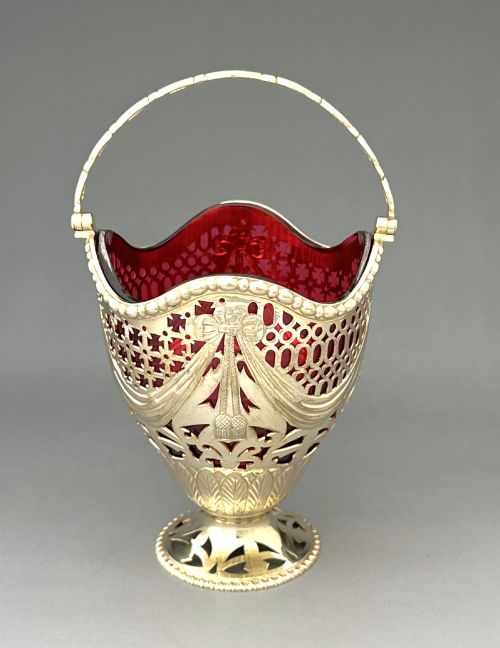
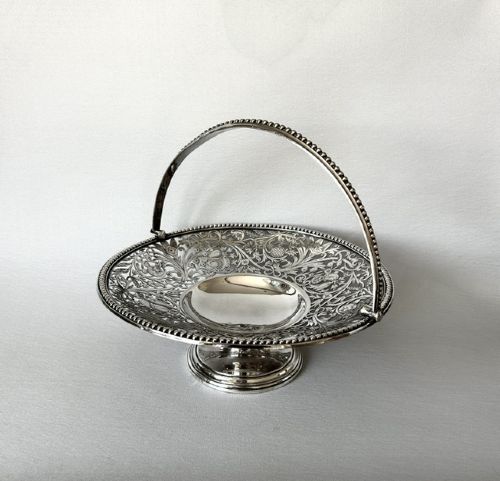
Silversmiths utilised sterling silver and Old Sheffield plate, employing intricate piercing, fretwork and wirework techniques to reduce weight while maintaining structural integrity.
Many examples incorporate contrasting coloured glass liners in cranberry, cobalt or ruby hues, held securely within pierced or repoussé metal frameworks.
Decoration was achieved through cast floral handles, embossed detailing and floral repoussé rims applied by specialist makers during the manufacturing process.
What Varies in Quality
Quality rests in the crispness of pierced lattice patterns and the harmonious proportion of the movable handle relative to the body.
Superior pieces display substantial weight in the metal and refined execution in cast or chased details rather than purely mechanical pressing.
The integration of original glass liners and the retention of clean hallmarks or maker marks elevate the distinction of individual specimens.
Aldridge and Green·Henry Chawner·George W Scott and Sons Ltd·Elkington·Samuel Herbert·Hammond Creake and Co·James Deakin and Sons·William Hutton and Sons·William Bond·James Dixon and Sons Ltd
The Silver Swinging Handle Basket Glossary
- Swing-handled
- A pivoting bail attached to opposing sides of a vessel via hinges or pins. This allows the handle to lie flat against the rim when stored or accessed.
- Pierced work
- Metal perforated with geometric or floral patterns using a piercing saw. This decorative technique lightens the object while creating delicate visual lace effects.
- Old Sheffield plate
- A composite material made by fusing a thin sheet of silver to a thicker copper base. It was widely utilised before modern electroplating methods.
- Repoussé
- Metalwork shaped by hammering from the reverse side to form raised ornamentation. Details are then refined from the front using punches and chisels.
- Silver gilt
- Silver that has been coated with a thin layer of gold on its surface. This treatment provides a rich two-tone appearance, frequently seen inside glass-lined vessels.
Silver Swinging Handle Basket: Frequently Asked Questions
How were these baskets used originally?
These vessels served diverse domestic functions, holding items ranging from small sugar lumps and sweetmeats to larger loaves of bread and fresh fruit at formal meals.
Smaller iterations with glass liners specifically contained moist foodstuffs or sugars, protecting the surrounding metal from corrosion while adding vibrant colour to the tablescape.
How do I care for silver baskets?
Maintenance requires gentle cleaning with appropriate silver polish and soft cloths to preserve the integrity of pierced details and embossed ornamentation without wearing down thin plating.
Glass liners should be washed separately in warm soapy water and dried thoroughly before being returned to their metal frameworks to prevent moisture trapping.
How do I distinguish Georgian from Victorian examples?
Georgian specimens from the eighteenth century typically exhibit restrained neoclassical restraint, fine wirework or crisp hand-piercing associated with makers like those working under George III.
Victorian and Edwardian pieces frequently display heavier cast floral handles, dramatic rococo revival curves, or sinuous Art Nouveau asymmetry reflecting the industrial techniques of later decades.
What is Old Sheffield plate?
Old Sheffield plate is an early fusion material created by thermally bonding a thin layer of sterling silver to a copper core before rolling it into sheets for fabrication.
Items fashioned from this composite often reveal faint hints of copper glowing through high points or edges where generations of polishing have worn the silver layer.