
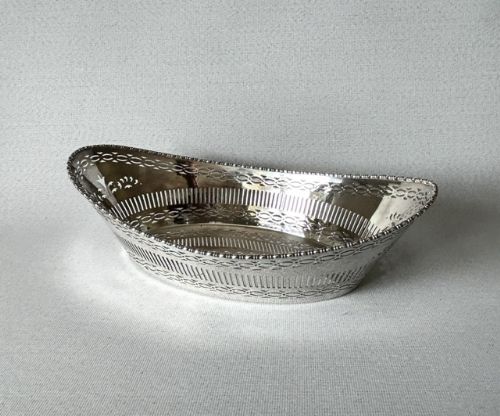

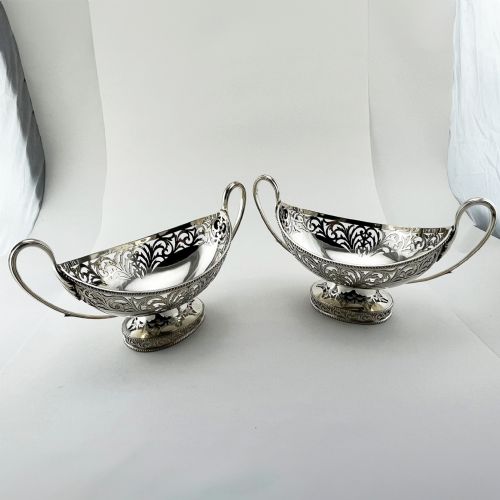


Pierced Silver Fruit Basket
A pierced silver fruit basket brings openwork elegance to a table, combining polished metal with elaborate fretwork and lattice patterns.
Pierced Silver Fruit Basket
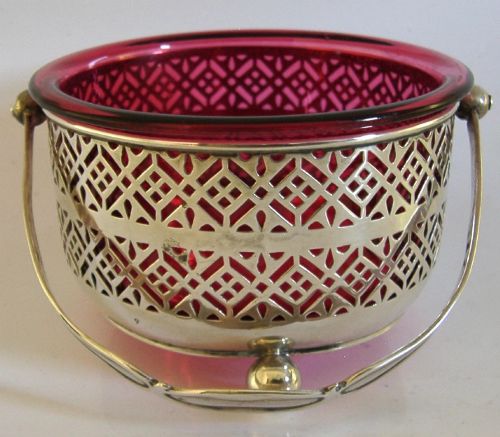
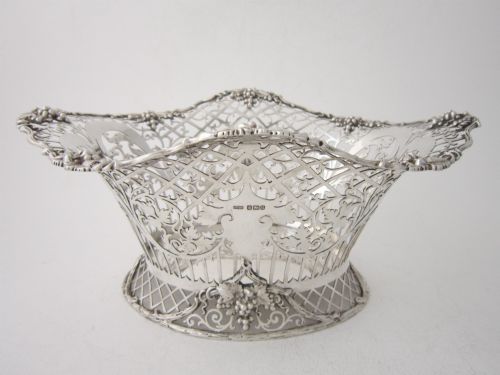
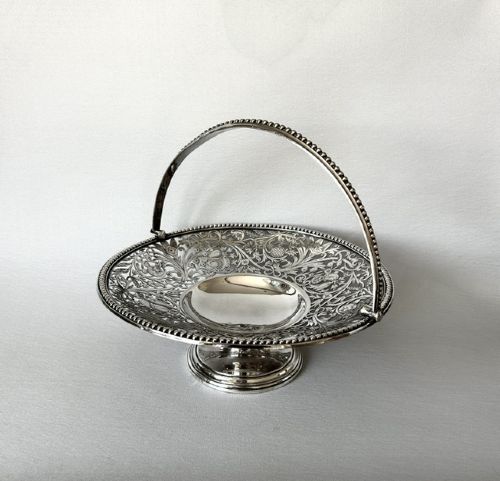
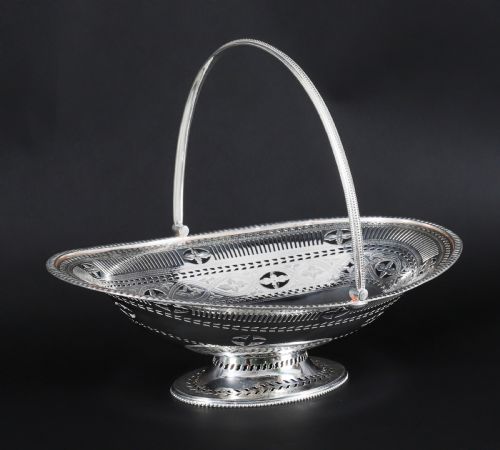
A pierced silver fruit basket takes the form of an openwork vessel designed for serving fruit, bread, or cakes, appearing frequently in solid sterling silver and silver plate across Victorian, Edwardian, and George V periods. You will encounter swing-handled examples alongside footed bowls and oval serving dishes, often fitted with removable cranberry glass liners or decorated with repousse work. These pieces range from substantial Edwardian centrepiece bowls to delicate late nineteenth century bread baskets.
Makers working in London, Sheffield, Birmingham, and Chester produced these baskets using techniques of piercing, fretwork, and lattice cutting to create light, decorative walls. The forms vary from simple oval dishes to large footed vessels with reeded handles, reflecting shifts in style from Victorian neoclassical and neo-rococo to Art Nouveau and Art Deco.
Determinants of quality
The refinement of the piercing work distinguishes finer examples, where crisp, uniform fretwork and detailed lattice designs require high skill. Substantial gauge metal and maker marks from prominent workshops also elevate the standing of a piece.
Integration of elements such as swing handles, cast feet, and fitted glass liners demonstrates superior manufacturing standards across Victorian and Edwardian items.
Listings feature items spanning the 1850s to the 1940s, encompassing Victorian, Edwardian, George V, Art Nouveau, and Art Deco periods in solid silver and silver plate.
Mappin & Webb·Elkington·Thomas Bradbury·John Hunt·Joseph Rodgers·Fenton·William Comyns·Hammond, Creake and Co·William Hutton and Sons·Martin Hall·Jay Richard Attenborough
The Pierced Silver Fruit Basket Glossary
- Piercing
- The cutting of geometric or floral shapes through sheet metal. This technique lightens the vessel and creates decorative friezes.
- Swing handle
- A movable handle attached to pivots on the rim of a basket. It allows the vessel to fold flat for storage or serving.
- Repousse
- A metalworking technique where the design is hammered into relief from the reverse side. It creates raised ornamental motifs on the body.
- EPNS
- Electroplated nickel silver. This designation indicates a base metal of nickel silver coated with a thin layer of pure silver.
- Fretwork
- An ornamental design created by cutting patterns through thin metal using a piercing saw. It forms intricate openwork borders.
Pierced Silver Fruit Basket: Frequently Asked Questions
What were pierced silver fruit baskets used for?
These vessels served fresh fruit, cakes, or bread on dining tables and sideboard displays during formal meals. The openwork design allowed air circulation around the contents.
Over time, they transitioned into decorative centrepieces or serving dishes used for special occasions in Victorian and Edwardian households.
How do I date a silver fruit basket?
Hallmarks stamped on sterling silver pieces provide specific assay office symbols and date letters for exact identification. Stylistic clues such as Edwardian fretwork or Victorian neoclassical motifs help narrow the period.
Silver plated items rely on maker marks and stylistic conventions to indicate their production era within the nineteenth and twentieth centuries.
How do I care for a silver basket?
Regular dusting with a soft cloth prevents dust accumulation in the pierced lattice work and crevices. Polishing should be done sparingly with a quality silver cleaner to preserve the metal surface.
Avoid abrasive materials that might scratch plated finishes or damage delicate fretwork edges during maintenance.
Are all these baskets made of solid silver?
The inventory includes both solid sterling silver pieces and silver plated items such as EPNS. Hallmarks distinguish solid silver items from plated wares.
Makers produced plated versions to offer decorative serving dishes at more accessible price points during the nineteenth and twentieth centuries.