




Silver Spelter Figure
A silver spelter figure brings the decorative energy of the early twentieth century into a room, offering dynamic forms captured in metal.
Silver Spelter Figure
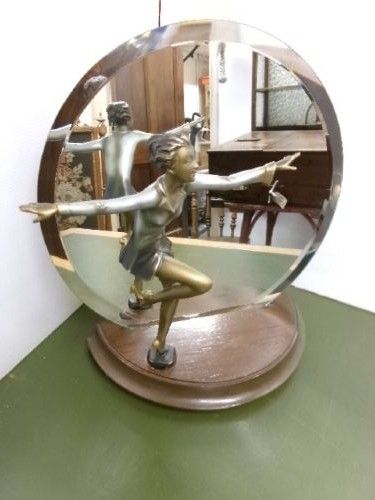
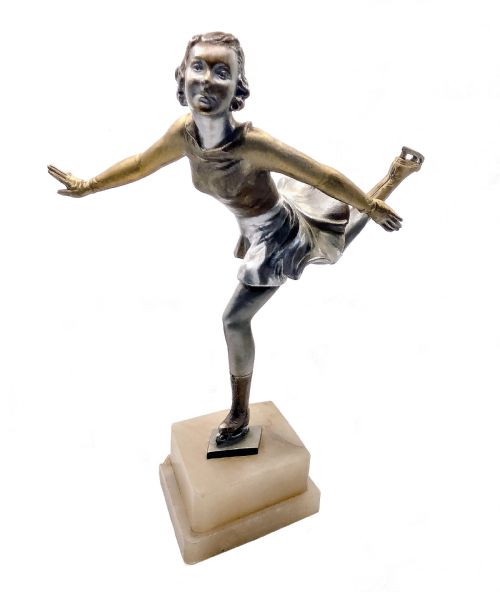
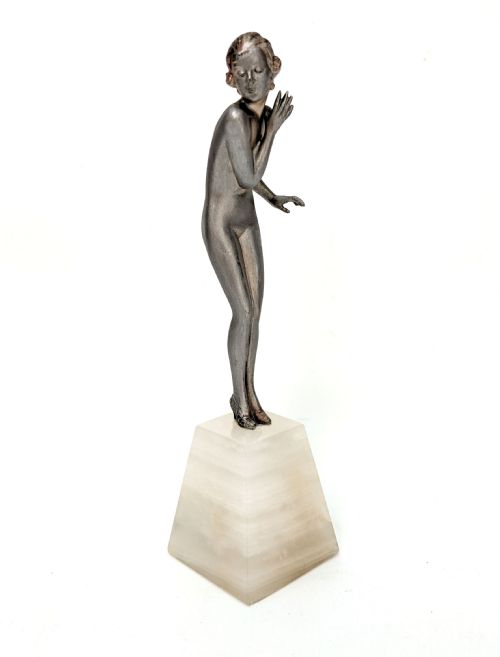
A silver spelter figure represents sculptural work from the late nineteenth and early twentieth centuries, principally spanning the Art Nouveau and Art Deco periods. These pieces take the form of freestanding sculptures, mantel clocks, garnitures, table lamps, and figurines depicting dancers, skaters, runners, and figures with animals.
The versions most commonly met on this page belong to the Art Deco era, particularly French pieces from around nineteen thirty. They frequently combine the metal figure with bases of onyx or marble, or pair a central clock with matching garnitures.
Earlier nineteenth century examples also appear, reflecting the neoclassical or romantic tastes of eighteen ninety. These take the form of signed figural lamp sculptures finished in silvered treatments.
How they were made
Spelter, an alloy primarily of zinc, served as the principal metal for these castings because it accepted fine detail and allowed for complex figural poses. Artisans cast the metal into moulds to create dancers, animals, and human forms before applying various surface treatments.
Many of these figures received a silvered finish or cold paint to simulate more expensive metals like bronze or silver. The finished metal components were then mounted onto heavy stone plinths made of marble or onyx, sometimes incorporating glass, wood, or brass elements.
Listings on this page span the periods eighteen ninety, nineteen twenty, and nineteen thirty, utilising materials including marble, onyx, glass, and cold paint.
What varies in quality
Quality in a silver spelter figure depends upon the crispness of the casting and the fidelity of the sculptural modelling. Pieces associated with named sculptors display more sophisticated anatomy and garment detailing than anonymous factory productions.
The integration of the figure with its base indicates the standard of manufacture. Superior examples feature substantial marble or onyx mountings and intact surface finishes, whereas lesser pieces show simpler construction and heavier wear to the silvered coating.
Josef Lorenzl·Geo Maxim·Auguste Moreau
The Silver Spelter Figure Glossary
- Spelter
- A zinc alloy commonly used as a less expensive substitute for bronze in decorative figures and clocks. It provides a stable base for patination, silvering, and cold painted finishes.
- Art Deco
- A design style emerging in the nineteen twenties and nineteen thirties characterised by streamlined forms, geometric patterns, and dynamic depictions of movement. It dominates the figures found on this page.
- Garniture
- A set of ornamental objects, typically a clock flanked by a pair of matching vases or sculptural ornaments designed to sit on a mantelpiece. They appear alongside figural works from the Art Deco period.
- Cold Paint
- Paint applied to a metal object after casting without subsequent firing in a kiln. It adds colour to hair, garments, and accessories on spelter figures but remains vulnerable to flaking.
Silver Spelter Figure: Frequently Asked Questions
What is a spelter figure?
A spelter figure is an ornamental sculpture cast from a zinc-based alloy rather than solid bronze. These pieces were widely produced in Europe during the late nineteenth and early twentieth centuries as decorative items.
They often received surface treatments such as silvering or cold painting to imitate precious metals, and were frequently mounted on marble or onyx bases for display on mantelpieces and tabletops.
How do I identify Art Deco figures?
Art Deco figures are recognizable by their emphasis on clean lines, stylised drapery, and dynamic movement such as dancing or ice skating. The subjects often reflect the modern spirit of the nineteen twenties and nineteen thirties.
These pieces frequently incorporate materials typical of the era, including polished marble and onyx plinths, and may feature signatures from known sculptors of the period.
Were these figures meant for lighting?
Some spelter figures functioned as parts of table lamps or were designed alongside matching clock garnitures to create symmetrical fireplace displays. The metal sculptures served a purely decorative role while integrating into functional domestic items.
Lamp versions typically incorporate light fittings and glass shades supported by the figural group or mounted adjacent to the main casting.
How should I care for silvered spelter?
Silvered spelter requires gentle maintenance to preserve the delicate metallic finish on the zinc alloy. Dusting with a soft, dry cloth is sufficient to keep the surface clean without risking abrasion to the coating.
Moisture and harsh cleaning agents must be avoided entirely, as spelter is a relatively soft metal and the silvered or painted surface can easily lift or tarnish.