



Silver Salt Pots Blue Glass
These silver salt pots blue glass pieces combine sterling silver frames with deep cobalt liners, offering both practical dining utility and striking table colour.
Silver Salt Pots Blue Glass
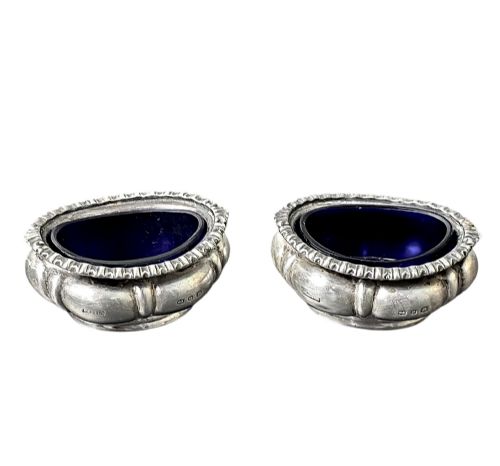
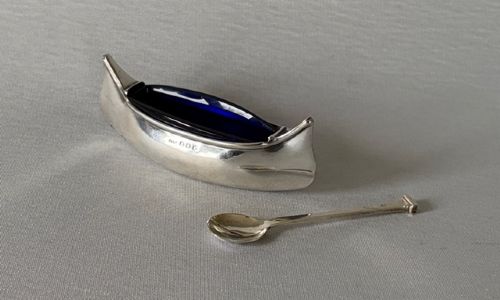
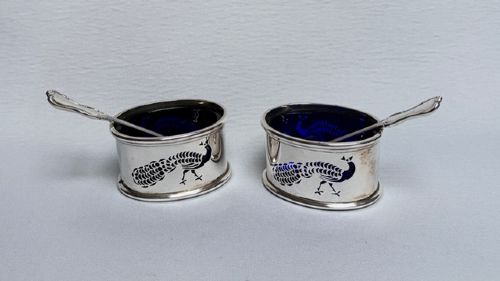
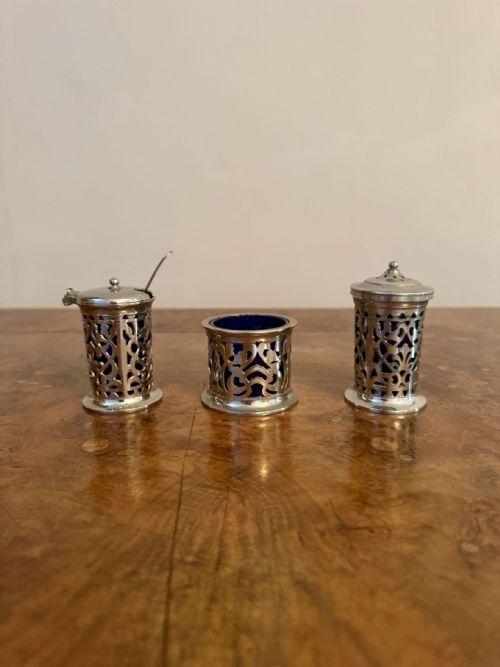
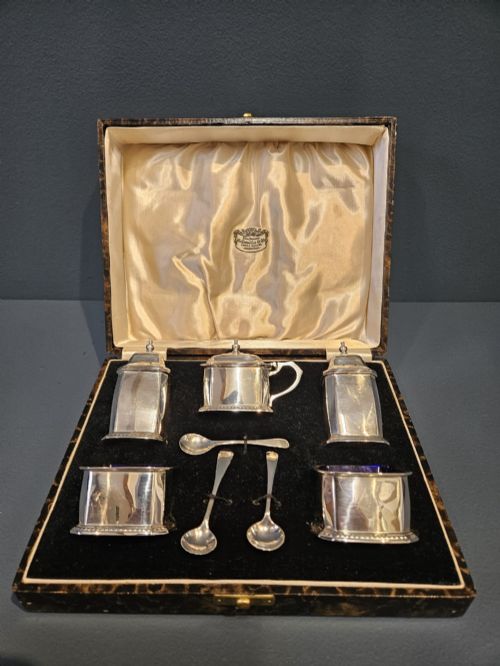
When you search for silver salt pots blue glass, you encounter table accessories designed to hold condiments safely away from reactive metal. The selection on this page centres on salt cellars, condiment tubs, mustard pots, and complete cruet sets.
The objects span Victorian, Edwardian, and Art Deco periods, encompassing various forms such as wirework frames, pierced designs, and novelty tubs. Most examples date from the late nineteenth century through to the early twentieth century.
Makers and workshops of the era produced these items in sterling silver, often paired with contrasting cobalt blue glass inserts. You find both individual pieces and matched pairs accompanied by their original spoons.
Materials and construction
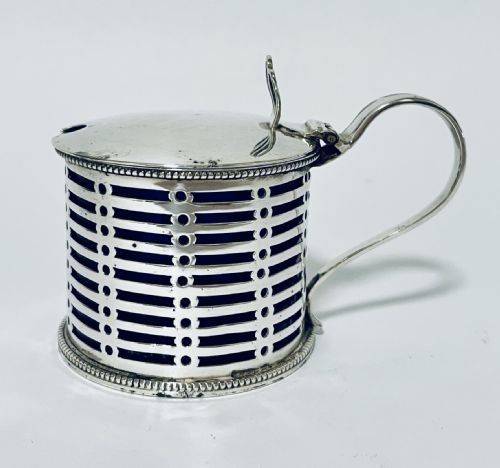
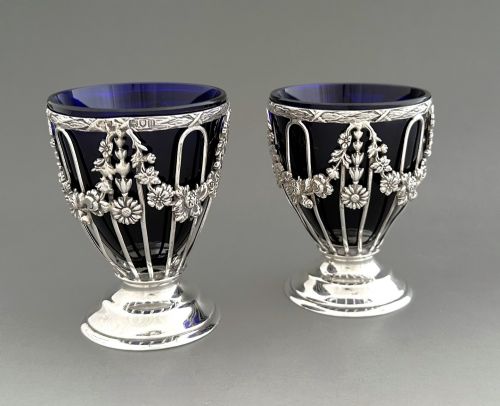
Silversmiths shaped the outer vessels using sterling silver, employing techniques like piercing, wirework, and casting to create decorative frames. These metal bodies require robust construction to support and protect the glass inserts housed within.
The vibrant inserts consist of cobalt blue glass or cobalt glass, blown and shaped to fit snugly inside the silver mounts. This glass prevents the salt or mustard from corroding the metal while providing a vivid visual contrast.
Silver Salt Pots Blue Glass Retail Price Guide 2026
Typical asking prices for silver salt pots blue glass among the pieces listed under this phrase on Sellingantiques today, from the lower quarter to the upper quarter. They describe what is for sale here now, not the wider market.
Listings feature sterling silver and cobalt blue glass across Victorian, Edwardian, and Art Deco periods, taking the form of mustard pots and cruet sets.
Assessing quality and craftsmanship
Quality rests in the weight of the sterling silver and the precision of the piercing or wirework. Finer pieces display crisp hallmarks and well-balanced proportions that sit securely on the dining table.
The condition and snugness of the blue glass liners also determine value. Original liners that fit their silver housings without excessive movement represent higher standards of period craftsmanship.
S Blanckense·William Neale
The Silver Salt Pots Blue Glass Glossary
- Salt Cellar
- An open vessel used to hold loose salt at the table before the advent of shaker bottles. They typically require a small spoon to dispense the contents.
- Cruet Set
- A matched assemblage of condiment containers, such as salt pots, mustard pots, and pepper shakers, often housed together in a stand. These sets formed a standard part of formal dining table arrangements.
- Mustard Pot
- A small covered container designed specifically for prepared mustard, usually supplied with a matching spoon and a glass liner. The lid helps keep the condiment moist.
- Wirework
- A decorative technique where thin strips or wires of silver are soldered together into open, geometric patterns. This method lightens the visual weight of the object while maintaining structural integrity.
- Cobalt Glass
- Deep blue glass coloured by the addition of cobalt oxide during manufacture. It remains popular for condiment liners because it hides residue while offering a bright hue.
Silver Salt Pots Blue Glass: Frequently Asked Questions
Were these pots used for salt?
These open vessels held dry salt before domestic salt shakers became common during the twentieth century. Diners used a tiny spoon or pinched the salt directly from the container onto their plates.
Covered versions functioned as mustard pots, keeping the wet condiment fresh during meals.
How can I date my salt pot?
Examine the hallmarks stamped onto the sterling silver body to find assay office marks, date letters, and maker's marks. These punch marks provide precise years of manufacture for British pieces.
Stylistic cues like Edwardian wirework or Art Deco geometric lines also help narrow down the production era.
Are replacement glass liners available?
Finding exact vintage replacement liners for specific salt pots proves challenging due to variations in handmade sizing. Many collectors accept minor chips on the inner rim of antique glass if the outer silver remains intact.
Universal replacement liners occasionally fit standard tub dimensions, though original glass adds more integrity to the piece.