



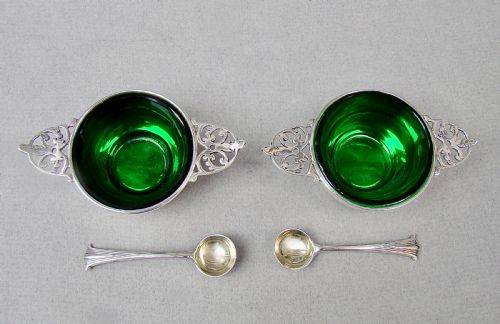

Pair Sterling Salt Cellars
These pair sterling salt cellars bring Georgian and Victorian dining tables to life with solid silver and cobalt glass.
Pair Sterling Salt Cellars
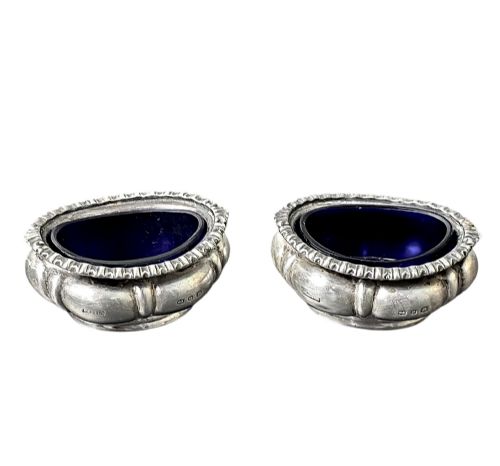
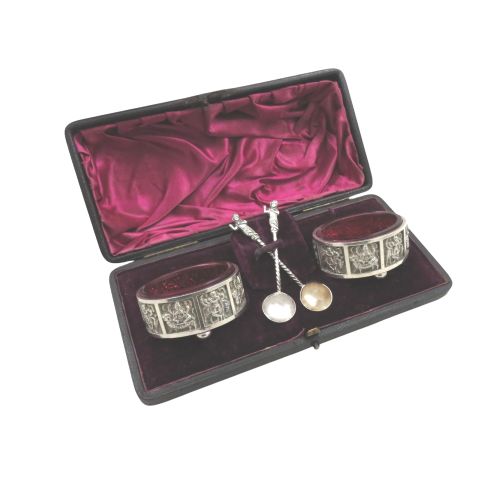
When searching for pair sterling salt cellars, collectors encounter small open vessels and condiment tubs designed to hold table salt during formal meals. The examples on this page span the 18th century, the Georgian era, the Victorian period, and the Edwardian years.
Origin points encompass London, Birmingham, Edinburgh, and Ireland, alongside continental European pieces. Many examples arrive complete with their original spoons and fitted cases.
How they were made
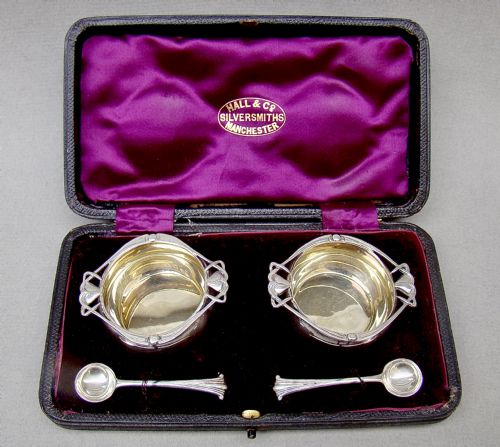
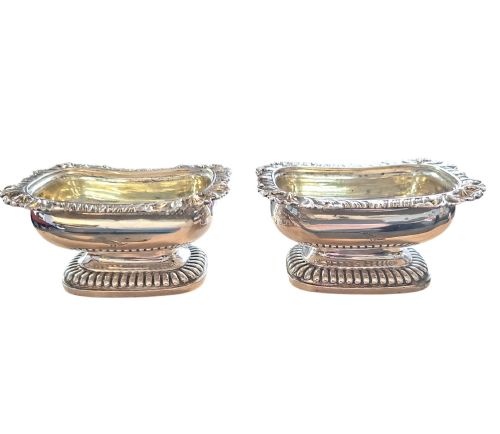
Makers utilised sterling silver and solid silver, forming bodies through casting, piercing, and wirework techniques. Interior surfaces frequently received a gold gilt or vermeil finish to protect the metal from corrosive salt.
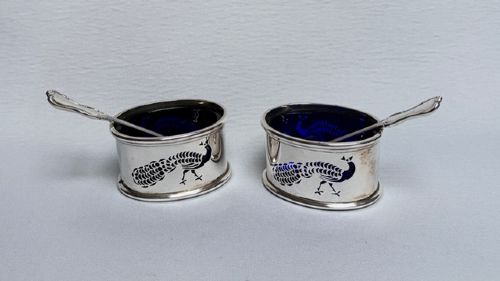
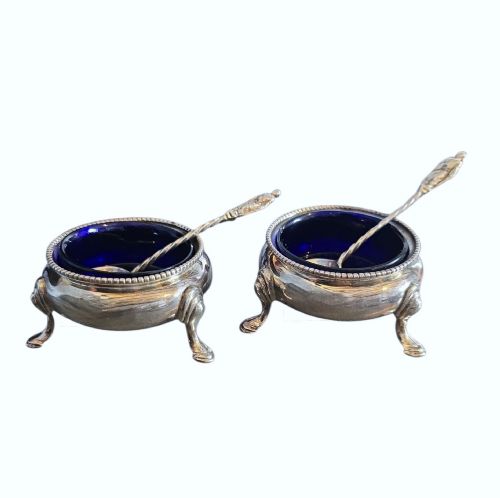
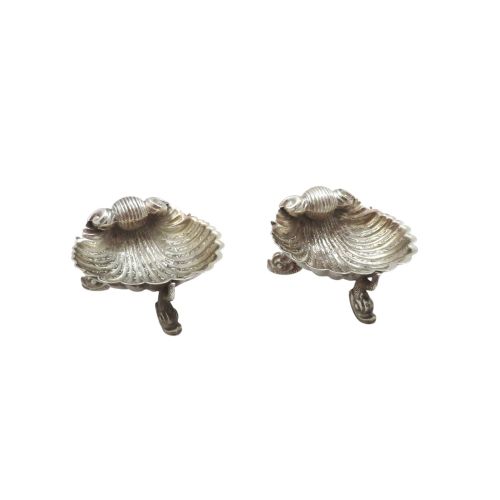
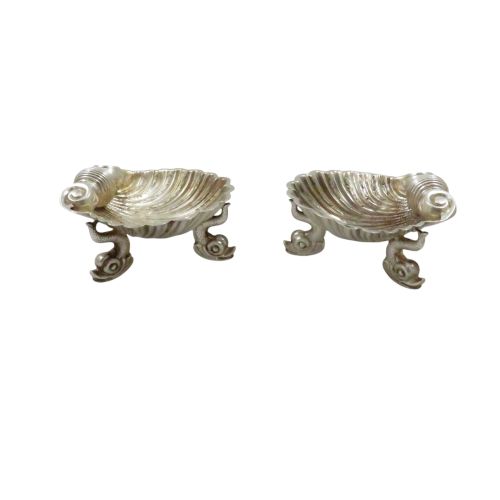
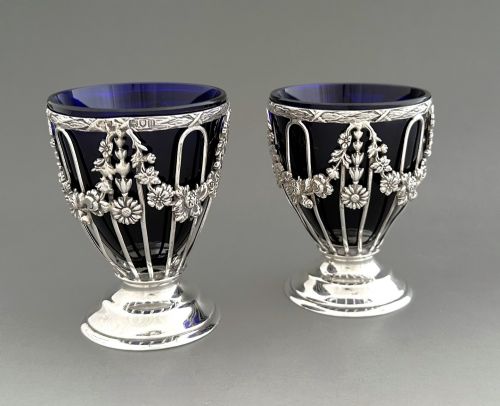
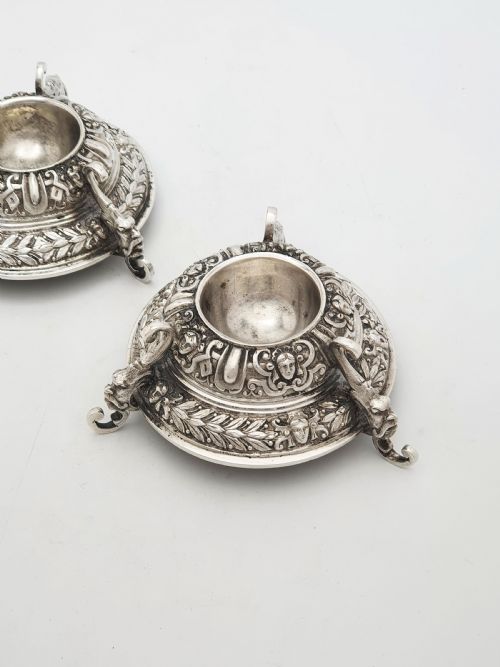
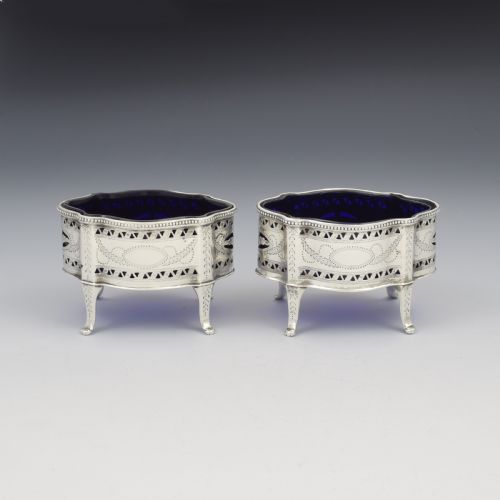
Many open salt cellars incorporate fitted glass liners in blue or cobalt glass, held securely within pierced or solid silver frames. Additional decorative elements include chased relief work, shell motifs, and dolphin feet.
Pair Sterling Salt Cellars Retail Price Guide 2026
Typical asking prices for pair sterling salt cellars among the pieces listed under this phrase on Sellingantiques today, from the lower quarter to the upper quarter. They describe what is for sale here now, not the wider market.
Silversmiths modelled novelty salt cellars as chicks, swans, peacocks, and garden wheelbarrows for Victorian dining tables.
What varies in quality
The standard of design and metalwork distinguishes basic condiment containers from exceptional silversmith output. Crispness in chased details, such as feathers on bird models or floral motifs on Neo-Classical and Art Nouveau pieces, indicates superior craftsmanship.
Completeness dictates much of the value in these pairs. The presence of matching original spoons, undamaged cobalt glass liners, and original fitted presentation cases elevates an item significantly above incomplete sets.
S Blanckense·Rebecca Emes And Edward Barnard I·Josiah Williams And Co·Beare Falcke·David Hennell·John Edmonstone·Edward Wood·Vale Brothers And Sermon
The Pair Sterling Salt Cellars Glossary
- Trencher salt
- A heavy, often geometric salt cellar placed on the dining table for shared use before individual salts became common. These early forms date back to the 18th century.
- Cobalt glass
- A deep blue glass used for the removable liners inside silver salt cellars. The dark colour provides a striking contrast against pierced silverwork.
- Vermeil
- Sterling silver coated with a thin layer of gold on the interior surfaces. This technique prevents the salt from tarnishing or corroding the silver.
- Caster
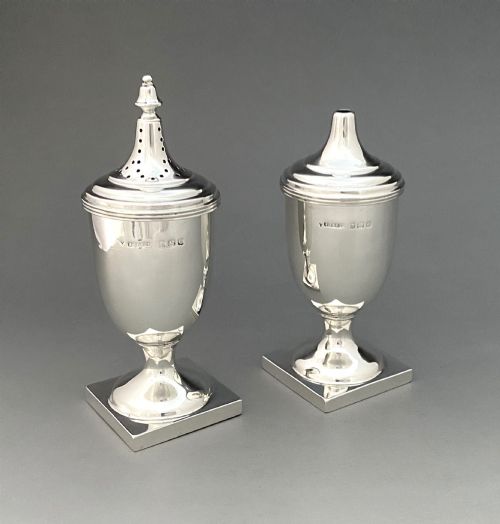
- A small perforate jar used for sprinkling sugar or pepper rather than holding damp salt. Casters often accompany salt cellars in matching condiment sets.
- Quaich
- A traditional Scottish two-handled drinking vessel adapted in some Edwardian examples as a novelty salt cellar.
Pair Sterling Salt Cellars: Frequently Asked Questions
How were salt cellars used on historic tables?
Diners used small spoons or pinches of fingers to take salt from these open vessels and apply it to their food.
Before free-flowing table salt existed, dry salt was decanted into individual cellars placed beside each place setting or shared between guests.
Are glass liners original to the salt cellars?
Many Victorian and Edwardian salt cellars retain their original cobalt glass liners, which protected the silver from corrosion.
Replacements do occur, so buyers examine the fit and colour consistency to determine if the glass matches the age of the silver frame.
How do I date antique silver salt cellars?
Hallmarks stamped onto the silver provide the exact year of manufacture, assay office city, and maker's mark.
Style indicators like Neo-Classical lines, Victorian shell motifs, or Edwardian wirework also help narrow down the period.
How should I clean silver salt cellars?
Gentle washing with warm soapy water removes residue without damaging the delicate silver or the glass liners.
Harsh abrasive polishes should be avoided, especially on gilded vermeil interiors where vigorous rubbing might wear away the gold coating.