

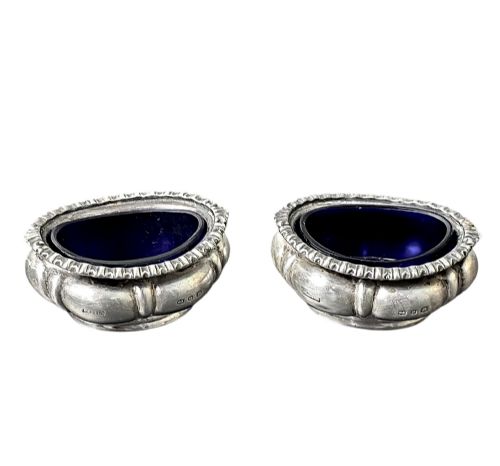
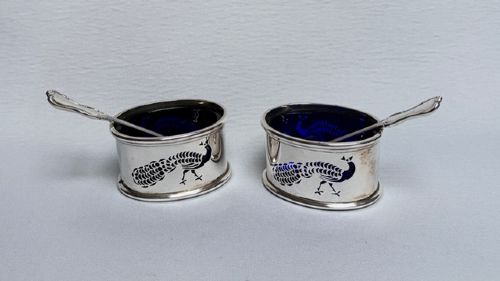
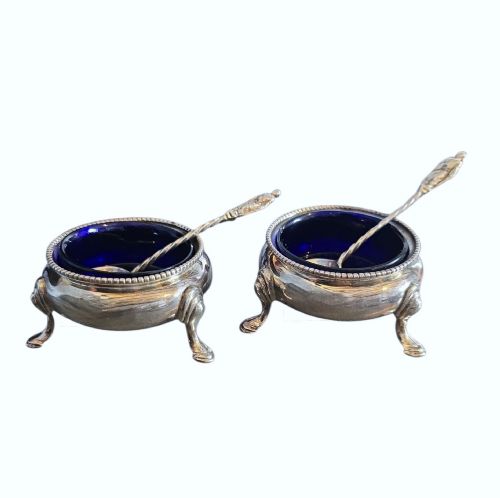
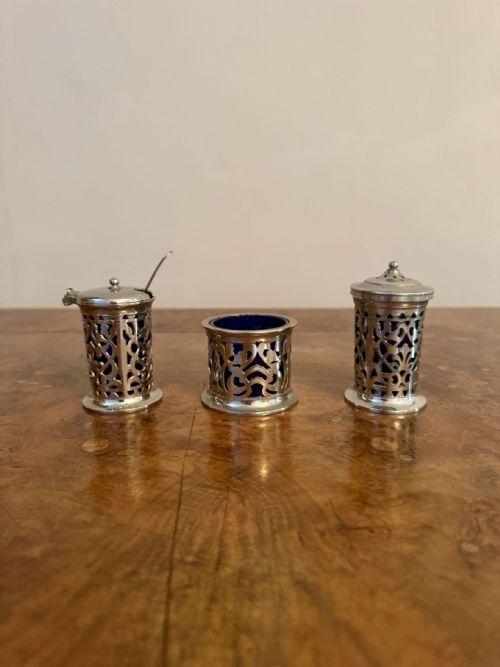
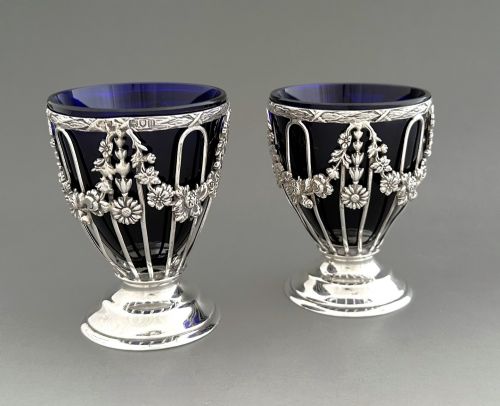
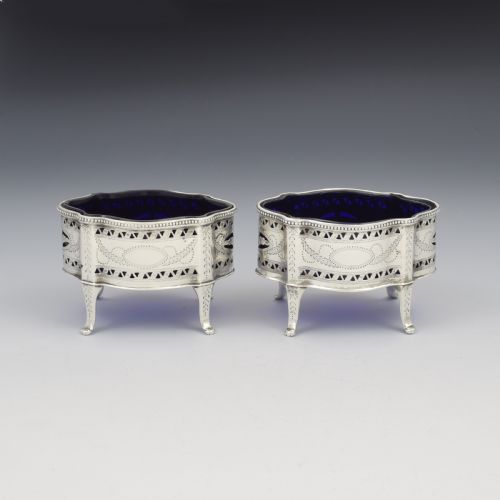


Cobalt Blue Salt Liner
These cobalt blue salt liner pieces bring rich colour and classic table function to antique condiment sets.
Cobalt Blue Salt Liner
When you search for cobalt blue salt liner, you are looking at small glass inserts designed to fit inside open silver table salts, cruet sets, and condiment pots. These vibrant glass vessels sit snugly within pierced or solid silver frames to protect the metal from corrosive salts.
As part of wider condiment and cruet sets, these liners served dining tables for mustard, salt, and other seasonings. Their survival alongside the original silver frames marks them out as functional survivors of nineteenth and early twentieth-century dining habits.
How they were made
Makers formed these liners using deep cobalt blue glass, often blown or pressed to fit specific silver frames made from sterling silver. Silversmiths shaped the accompanying metal vessels through techniques such as piercing, wirework, and casting.
Silver components bear hallmarks indicating origins in cities like London and Birmingham, while the glass elements rely on rich metallic oxides to achieve their intense colour. The combination requires precise fitting so the delicate glass rests securely within the metalwork.
Cobalt Blue Salt Liner Retail Price Guide 2026
Typical asking prices for cobalt blue salt liner among the pieces listed under this phrase on Sellingantiques today, from the lower quarter to the upper quarter. They describe what is for sale here now, not the wider market.
Cobalt glass owes its vivid hue to the addition of cobalt oxide, a substance so potent that a mere pinch dyes an entire molten batch.
What varies in quality
The distinction between standard domestic wares and finer examples rests on the crispness of the silver casting and the complexity of the frame's design. Pierced or wirework silver mounts demand greater skill from the silversmith than plain boat-shaped vessels.
Quality also depends on the preservation of the original glass liner within its silver housing, particularly where the cobalt glass matches the exact contours of Victorian or Edwardian salt cellars without replacement.
The Cobalt Blue Salt Liner Glossary
- Cruet Set
- A matched collection of condiment bottles and salt cellars held within a frame. These sets often incorporate multiple cobalt blue glass liners.
- Sterling Silver
- An alloy of silver containing parts of other metals for durability. Most pieces on this page are fashioned from this standard.
- Wirework
- A style of silversmithing constructed from fine wires soldered into decorative open frames. Edwardian makers utilised this method for light condiment tubs.
Cobalt Blue Salt Liner: Frequently Asked Questions
What is a salt liner?
A salt liner is a small glass insert placed inside a silver salt cellar to prevent the salt from corroding the metal.
These removable vessels made cleaning easier and protected the structural integrity of the silver frames.
How do I date a silver salt cellar?
You date these pieces by examining the hallmarks stamped into the silver, which record the assay office, date letter, and maker's mark.
Stylistic clues such as Victorian piercing or Edwardian wirework also help narrow down the period of manufacture.
Are these glass liners original?
Many listings retain their original cobalt blue glass liners, though some antique salts have replacement glass fitted at a later date.
Matching the exact contours and period characteristics helps determine if the glass and the silver frame belong together.
How were salt cellars used?
Diners used open salt cellars by taking pinches of salt with small spoons or fingers to season food at the table.
They formed a central part of formal dining settings alongside mustard pots and cruet sets.