

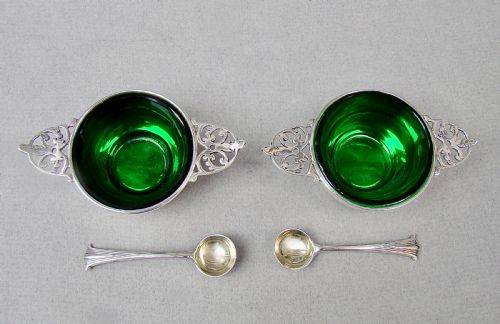


Vintage Silver Salt Dips
These vintage silver salt dips bring miniature craftsmanship to the dining table, offering open vessels designed to hold salt before modern shakers took over.
Vintage Silver Salt Dips
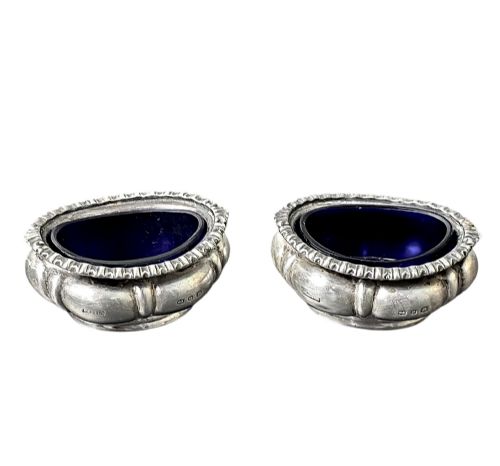
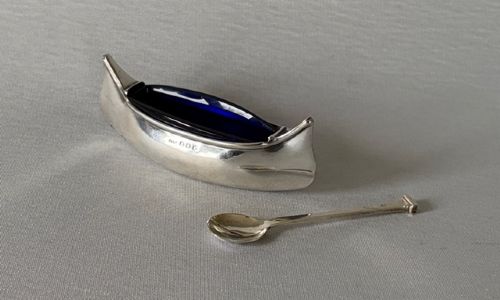
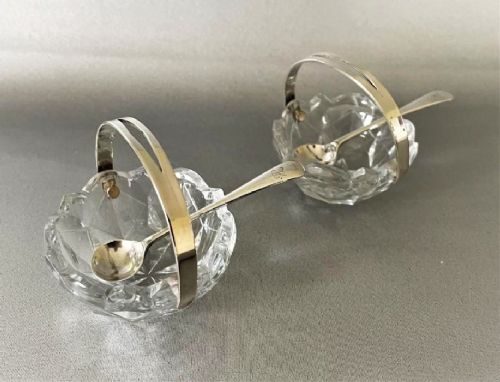
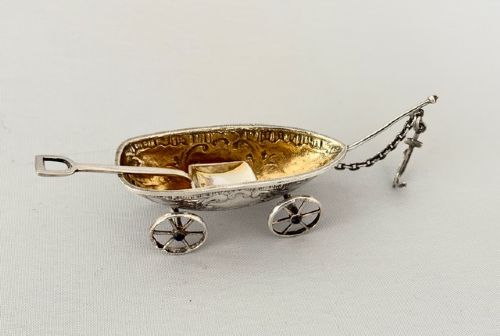
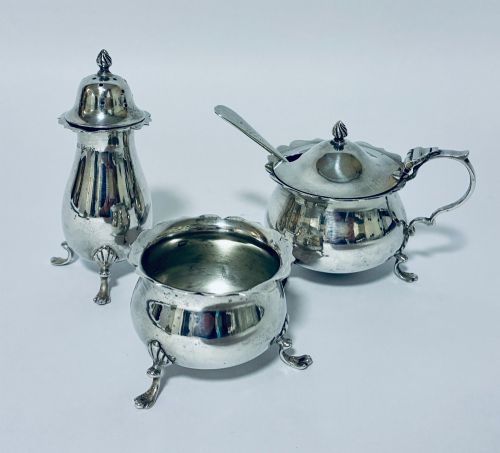
Vintage silver salt dips are small open vessels created to hold salt at the dining table, frequently appearing on this page as individual small dishes, paired salt cellars, and complete cruet sets. When collectors search for vintage silver salt dips, they encounter forms ranging from simple traditional open salts to novelty articulated pieces and handled condiment baskets.
The selections recorded here span multiple eras, encompassing Georgian, Victorian, Edwardian, and mid twentieth-century examples alongside George III and George V revival styles. Materials extend beyond solid sterling silver to incorporate cut glass, crystal, green glass, and silver-gilt interiors, frequently accompanied by matching miniature spoons.
How they were made
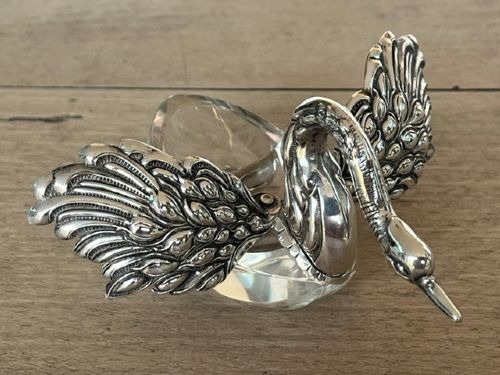
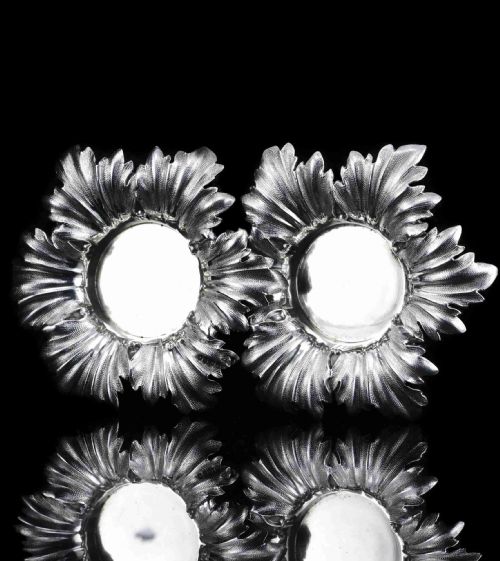
Makers shaped these small vessels using sterling silver and silver-gilt, often combining metal bodies with heavy cut glass or crystal liners. Artisans employed traditional techniques such as foliate chasing to decorate the silver surfaces of Victorian and Edwardian examples.
Specialised forms involved intricate construction, seen in novelty hinged components like movable swan wings or articulated miniature boats. Cased sets relied on precise fitted interiors lined in leather to house the salt dips and their accompanying spoons securely.
Vintage Silver Salt Dips Retail Price Guide 2026
Typical asking prices for vintage silver salt dips among the pieces listed under this phrase on Sellingantiques today, from the lower quarter to the upper quarter. They describe what is for sale here now, not the wider market.
What varies in quality
Quality in these small pieces rests upon the crispness of the chasing and the weight of the metal used in the body. Substantial gauge silver maintains its structural integrity and resists denting far better than thinner alternatives.
Distinction also lies in originality, where complete sets retaining their fitted leather cases, original matching spoons, and undamaged glass liners command closer attention from discerning collectors.
Georg Jensen·Barnards·Josiah Williams and Co
The Vintage Silver Salt Dips Glossary
- Salt cellar
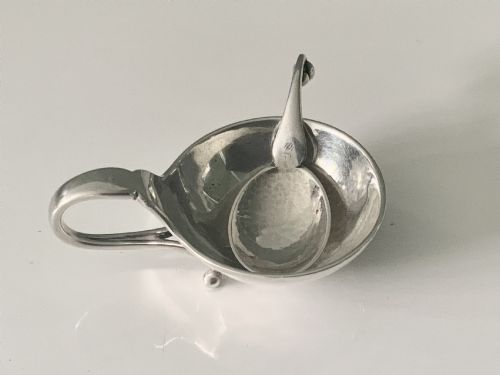
- A small open bowl or dish designed to hold salt on the dining table prior to the invention of the shaker. They often sit on three tiny feet or a raised circular foot.
- Cruet set
- A matched assembly of small containers holding condiments such as salt, pepper, and mustard, frequently housed together in a metal frame or fitted presentation case.
- Silver-gilt
- Silver that has been coated with a thin layer of gold on its interior surface. This technique protected the silver from being tarnished by the corrosive properties of salt.
- Quaich
- A traditional Scottish two-handled drinking vessel scaled down in these listings to serve as a novel salt cellar. The flat handles are known as lugs.
- Chasing
- A metalworking technique where the artisan hammers patterns into the front of the silver from the outside, pushing the metal rather than cutting into it to create raised decorative motifs.
Vintage Silver Salt Dips: Frequently Asked Questions
What is a salt dip?
A salt dip is an open container used to hold salt at the dining table before the widespread adoption of shaker bottles. Diners used a tiny spoon or their fingers to take a pinch of salt from the dip.
These pieces date across several centuries and appear in numerous forms, from simple glass-lined dishes to elaborate novelty shapes.
How were salt dips used?
They were placed beside each setting or shared between guests on the dining table to allow individual seasoning of food. Miniature spoons were often provided to transfer the salt neatly onto the side of the plate.
In larger formal settings, they formed part of a matched cruet set alongside mustard pots and pepper shakers.
How do I clean silver salt dips?
Silver salt dips require gentle cleaning with a specialist silver cloth to preserve the metal surface and any delicate chasing. Harsh abrasive dips should be avoided, particularly on pieces with gilded interiors or glass components.
Removable glass liners can be lifted out and washed separately in warm soapy water before being thoroughly dried.
How do I date an antique salt dip?
Dating relies heavily on hallmarks stamped into the silver, which indicate the assay office, date letter, and maker's mark. Stylistic clues such as Victorian foliate chasing or Edwardian structural forms also help determine the period.
Completely unmarked pieces or those made from alternative materials like crystal are dated by their overall design and manufacturing characteristics.