



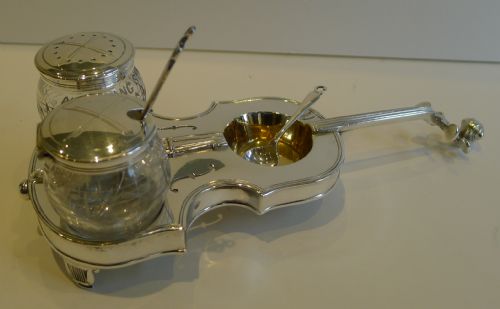


Silver Plated Salt Pots
Silver plated salt pots and cruet sets bring nineteenth and twentieth-century dining tables a mix of utility and whimsical design.
Silver Plated Salt Pots
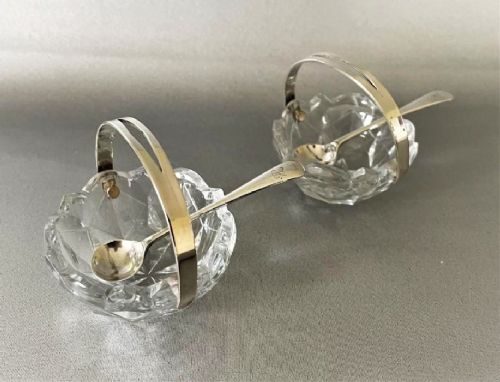
When you search for silver plated salt pots, you encounter a variety of tabletop pieces ranging from utilitarian condiment stands to intricate novelty designs. The selections on this page span the Victorian, Edwardian, and Art Deco periods, encompassing cruet sets, open salts, and condiment baskets.
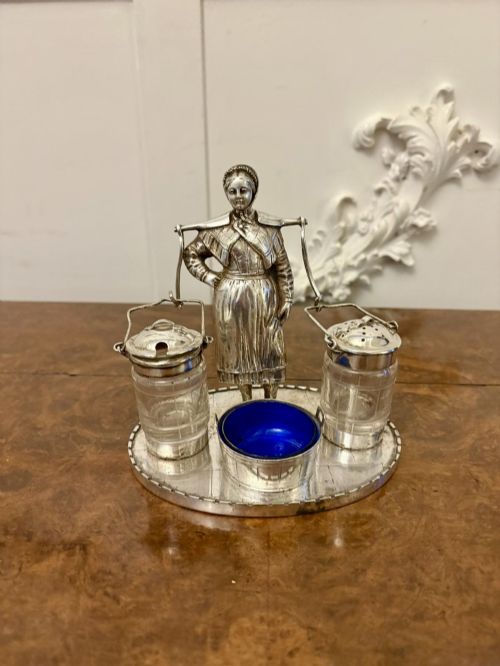
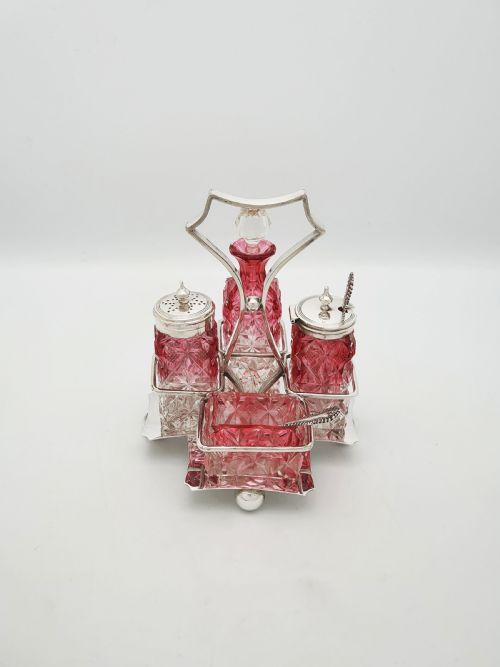
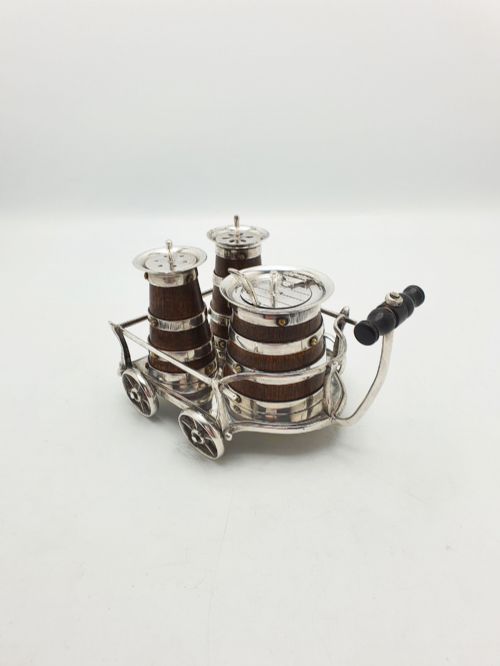
You are most likely to meet Edwardian cruet sets alongside Victorian novelty pieces formed as oak barrels, farmyards, carriages, violins, and butler trays. These items frequently incorporate glass inserts, including cobalt and cranberry flashed cut glass, alongside wooden elements in oak.
How they were made
Makers constructed these pieces using silver plate over base metals, combining metalwork with glassblowing and cutting techniques. Artisans produced coloured glass inserts, such as cranberry and cobalt varieties, to sit within the metal frames.
Woodworking skills appear in pieces utilising oak, particularly in barrel and tray formations, whilst novelty items demonstrate detailed casting and shaping to mimic everyday objects, animals, and musical instruments.
Silver Plated Salt Pots Retail Price Guide 2026
Typical asking prices for silver plated salt pots among the pieces listed under this phrase on Sellingantiques today, from the lower quarter to the upper quarter. They describe what is for sale here now, not the wider market.
Materials recorded across the current items include silver plate, oak, cranberry glass, cobalt glass, and cut glass.
What varies in quality
The distinction between standard items and superior examples lies in the crispness of the casting detail on novelty pieces and the weight of the silver plate. Finer sets retain their original matching spoons and undamaged glass liners.
The complexity of the design, such as architectural carriage cruets or intricate musical instruments, elevates the execution. Preservation of the underlying metal and the quality of the cut glass inserts further differentiate the standard of manufacture.
The Silver Plated Salt Pots Glossary
- Cruet set
- A matched collection of bottles, jars, or open salt pots held within a single stand for the dining table. These typically served condiments like salt, mustard, pepper, oil, and vinegar.
- Open salt
- A small bowl designed to hold loose salt, into which diners dipped a small spoon or used pinches of salt. They often feature glass liners protected by a metal frame.
- Cranberry glass
- A rich red-pink transparent glass created by adding gold chloride to the molten glass mixture. It frequently appears in late Victorian and Edwardian tableware.
- Cobalt glass
- A deep blue glass produced by the addition of cobalt oxide during manufacturing. It provides a striking contrast against silver plated frames in condiment sets.
- Novelty cruet
- A condiment set formed in the shape of an unrelated object, such as a carriage, animal, or barrel. These pieces combined tabletop utility with decorative amusement.
Silver Plated Salt Pots: Frequently Asked Questions
What is a silver plated salt pot?
A silver plated salt pot is a small tabletop container designed to hold salt for dining, featuring a silver-coated metal exterior often paired with a glass liner. These items range from simple open bowls to components of larger condiment sets.
They emerged strongly during the Victorian and Edwardian eras, serving both practical seasoning functions and decorative purposes on formal dining tables.
How were novelty cruet sets used?
Novelty cruet sets held various condiments while doubling as charming conversation pieces at the dining table. Guests and hosts interacted with them during meals to dispense salt, pepper, and mustard from whimsical shapes like carriages and oak barrels.
These pieces reflect the Victorian appetite for combining domestic utility with theatrical design in everyday objects.
How do I care for silver plated tableware?
Silver plated items require gentle cleaning with non-abrasive cloths and dedicated silver care products to preserve the outer plating. Avoid harsh scrubbing that might wear through the thin silver layer down to the base metal.
Glass liners and wooden components such as oak should be cleaned separately using appropriate methods to protect both materials from moisture damage.
How do I identify Edwardian salt pots?
Edwardian salt pots and cruet sets often display lighter, more refined decorative motifs compared to heavier Victorian predecessors. They frequently date between the late nineteenth century and the outbreak of the First World War.
Examining the associated glass inserts, such as cranberry or cut glass, alongside the style of the silver plate helps distinguish this period from earlier Victorian or later Art Deco items.