



Silver Plated Tea Jar
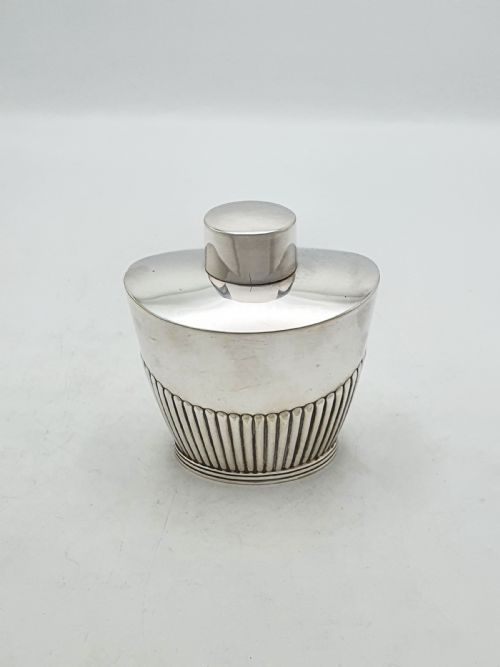
A silver plated tea jar brings period elegance to the table, combining durable metal mounts with ceramic bodies or glass liners for daily service.
Silver Plated Tea Jar
The materials vary across the pieces, pairing silver plate, Old Sheffield plate, and nickel silver with cut glass, earthenware, ceramic, and oak bodies. Stylistic expressions range from ornate Victorian and Edwardian designs to Arts and Crafts and Regency forms, alongside occasional novelty shapes such as weights.
These items originate largely from English makers and potteries, showing the intersection of metalwork and ceramic production in domestic containers. Whether you examine a drum box or a cylindrical canister, each piece demonstrates the practical requirements of period household storage.
Materials and construction
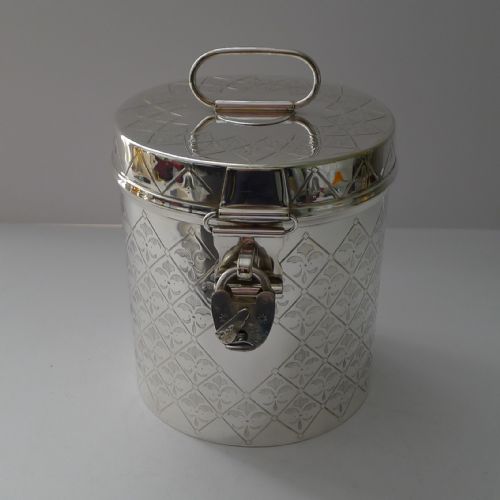
Makers applied silver plate or Old Sheffield plate over base metals like nickel silver to create durable outer mounts, lids, and swinging handles. These metal elements were frequently pierced, engraved, or cast with ornate patterns before being fitted to the main body.
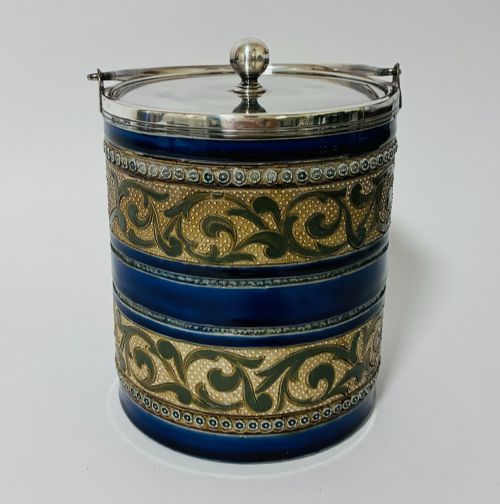
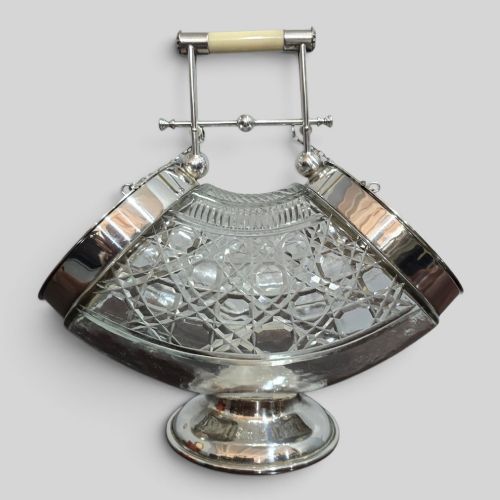
Glass liners and bodies utilised hobnail cutting and heavy moulding techniques to catch the light, while ceramic and earthenware components like Doulton Lambeth and flow blue pottery were glazed and fired separately. Oak mounts introduced timber grain alongside metal work, creating mixed-media containers secured with hinges and locks.
The inventory combines Victorian and Edwardian examples, pairing silver plate and Old Sheffield plate with cut glass, earthenware, ceramic, and oak.
Judging the range
Quality separates standard production containers from those bearing the marks of prominent firms through the crispness of the casting and the depth of the metal plating. Superior examples show heavier gauge metalwork, intact silver layers, and precisely fitted hinged lids that close flush against the body.
The integration of materials also defines the tier of a piece, seen in the clarity of cut glass liners, the weight of the ceramic or earthenware bodies, and the robustness of locking mechanisms. Signed pieces by established makers typically exhibit superior finishing on interior mounts and hinge pins.
Mappin and Webb·Robert & Belk·Walker & Hall·William Hutton·Elkington & Co·John Grinsell & Sons
The Silver Plated Tea Jar Glossary
- Old Sheffield plate
- A method of fusing a thin sheet of silver to a thicker copper core by heat and pressure, producing a rich metal finish found on earlier tea caddies.
- Electroplated nickel silver
- A process utilising an electrical current to apply a coating of silver onto a nickel silver base, becoming widespread during the Victorian period.
- Flow blue
- A ceramic glazing technique where cobalt blue colour bled slightly during firing into the white glaze, creating a characteristic blurred effect on Edwardian biscuit barrels.
- Hobnail cut
- A sharp, geometric decorative pattern cut into the surface of glass bodies and liners, creating faceted points that reflect light.
- Doulton Lambeth
- A prominent British pottery known for stoneware and earthenware bodies featuring applied decoration and salt-glazed finishes.
Silver Plated Tea Jar: Frequently Asked Questions
How were these jars used?
These containers were utilised in period dining rooms and drawing rooms to store dry goods such as biscuits and tea leaves. The lids and locking mechanisms helped keep contents fresh on the sideboard.
Over time, their domestic role expanded from purely functional pantry storage to decorative table service items displayed during afternoon tea.
How do I clean silver plate?
Maintenance requires soft cloths and gentle cleaning agents specifically formulated for silver plate to avoid wearing through the thin metal layer to the base metal underneath. Frequent light dusting preserves the surface better than aggressive polishing.
Removable glass liners and ceramic bodies should be washed separately in warm soapy water, ensuring no moisture remains trapped around metal mounts or hinges.
Are cut glass liners original?
Many surviving pieces retain their matched cut glass or ceramic liners, which were individually fitted to the silver plated frame during production. Inspecting the rim and base for consistent wear helps indicate whether the liner belongs to the period.
Replacement liners are common due to the fragility of glass, so noting exact fit within the metal basket is standard practice for collectors.
What is Old Sheffield plate?
Old Sheffield plate is an early layering technique where a thin sheet of silver is fused to a copper base before shaping. This method predates nineteenth-century electroplating.
Items produced this way often display subtle traces of the underlying base metal along exposed edges, which serves as an indicator of the earlier manufacturing process.