



Silver Plate Coffee Pot
A silver plate coffee pot brings the elegance of formal hospitality to the table, offering a durable vessel for serving hot brews.
Silver Plate Coffee Pot
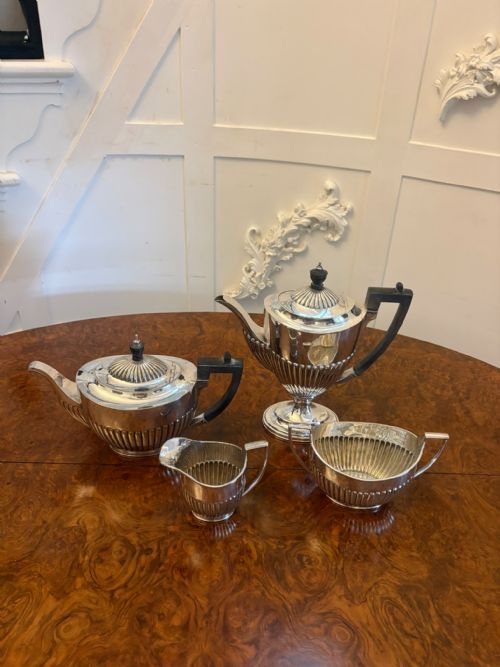
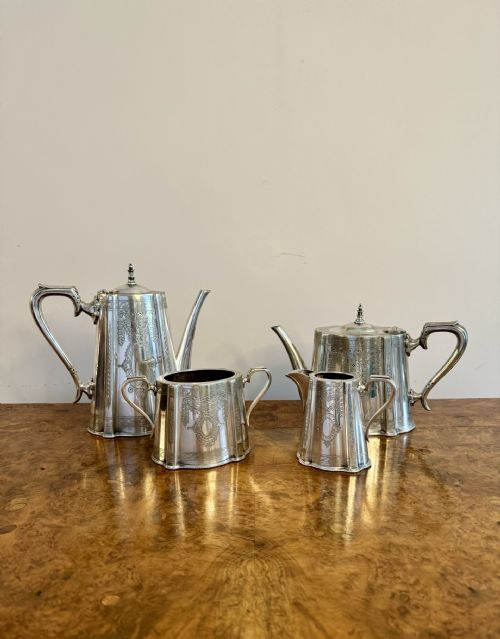
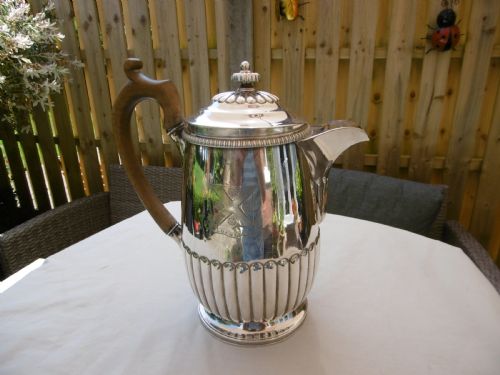
A silver plate coffee pot forms part of a rich tradition of metalware designed for domestic service, appearing as a standalone vessel or within larger tea and coffee sets. These items range from slender 18th-century Old Sheffield Plate designs to ornate Victorian and Edwardian examples.
Buyers will encounter single pots alongside multi-piece tea services that include creamers and sugar bowls. The forms extend from classical Georgian shapes to later Art Deco configurations.
How they were made
Early examples utilise the Old Sheffield Plate technique, fusing a thin layer of silver to a copper base, often revealing subtle lines of copper at the seams and edges. Later pieces employ electroplated nickel silver as a substrate, providing a uniform base for the applied silver layer.
Handles incorporate materials such as wood, bone, ivory, ebonised wood, or bakelite to insulate against heat during pouring. Decoration is achieved through repoussé floral work, etching, or crisp engraving.
Materials recorded across the inventory include silver plate, Old Sheffield plate, copper, silver, wood, bone, and bakelite.
What varies in quality
The distinction between tiers rests upon the crispness of the hand-chased ornamentation and the structural integrity of the metal. Heavier gauges of silver plate and Old Sheffield Plate retain their form and plating thickness far better over decades of use.
Makers such as Matthew Boulton, Elkington and Co, and Walker and Hall demonstrate superior craftsmanship through balanced proportions, secure handle insulation, and well-executed heraldic crests.
Walker and Hall·Matthew Boulton·John Hoyland·Boardman Glossop and Co·Aspreys·Victor Saglier Paris·Elkington and Co·WMF·Arnand Fresnais·Atkin Bros·Adie Brothers
The Silver Plate Coffee Pot Glossary
- Old Sheffield Plate
- An early fusing technique where a sheet of silver is joined to a copper ingot before rolling. This method predates electroplating and often reveals thin lines of copper wear along high points.
- Electroplated Nickel Silver
- A base alloy of copper, nickel, and zinc coated with a layer of pure silver through an electrical bath. This process became standard for silver plate production from the mid-nineteenth century onward.
- Repoussé
- A metalworking technique where the artisan hammers the design from the reverse side to form raised decorative motifs on the front. It creates tactile floral and scroll patterns on the body of the vessel.
- Insulators
- Small spacers made of bone, wood, ivory, or bakelite fitted into the handle brackets. These materials prevent heat transfer from the pot to the hand of the person pouring.
Silver Plate Coffee Pot: Frequently Asked Questions
How do I clean a silver plate coffee pot?
Wash the pot gently using warm soapy water and a soft cloth to remove dust and residue. Avoid abrasive cleaners or harsh scrubbing that can wear through the thin silver layer.
Dry the vessel thoroughly with a soft lint-free cloth to prevent water spots. Use a specialised silver polish sparingly only when tarnish requires removal.
Can I still use these coffee pots daily?
Most of these vessels remain physically capable of holding hot liquids, provided the interior solder and joints are secure. Many owners choose to use them for special occasions rather than everyday routines to preserve the antique finish.
Take care not to expose older wooden or bone handle insulators to extreme heat or dishwashers. Hand washing protects the structural integrity of the handle joints and insulating rings.
How do I tell Old Sheffield Plate from later silver plate?
Examine the edges and rims for subtle hints of a copper underneath where the silver layer has worn thin over generations. Old Sheffield Plate displays a characteristic reddish hue beneath the silver on high points and seams.
Items produced after the mid-nineteenth century generally utilise a white nickel-silver base metal. Consequently, worn areas on electroplated pieces reveal a grey or yellowish base rather than bright copper.
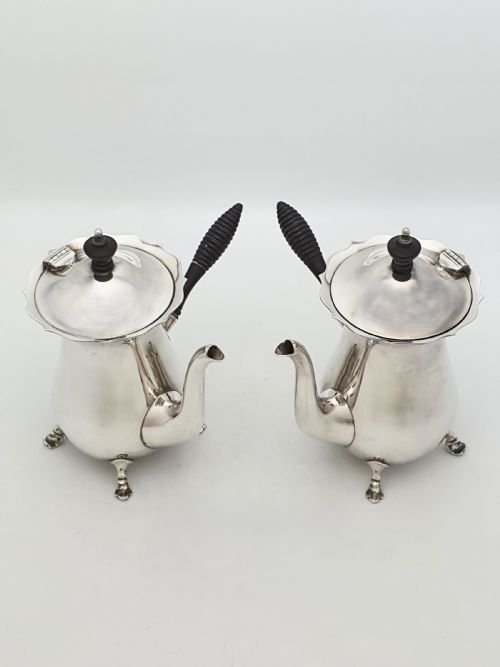
What is a cafe au lait pot?
A cafe au lait pot is designed specifically for serving warm milk alongside coffee simultaneously. These pots often appear in pairs or matching sets alongside other beverage vessels.
The form caters to traditional breakfast service where diners pour coffee and milk from separate matching jugs into their cups.