


Silver Open Salt Bowls
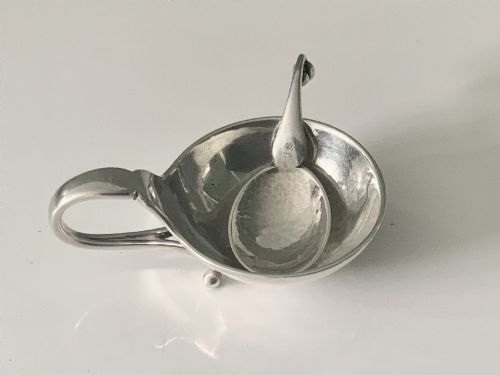
Silver open salt bowls are small vessels for the dining table designed to hold loose salt, combining solid metal frames with coloured glass liners.
Silver Open Salt Bowls
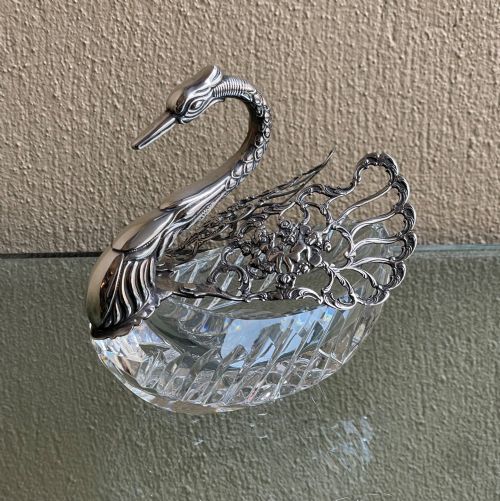
Silver open salt bowls are small dining table vessels designed to hold loose salt before the invention of free-running salt. These pieces appear in forms ranging from simple circular bowls to sculptural animals and classical revival shapes.
The versions most commonly met on this page date from the Georgian and Victorian eras, alongside Edwardian examples and mid-twentieth-century designs. Makers produced these items in matched pairs or larger sets, frequently accompanied by small spoons.
Materials and construction
Silversmiths utilised sterling silver and silver plate for the structural frames, shaping them through casting, hammering, and lobed repoussé work. Many examples incorporate intricate pierced designs or cast borders reflecting Georgian and Victorian styles.
Vessels often feature fitted glass liners in cobalt blue or clear cut glass to protect the silver from corrosive salt. Some interiors are finished with gold gilt or vermeil coatings for additional protection and contrast.
The listings show materials spanning sterling silver, silver plate, cut glass, cobalt glass, and gold gilt across the Victorian, Georgian, and Edwardian periods.
Distinctions in quality
Quality rests upon the weight of the metal and the crispness of the chased or cast ornament around the rim and feet. Heavier gauge sterling silver and fully articulated figural forms demonstrate superior craftsmanship compared to lighter plated alternatives.
The presence of matching original spoons and intact coloured glass liners elevates an individual piece or set. Maker marks and clear hallmarks indicating specific assay offices provide historical integrity that simpler unmarked items lack.
Georg Jensen·Thomas Smily·Edward Wood·Vale Brothers and Sermon
The Silver Open Salt Bowls Glossary
- Open salt
- A small table vessel designed to hold loose salt, used with a salt spoon rather than a shaker. These pieces rely on internal glass liners to prevent the salt from corroding the metal.
- Cauldron salt
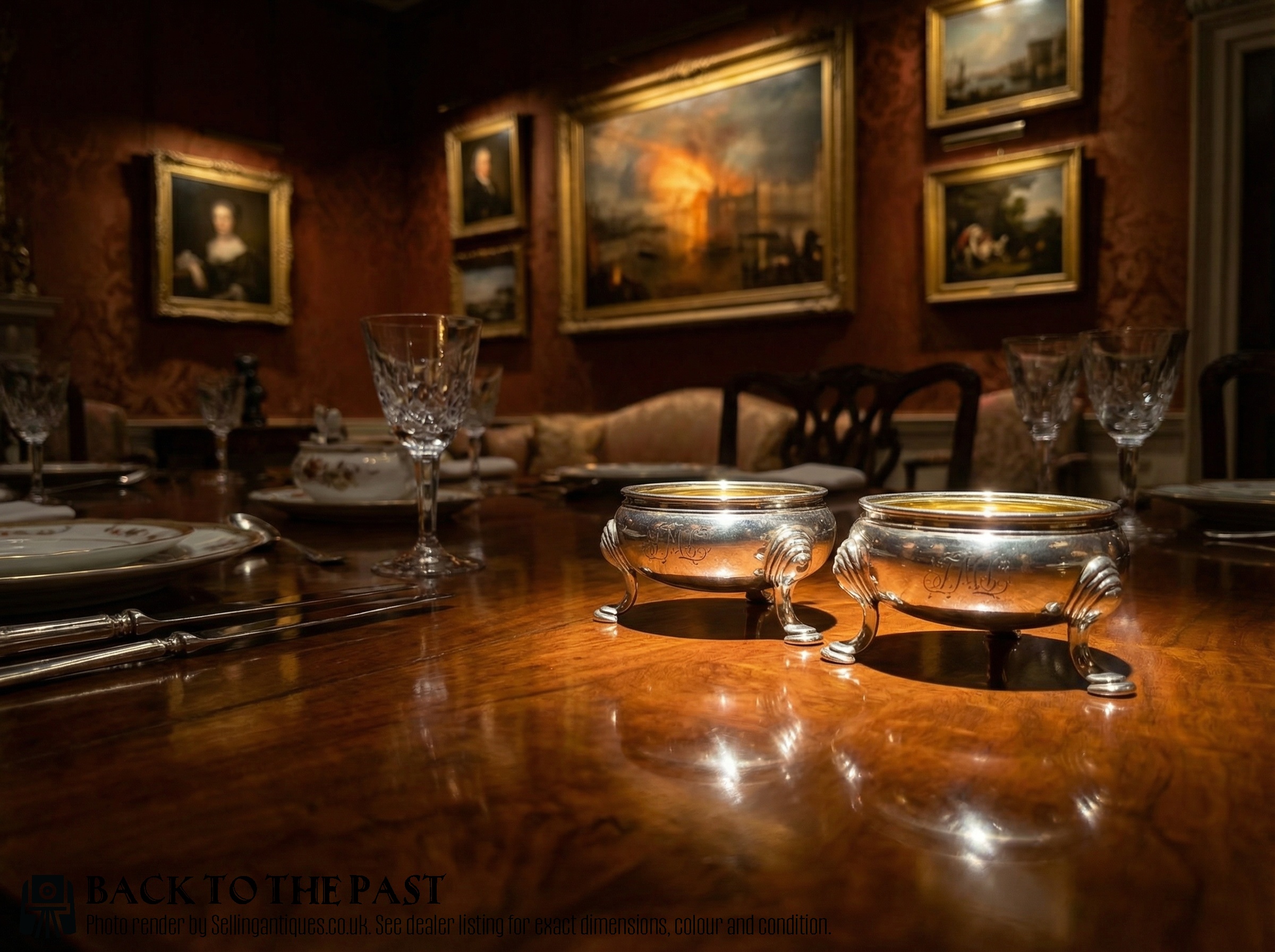
- A small bowl shaped like a traditional cooking cauldron, typically standing on three short legs or feet. This form is frequently encountered in Victorian silver sets.
- Vermeil
- Sterling silver coated with a thin layer of gold on the interior or exterior surface. This technique provides a rich yellow finish while protecting the silver from tarnishing.
- Cobalt glass
- Deep blue glass used extensively as removable liners inside open salt bowls. The dark colour provides a striking visual contrast against polished silver frames.
- Hallmark
- A series of official stamps applied to precious metals indicating the standard of purity, the assay office, and the year of manufacture. These marks allow collectors to date pieces accurately.
Silver Open Salt Bowls: Frequently Asked Questions
How were silver open salt bowls used?
Diners used these small open vessels to hold individual portions of salt at the table before modern shakers became common. Guests would take a pinch of salt using a tiny matching spoon or a clean knife tip.
They sat upon dining tables singly, in pairs, or in sets alongside dinner plates. The salt within them was often replenished between courses during formal meals.
Do these salts require glass liners?
Many open salt designs incorporate removable glass liners made from cobalt or cut glass. These liners protect the delicate silver or silver-plated interior from the corrosive nature of salt.
Items without liners were typically designed with gilt or vermeil interiors to provide a protective barrier against chemical tarnishing.
How do I clean silver salt bowls?
Cleaning requires a soft cloth and specialist silver polish applied gently to avoid wearing away thin plating or fine chasing. Liners should be removed and washed separately in warm soapy water.
Harsh abrasive cleaners and prolonged soaking must be avoided to preserve the historical surface finish and any underlying gilt layers.
How can I tell Georgian salts from Victorian ones?
Georgian examples generally display simpler, more restrained neoclassical lines or heavier cast components without the elaborate machinery of later decades. Victorian pieces frequently utilise more exuberant revival styles, including heavier lobing and floral repoussé.
Examining the hallmarks stamped on the base provides the most definitive guide to the exact period of manufacture.