
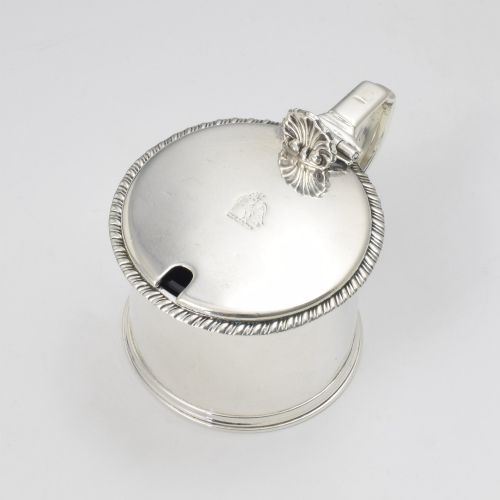


Silver Mustard Vessel
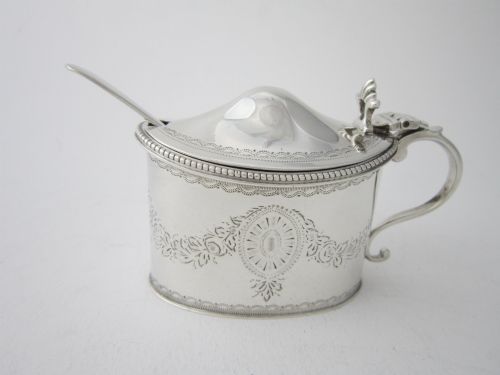
A silver mustard vessel brings a touch of refinement to the dining table, taking the form of a small lidded pot designed for condiment service.
Silver Mustard Vessel
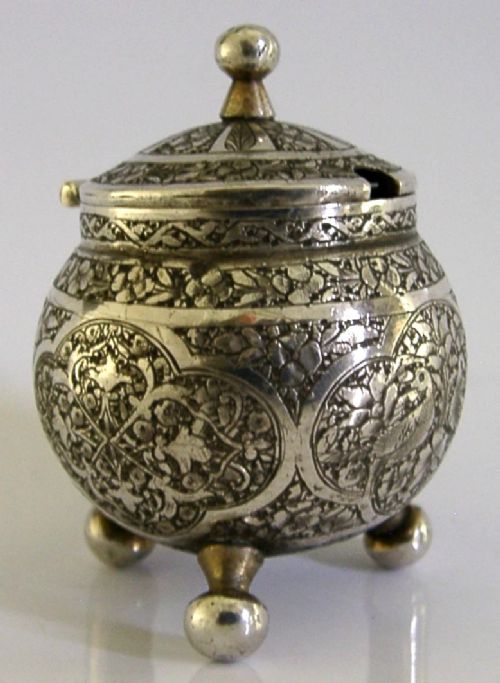
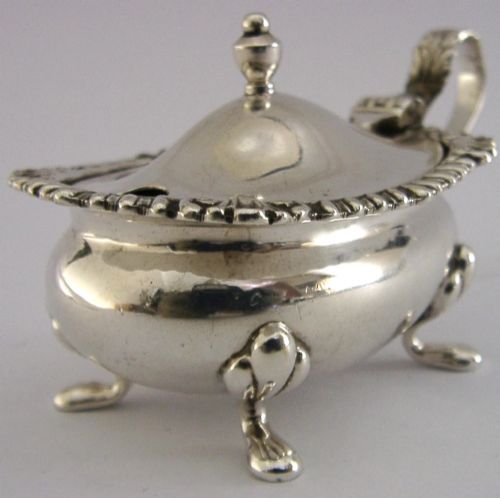
A silver mustard vessel is typically encountered as a small pot, jar, or condiment holder designed to accompany the dining table. The pieces available here span several distinct periods, including Georgian, Victorian, Edwardian, and the 1920s.
Origins vary between English workshops in centres such as Birmingham and Chester, alongside continental European pieces and Ottoman examples. Buyers will frequently find silver mustard pots paired with contrasting inserts rather than plain metal interiors.
Materials and Construction
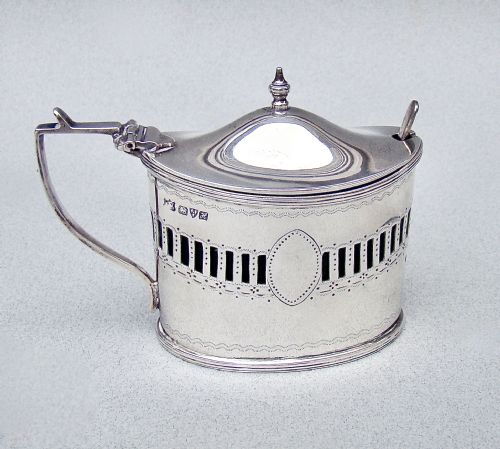
The construction of a silver mustard vessel relies primarily on sterling silver or silver plate for the main body and hinged lid. Many examples incorporate intricate pierced work or smooth sheet metal formed into drum, octagonal, or novelty shapes.
Listings feature sterling silver, silver plate, and brass combined with blue, cobalt, and cut glass across Georgian, Victorian, and Edwardian periods.
Quality and Execution
The quality of a silver mustard vessel is determined by the weight of the metal and the crispness of any pierced or chased decoration. Substantial gauge silver and robust hinges separate high-grade tableware from lighter, more utilitarian productions.
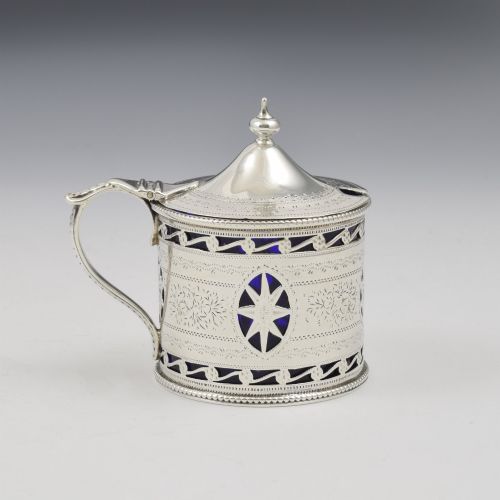
The integration of the glass liner also indicates distinction, particularly where hand-cut or deeply coloured cobalt and blue glass fits precisely within the silver frame. Maker attribution plays a significant role, with pieces bearing the marks of notable silversmiths demonstrating superior hand craftsmanship.
Alfred Marston·Nathan and Hayes·Charles Fox II·Matthew Boulton·Robert Hennell I·Charles Stuart Harris·Omar Ramsden·Heath and Middleton
The Silver Mustard Vessel Glossary
- Pierced silver
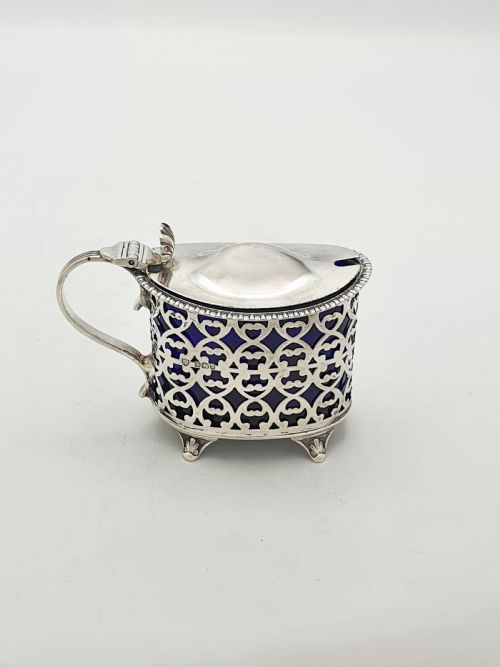
- Metalwork cut through in decorative patterns to reveal the glass liner beneath. This technique was particularly popular during the Victorian period.
- Drum mustard pot
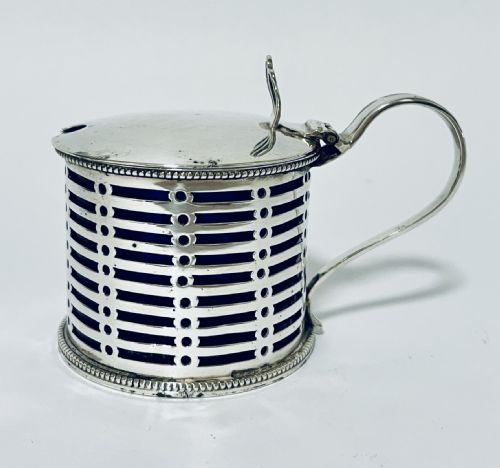
- A cylindrical form with straight vertical sides and a flat hinged lid. It remains one of the most classic shapes for eighteenth and nineteenth-century condiment pots.
- Blue glass liner
- A coloured glass insert placed inside openwork or pierced silver pots to contain the condiment. Cobalt and lighter blue hues are most frequently encountered.
- Condiment holder
- A broader descriptive term for vessels designed to hold table sauces, preserves, or mustards. These often include wirework stands or associated spoons.
- Novelty mustard pot
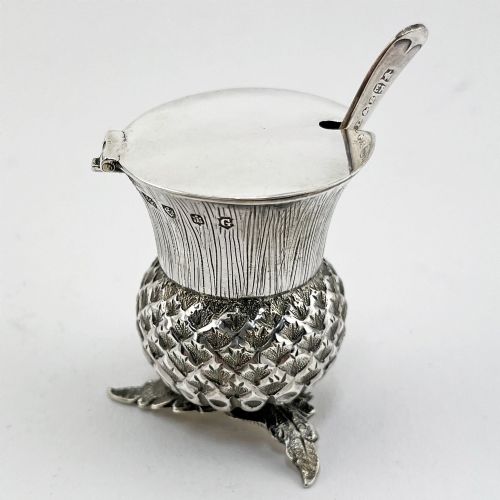
- A container shaped to resemble an animal, plant, or object rather than a standard geometric pot. Scottish novelty examples and thistle forms appear within this tradition.
Silver Mustard Vessel: Frequently Asked Questions
What is a silver mustard vessel used for?
These pots were designed to hold prepared mustard on the dining table for individual or communal service.
They usually sat alongside other condiment containers as part of a formal table setting during the Georgian and Victorian periods.
How do I clean a silver mustard pot?
Maintenance requires gentle cleaning with a specialist silver cloth to preserve the polished surface and any engraved details.
Glass liners should be removed and washed separately in warm soapy water to prevent residue from affecting the metal.
How do I date a silver mustard pot?
Dating relies upon the hallmarks stamped on the metal, which indicate the assay office, the year of manufacture, and the silversmith's mark.
Stylistic elements such as Georgian drum shapes or Victorian pierced work also offer clear clues to the period of origin.
Are glass liners original to the pots?
Many pots retain their original fitted glass inserts, particularly when the blue or cut glass matches the interior dimensions precisely.
Because glass is fragile, replacement liners are sometimes used in older condiment vessels.