



Silver Meat Dome
A silver meat dome brings undeniable presence to the dining table, keeping joints warm while telegraphing nineteenth-century hospitality at its most grand.
Silver Meat Dome
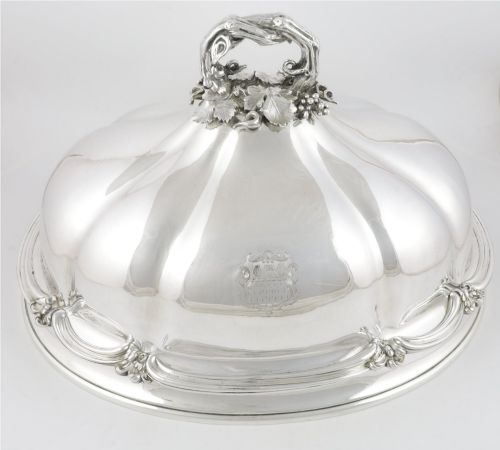
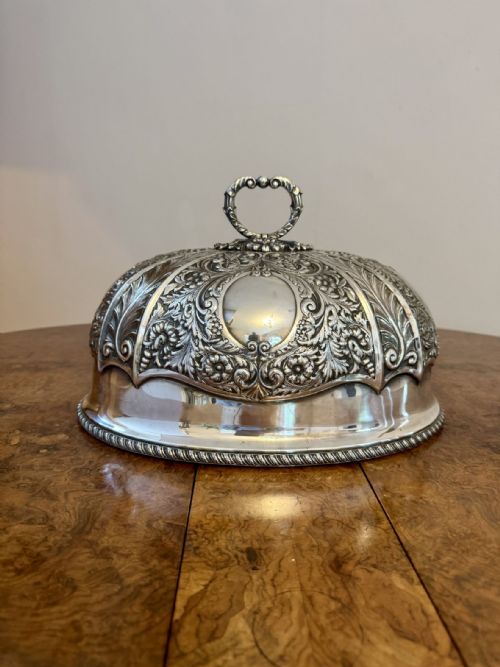
A silver meat dome is a heavy serveware cover designed to fit over large roasts and platters, preserving heat and grandeur before carving at the table. When searching for a silver meat dome, buyers encounter substantial covers spanning the Georgian, Victorian, and Edwardian eras.
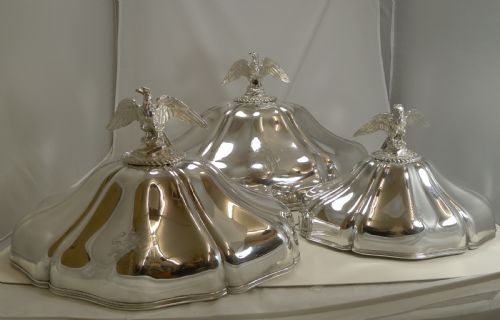
The domestic forms vary from small game covers to large turkey domes, occasionally accompanied by original well and tree warming bases or stands. Most examples originate from English workshops, alongside notable French makers producing graduated sets of cloches.
The dominant styles recorded on this page stretch from Regency and William IV to French Restoration and ornate Victorian designs. These pieces range from plain utilitarian service covers to deeply engraved display items bearing crests.
Materials and construction methods
Early nineteenth-century examples rely heavily on Old Sheffield Plate, a fusion method fusing a thin sheet of silver onto a copper core, which often reveals subtle lines of base metal at the rims. Makers also utilised solid silver for the most luxurious commissions.
By the Victorian period, electroplating methods such as EPNS and silver plate on base metal or copper became widespread, allowing heavier production of detailed relief ornamentation and handles.
Surface decoration required skilled hand engraving, creating ferns, crests, and armorials, while handles were cast separately and securely fastened to the top of the dome.
The archive listings demonstrate that English firms like Elkington dominated mid-nineteenth century production, while French makers such as Durand specialised in graduated sets.
Defining quality in silver meat domes
The thickness of the original plating or silver layer dictates longevity, particularly where polishing wears down high points over generations. Old Sheffield Plate shows distinct copper bleed through the silver surface on lesser pieces, whereas premier examples retain their skin.
Form and proportion separate standard utilitarian kitchenware from grand dining room showpieces, particularly when cast handles feature intricate foliage or distinct armorial crests. Maker attribution to established firms like Elkington or Boulton elevates the standing of an individual piece.
Completeness alters the character of the piece entirely, with matching well and tree warming bases or original graduated sets commanding greater attention than isolated covers.
Roberts Cadman·Henry Wilkinson·Boulton·Durand·Harrods·Walker and Hall·Elkington and Co·Christofle
The Silver Meat Dome Glossary
- Old Sheffield Plate
- An early fusing technique where a sheet of silver is fused to a copper base before rolling. Edges often reveal the underlying copper core upon close inspection.
- EPNS
- Electro Plated Nickel Silver. A mid-nineteenth century industrial process that replaced older plating methods by depositing silver onto a nickel brass alloy via electrical current.
- Cloche
- A bell-shaped food cover designed to keep individual plates or serving dishes warm at the table. French makers frequently used this term for serving domes.
- Well and Tree
- A serving platter base featuring channels and a central well to catch meat juices during carving. These bases occasionally accompany larger dome covers.
- Game Cover
- A smaller domed serveware piece intended for poultry or game birds rather than massive beef joints.
Silver Meat Dome: Frequently Asked Questions
What was a silver meat dome used for?
These large covers were placed over roasted joints, poultry, or game on the dining table to retain heat between the kitchen and the moment of carving.
Wealthy households used them to maintain food temperature during formal multi-course meals while displaying silver and plate craftsmanship.
How do I clean a silver plated dome?
Use a gentle, non-abrasive silver polish applied with a soft cloth to remove tarnish without harming the underlying plate or copper base.
Avoid harsh dips, particularly on Old Sheffield Plate, where excessive chemical cleaning can strip the thin silver layer and expose the copper beneath.
How do I date an antique meat dome?
Examine the manufacturing technique, noting whether the piece uses Old Sheffield Plate or nineteenth-century electroplating methods like EPNS.
Maker marks, registration stamps, and stylistic cues such as Regency lines or heavy Victorian ornamentation further narrow the production era.
Can I use a meat dome for modern dining?
Many collectors use these pieces functionally on dining tables or sideboards to keep large roasts warm during family gatherings.
Their substantial weight and historic presence also make them striking decorative objects when displayed on large sideboards or tables.