



Silver Plated Cloche
These silver plated cloche pieces are substantial dining table domes designed to keep joints of meat and dishes warm, offering both practical utility and formal presence.
Silver Plated Cloche
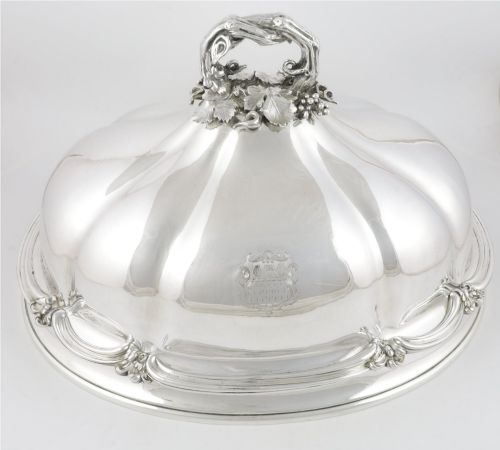
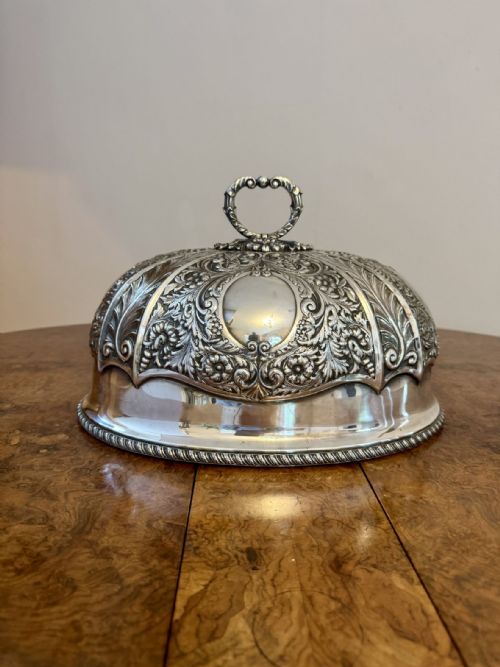
A silver plated cloche takes the form of a domed cover designed to sit over meat platters and serving dishes upon the dining table. These items appear across several historic periods, spanning Georgian, Regency, Victorian, and Edwardian eras, reflecting changing dining customs.
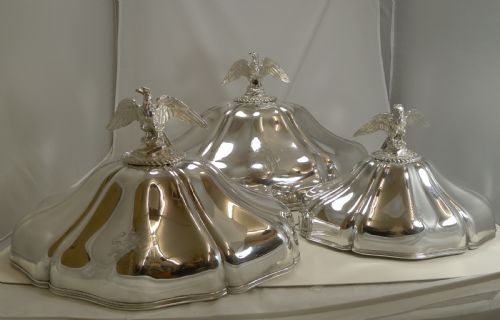
The objects listed here include meat domes, meat covers, game covers, and dish covers, often presenting in graduated sets or large individual sizes. Most examples originate from the nineteenth century, utilising silver plate, Old Sheffield plate, copper, and EPNS.
Forms range from plain hemispherical domes to pieces engraved with crests such as those of the Macfie clan or associated with figures like the Duke of Somerset. Makers represented include Roberts Cadman, Henry Wilkinson, Boulton, and Durand of Paris.
Materials and construction methods
Early examples employ Old Sheffield plate, a technique fusing a thin sheet of silver to a thicker copper base, often visible at cut edges or wear points. Later nineteenth-century pieces utilise electroplating, known as EPNS, applied over base metal or copper foundations.
Construction involves shaping heavy metal sheets into large domes to retain heat, supplemented by applied handles, borders, and engraved family crests. Paris makers and English workshops alike employed skilled metalsmiths to raise these substantial serveware items by hand or press.
One recorded dome carried the crest of the Duke of Somerset, proving that even a humble meat cover can occasionally rub shoulders with nobility.
Distinguishing quality across examples
Quality separates through the weight of the metal, the crispness of applied borders, and the presence of distinguished maker marks or heraldic engravings. Pieces originating from notable makers like Boulton or Durand display superior heft and balance compared to standard utilitarian wares.
The choice of plating method alters the character of the piece, with early Old Sheffield plate showing distinct material layering, whilst later electroplated items offer uniform surfaces. Engraved crests and matched sets of graduated domes further elevate the standing of an individual piece.
Roberts Cadman·Henry Wilkinson·Boulton·Durand
The Silver Plated Cloche Glossary
- Old Sheffield plate
- An early form of silver plating created by fusing a sheet of silver onto a copper core before shaping. This method precedes nineteenth-century electroplating techniques.
- EPNS
- Electroplated Nickel Silver, a method introduced in the nineteenth century where a layer of silver is deposited onto a base metal using electricity.
- Meat dome
- A large domed cover placed over a meat platter on the dining table to retain heat and present the joint formally.
- Game cover
- A smaller domed cover specifically intended for serving game birds or smaller dishes at the table.
Silver Plated Cloche: Frequently Asked Questions
What is a silver plated cloche used for?
These domes were placed over large platters of meat or game on formal dining tables to keep the food warm between courses. They also served to conceal the joint until the moment of carving.
Today, they function as striking decorative centrepieces or functional serveware for large gatherings and traditional dining settings.
How do I date a silver plated cloche?
Dating relies on maker marks, the manufacturing technique, and stylistic cues from periods like the Georgian, Regency, or Victorian eras. Early pieces often employ Old Sheffield plate, whilst later ones use EPNS.
Maker stamps and engraved crests can also point toward specific decades or notable workshops active in the nineteenth century.
What is the difference between Old Sheffield plate and EPNS?
Old Sheffield plate involves physically fusing silver to a copper ingot before rolling it into sheets, often showing subtle copper undertones where wear occurs. EPNS uses an electrical current to bond silver to a nickel or base metal substrate.
Objects made with Old Sheffield plate generally date from the Georgian and early Regency periods, whereas EPNS becomes common from the Victorian era onward.
How should I clean a silver plated cloche?
Gentle cleaning with a specialised silver cloth or mild non-abrasive polish preserves the plated surface without removing the underlying metal. Care must be taken around engraved crests and applied borders.
Avoiding harsh chemical dips ensures that older plating methods, particularly on Old Sheffield pieces, remain intact and retain their historic character.