



Antique Meat Cloche
An antique meat cloche guards the heat and presence of a joint at the table, uniting practicality with weight and scale.
Antique Meat Cloche
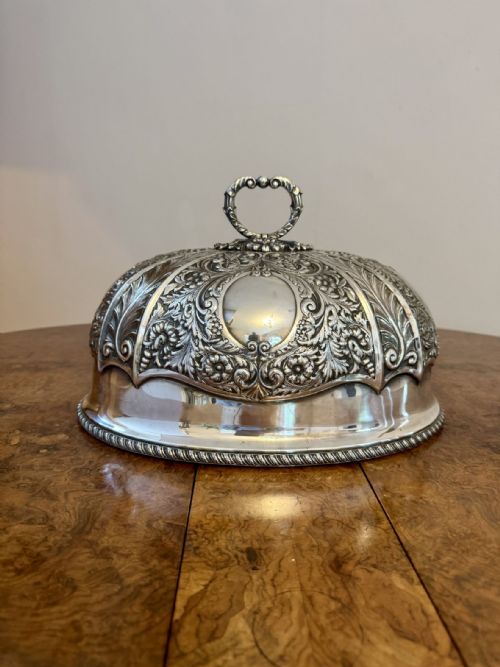
When you search for an antique meat cloche, you look for heavy metal domes designed to cover joints of meat or poultry on serving platters. These pieces arrive from periods such as the Georgian, Regency, Victorian, and Edwardian eras.
The versions you meet most often on this page take the form of silver plated meat covers, Old Sheffield Plate domes, and copper dish covers. They range from small game covers up to large serving domes intended for grand dining tables.
How they were made
Silversmiths and metalworkers shaped these domes from base metal, copper, and silver plate, often employing the Old Sheffield Plate technique of fusing silver to a copper core. Makers applied heavy electroplating in later Victorian and Edwardian examples.
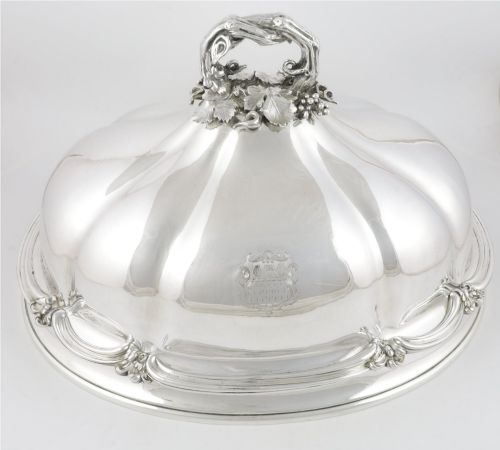
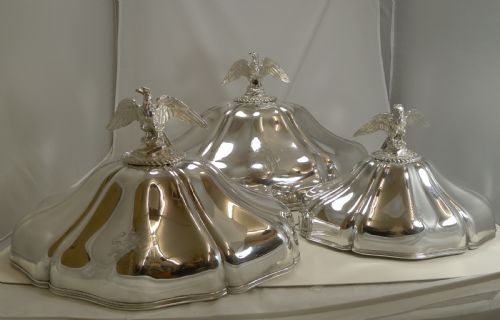
Handles and crests required casting and soldering separately onto the main dome body, creating secure grips and decorative motifs such as eagles.
A Duke's coat of arms on a dome reminds us that cold meat was once a serious political hazard.
What varies in quality
Quality rests in the weight of the metal, the crispness of applied handles, and the integrity of the original plating. Thicker metal holds heat better and resists denting from centuries of service.
Maker marks and armorial engravings elevate certain pieces, whilst balanced proportions and clean surfaces distinguish finer workshop output from standard utility items.
Roberts Cadman·Henry Wilkinson·Boulton·Durand Paris
The Antique Meat Cloche Glossary
- Old Sheffield Plate
- A method of fusing a thin sheet of silver to a thicker copper ingot before rolling and shaping. This technique leaves a characteristic copper seam visible on edges.
- EPNS
- Electro Plated Nickel Silver. A mid nineteenth century method where a layer of silver is deposited onto a nickel alloy base using electrical current.
- Cloche
- A bell shaped cover used in dining to keep food warm and protect it until carving. The term originates from the French word for bell.
- Game cover
- A smaller dome specifically sized for poultry, small game birds, or side dishes. These frequently appear in graduated sets.
Antique Meat Cloche: Frequently Asked Questions
What is an antique meat cloche used for?
These large metal domes sat over roast joints, poultry, or game on the dining table to retain heat and keep food protected between the kitchen and the carving. Footmen removed them just before carving and serving the meal.
Today, collectors utilise them as striking decorative centrepieces on sideboards or dining tables, where their reflective metal surfaces catch the light.
How do I tell Old Sheffield Plate from silver plate?
Old Sheffield Plate reveals a thin line of copper showing through where the silver layer has worn down on high points or edges. This technique involves fused sheets of silver and copper rather than electrical deposition.
Later silver plated items using EPNS show a greyish base metal where wear occurs, lacking the warm reddish tone of copper underneath.
How do I clean an antique meat cloche?
Careful cleaning requires a gentle silver cream and a soft cloth to preserve the remaining plating and any underlying copper. Avoid harsh dips that strip away historic character and tone.
Frequent light dusting keeps tarnish at bay without wearing down the soft metal surface of the dome.
What periods do these meat covers come from?
The pieces seen here span the Georgian, Regency, William IV, Victorian, and Edwardian periods. Earlier examples from the eighteenth and early nineteenth centuries often employ Old Sheffield Plate.
Later Victorian and Edwardian pieces frequently utilise newer electroplating methods on base metal alloys.