



Antique Platter Cover
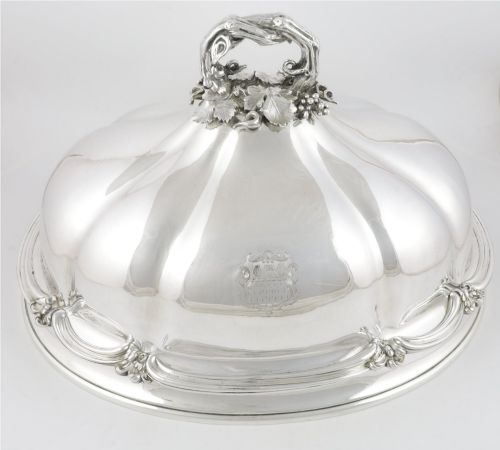
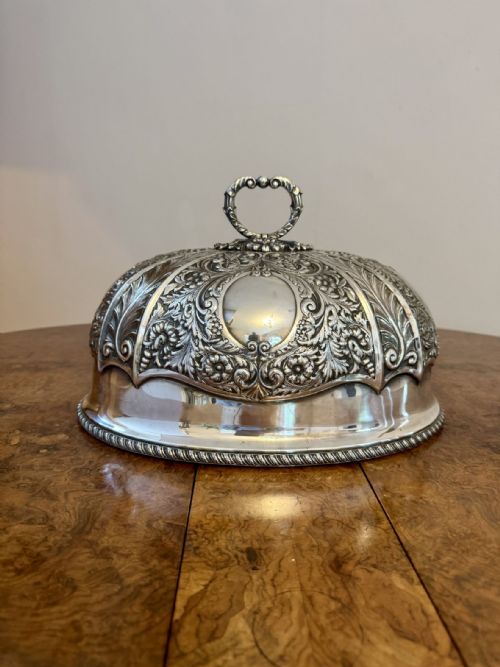
An antique platter cover keeps a roast warm at table, bringing heavy silver plate and Old Sheffield Plate directly into the dining room.
Antique Platter Cover
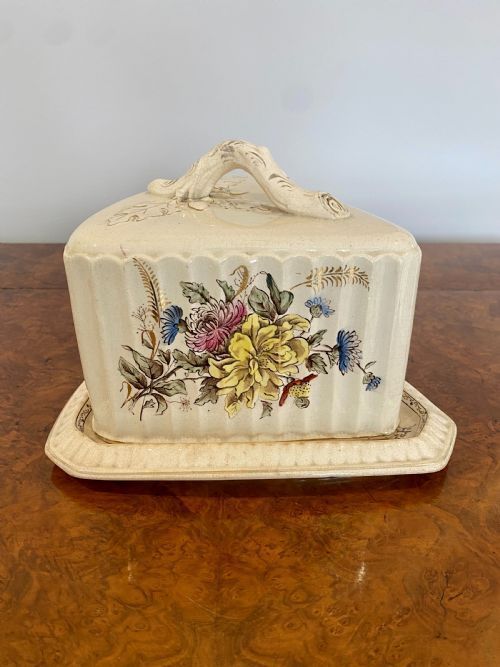
The search for an antique platter cover leads directly to heavy serving domes, meat covers, and entree dishes designed to protect food and retain heat. These pieces appear across Georgian, Victorian, and Edwardian periods, taking forms from simple rectangular dishes to large domed covers.
Most examples found here date from the nineteenth and early twentieth centuries, fashioned primarily in silver plate and Old Sheffield Plate. Makers shaped these pieces to cover joints of meat, game, or vegetables on formal dining tables.
Forms range from small game covers to grand graduated meat domes bearing crests or handles. The selection spans traditional European styles alongside distinct pieces like warming dishes and sauce tureens.
Materials and construction methods
Silversmiths built early covers using Old Sheffield Plate, fusing a thin layer of silver to a copper core. This technique produced durable items where the base metal occasionally peeks through wear on high points.
Later Victorian and Edwardian workshops utilised electroplating, depositing silver over a nickel silver or base metal foundation. This method allowed intricate chased decoration and applied borders to be fixed securely to the main body.
A duke's dinner table once relied on these very domes to keep the mutton warm.
Evaluating the standard of workmanship
Quality rests in the weight of the metal and the crispness of applied handles, crests, and cast borders. Finer domes feel substantial in the hand and maintain rigid structural integrity across large expanses of curved metal.
Attention to detail separates standard production items from workshop pieces bearing maker marks. Superior examples display careful hand-chasing and smooth interior surfaces free from excessive solder or repair.
Roberts Cadman·Henry Wilkinson·Boulton·Hamilton and Inches·Cresswick·Durand Paris
The Antique Platter Cover Glossary
- Old Sheffield Plate
- A material made by fusing silver to a copper ingot before rolling them into sheets together. This method creates a distinctive edge where the copper base is visible.
- Entree dish
- A shallow vessel with a removable cover used for serving side dishes or second-course items. These often feature shaped handles and decorative borders matching the main service.
- Meat dome
- A large domed cover designed to fit over a platter holding a roast or joint of meat. They keep food warm and direct steam back towards the centre of the dish.
- Electroplated Nickel Silver
- A base alloy of copper, nickel, and zinc coated with a layer of pure silver using an electrical current. This process became widespread during the Victorian period.
- Sauce tureen
- A small covered vessel equipped with handles and often a matching base stand, intended for serving gravies or sauces at the table.
Antique Platter Cover: Frequently Asked Questions
What is an antique platter cover used for?
These covers were placed over roasted meats, game, and side dishes on the dining table to preserve heat between courses. They kept food warm in large formal dining rooms before modern heated serving systems existed.
Today they function as decorative display pieces or practical serving items for large gatherings. Collectors often place them on sideboards or use them to cover large platters during dinner parties.
How do I tell Old Sheffield Plate from later silver plate?
Old Sheffield Plate shows a thin line of copper along cut edges or worn spots where the silver layer has thinned. This results from the fused sheet method used before electroplating became common.
Electroplated items show a uniform silver colour across all surfaces without the underlying copper tint. They generally date from the Victorian period onward when electrical deposition replaced fused plating.
How do I clean and polish an antique silver plated cover?
Use a gentle silver cream and a soft cloth to remove tarnish without scrubbing away the thin silver layer. Avoid abrasive dips that strip the remaining plate from the underlying metal.
Store pieces in dry conditions away from direct sunlight to minimise future tarnish buildup. Regular light dusting helps maintain the surface finish without requiring harsh cleaning.
How can I date an antique meat dome?
Dating relies on maker marks, style markers, and the manufacturing technique used on the body. Georgian pieces often show Old Sheffield Plate characteristics while Edwardian examples utilise electroplated nickel silver.
Engraved crests and handle designs also provide clues to the decade of manufacture. Comparing the weight and construction method helps narrow down the production period.