


Antique Food Cover
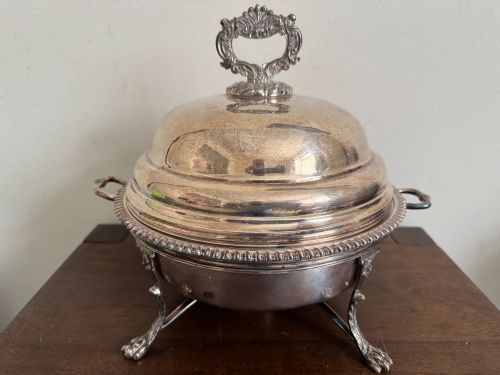
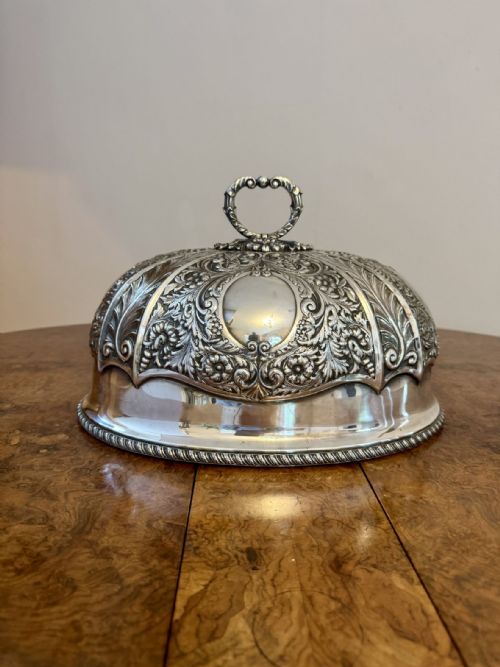
An antique food cover guards a roast or a cheese from cooling too fast, bringing silver shine or heavy ironstone to the dining table.
Antique Food Cover
An antique food cover serves to protect dishes upon the table, taking the shape of tall meat domes, cheese covers, and vegetable tureens. The pieces found here span the Georgian, Victorian, and Edwardian periods, reaching back into the nineteenth century with occasional twentieth-century examples.
Large meat domes dominate the metal selection, often forged in sets of graduated sizes or matched pairs. Alongside these stand heavy ceramic cheese domes with matching stands, as well as warming dishes, egg warmers, and cloches designed for formal dining.
The materials reflect the dining customs of their eras, shifting from early Old Sheffield plate and sterling silver through to later electroplated nickel silver and robust white ironstone pottery. Simpler metal sets in pewter also appear, showing how households of varying means protected their meals.
Metals and Ceramics on the Table
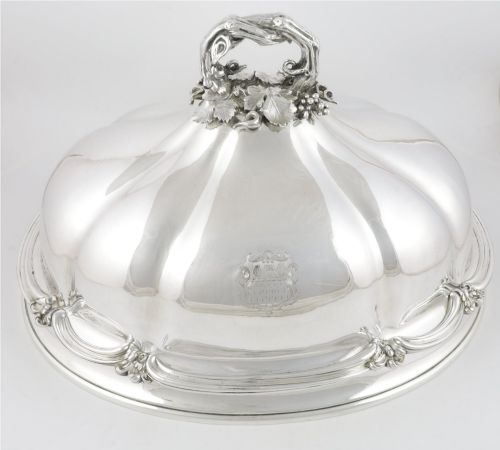
Metals form the core of these pieces, employing Old Sheffield plate where a thin sheet of silver is fused to a copper base, or later electroplating upon a nickel silver foundation. Solid sterling silver appears in high-ranking commissions, whilst pewter provides a durable alternative for simpler domestic service.
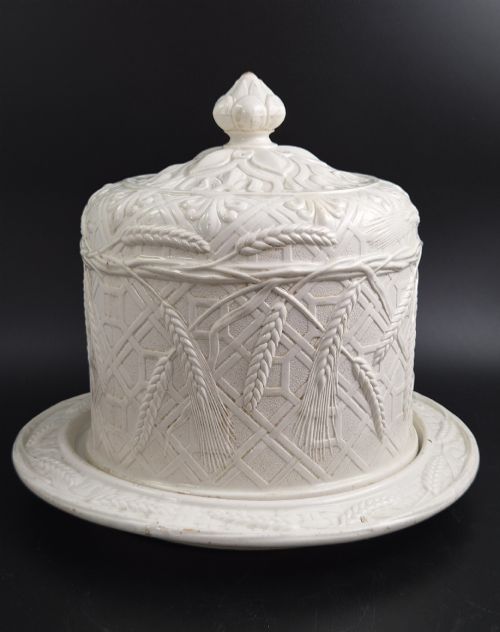
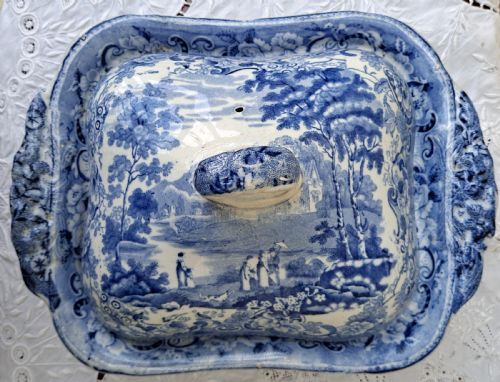
Ceramic examples rely upon heavy white ironstone and earthenware, moulded with relief patterns such as wheat and lattice or transfer-printed scenes. Potters fired these bodies at high temperatures to withstand the rigours of daily kitchen use and heated dining rooms.
Evaluating Form and Metalwork
Quality rests in the crispness of the chased decoration on metal domes, such as cast handles shaped as oak leaves, acorns, or eagles. Fine Old Sheffield plate reveals the subtle golden glow of underlying copper at high points where decades of polishing have worn the silver layer thin.
Ceramic quality shows in the depth of the glaze and the sharpness of moulded motifs on ironstone cheese stands and vegetable tureens. Maker marks from established potteries and silversmiths elevate a piece, as do matched graduated sets that survive complete.
Roberts Cadman·Henry Wilkinson·Boulton·Mappin and Webb·Dan Holy·Durand·Atkin Brothers·James Wallace Co·Copeland
The Antique Food Cover Glossary
- Old Sheffield Plate
- A composite metal made by fusing a thin sheet of silver to a thicker copper ingot, common before the invention of electroplating.
- EPNS
- Electroplated Nickel Silver, a manufacturing method introduced in the nineteenth century that coated a base metal alloy with a layer of pure silver.
- Meat Dome
- A large, domed cover placed over a platter of meat to retain heat and keep insects away before carving.
- Ironstone
- A heavy, durable type of earthenware patented in the nineteenth century, prized for its strength and bright white glaze.
- Cloche
- A bell-shaped cover, typically made of silver plate or glass, used to cover individual plates or small serving dishes.
Antique Food Cover: Frequently Asked Questions
What is an antique food cover used for?
These covers kept roasted meats, vegetables, and cheeses warm on the dining table before carving and serving took place.
They also protected the food from dust and drafts in large, drafty dining rooms of the nineteenth century.
How do I clean silver plated meat domes?
Use a gentle silver cream and a soft cloth to remove tarnish, avoiding harsh abrasive brushes that damage the plating.
Take particular care around cast handles and engraved crests where old polish can accumulate over the decades.
How can I tell Old Sheffield plate from EPNS?
Old Sheffield plate often reveals a faint reddish copper show-through along edges and high points where the silver has worn.
Electroplated nickel silver usually shows a grey or yellow base metal where the uniform silver coating has rubbed away entirely.