


Engraved Silver Cover
An engraved silver cover sits atop a grand dining table or desk, serving to protect food or sacred texts with considerable ceremony.
Engraved Silver Cover
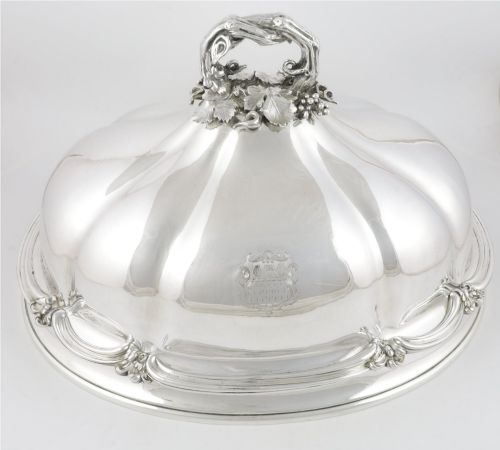
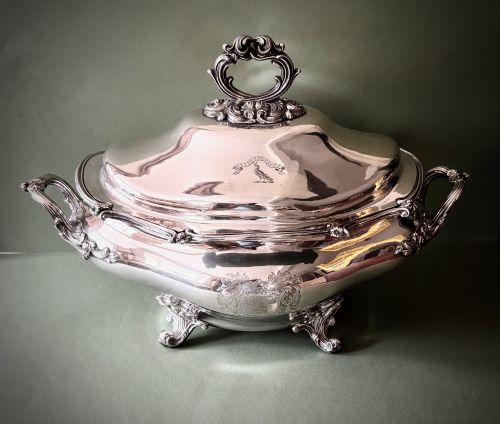
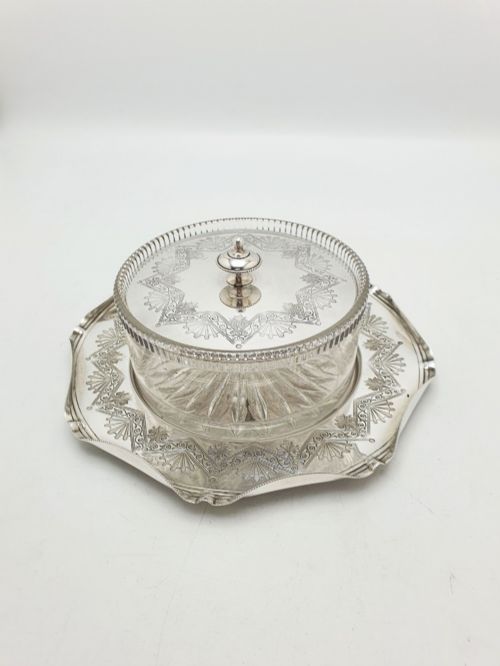
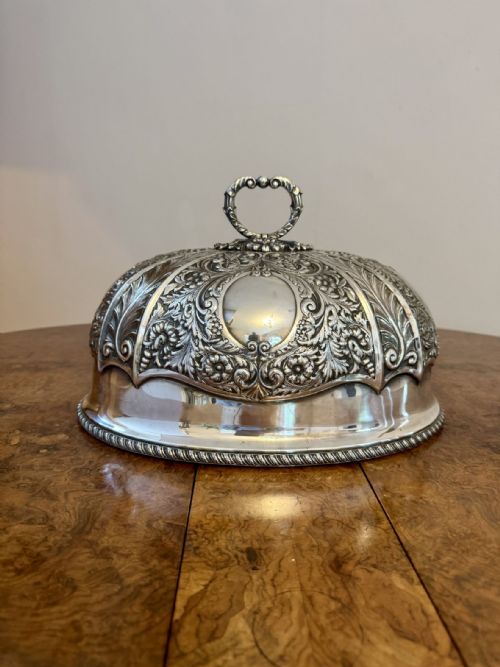
When you search for an engraved silver cover, you encounter large dining table serving pieces as well as small personal accessories. The most common forms on this page are meat domes, cloches, and entree dishes made for formal service.
The objects span several centuries, with pieces originating from the Georgian, Victorian, and Edwardian periods. Alongside solid sterling silver, you will frequently find silver plate, Old Sheffield plate, and EPNS.
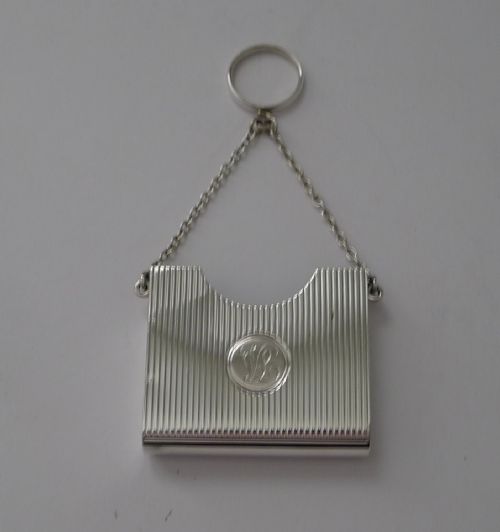
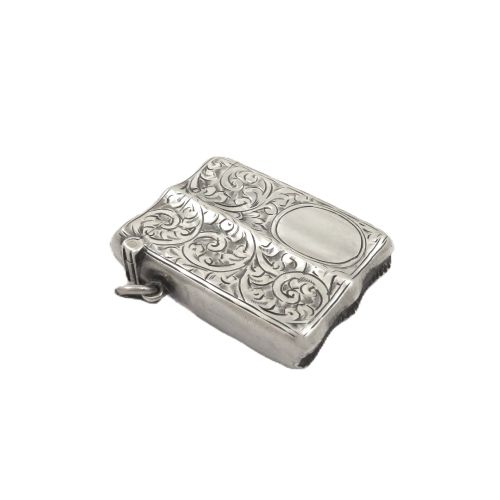
Beyond the dining table, the category embraces smaller items with protective lids, including vesta cases, match holders, and prayer book holders. These domestic items display fine hand engraving and crests, marking them out from plain utility vessels.
Materials and construction methods
Makers formed the larger meat domes and tureens by hammering and shaping copper fused with silver, known as Old Sheffield plate, or by depositing silver onto base metals via electroplating techniques. Solid sterling silver served for smaller items like prayer book holders and vestas, offering a heavier substance for intricate hand work.
Craftsmen applied surface decoration through manual engraving, chasing, and the insertion of crests and monograms into the metal. Structural elements such as cast handles, bezels, and applied rims were soldered onto the main body to complete the service pieces.
Listings include both solid sterling silver and silver-plated copper items spanning the Georgian, Victorian, and Edwardian eras.
Distinctions in quality
The standard of an engraved silver cover depends heavily upon the crispness of the hand-cut decoration and the weight of the underlying metal. Pieces by notable makers show deeper chasing, sharper armorial crests, and heavier gauge metal that resists denting.
Proportion and balance dictate the aesthetic success of large domes and entree dishes, where cast handles must sit securely and harmoniously on the cover. Preservation of the original plating or solid silver surface without excessive wear or modern re-plating marks the difference between average domestic utility and high workshop output.
Roberts Cadman·Sampson Mordan·William Bennett·Henry Wilkinson·Boulton·Elkington Co·Cresswick
The Engraved Silver Cover Glossary
- Cloche
- A bell-shaped cover used in dining service to keep food warm and protected at the table. These are frequently found in silver plate and Old Sheffield plate.
- Old Sheffield plate
- A composite material made by fusing a thin sheet of silver to a thicker base of copper. This technique was widely utilised before the invention of electroplating.
- Tureen
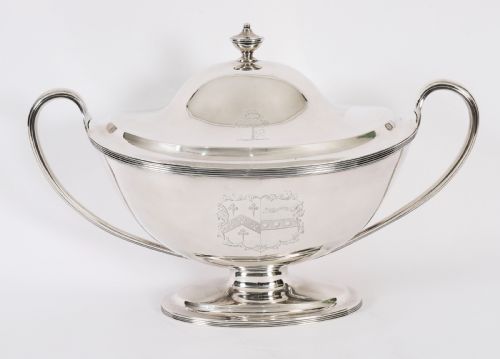
- A deep serving bowl with a matching cover, used for soups, sauces, or vegetables. Examples appear in both solid silver and silver plate.
- EPNS
- Electroplated nickel silver, a common base metal method introduced in the nineteenth century for producing affordable plated wares.
Engraved Silver Cover: Frequently Asked Questions
What is a meat dome used for?
A meat dome covers large joints of meat on a serving platter to retain heat and keep food warm before carving at the dining table.
These large covers also protected food from dust and insects in formal dining rooms before the widespread use of modern kitchen facilities.
How do I clean engraved silver?
Clean silver items using a soft cloth and a specialised silver polish designed to remove tarnish without abrading the delicate hand engraving.
Avoid harsh scrubbing around engraved lines and crests where polish residue can accumulate and dull the detail.
What is Old Sheffield plate?
Old Sheffield plate is an early nineteenth-century material created by fusing silver to a copper core under high heat.
This method produces a distinctive layered edge where the underlying copper occasionally shows through with age.
How do I date a silver cover?
Dating relies on maker marks, assay office symbols, and stylistic indicators such as Regency or Victorian decorative motifs.
Pieces without hallmarks require stylistic comparison with documented domestic silver and plated wares from the same period.