
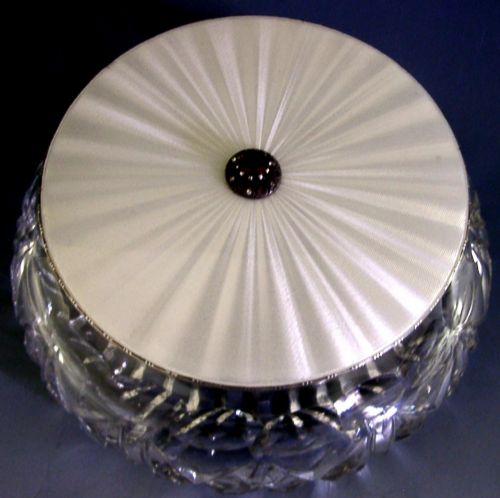


Silver Lid Trinket Pot
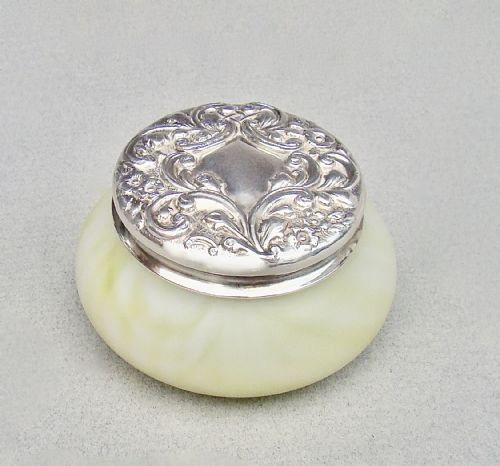
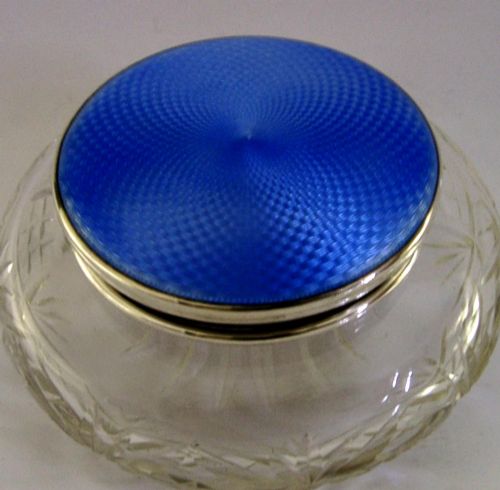
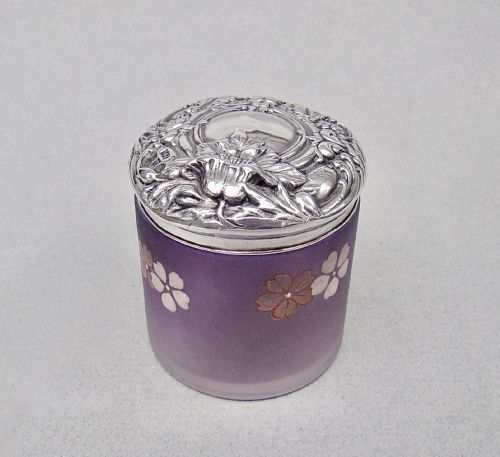
These silver lid trinket pot examples range from Edwardian dressing table jars to Art Deco glass vessels, offering tactile desktop storage.
Silver Lid Trinket Pot
A silver lid trinket pot is a small lidded vessel designed for dressing tables, desks and cabinets to hold pins, rings, and small cosmetics. When searching this phrase, a buyer encounters a diverse mix of forms spanning the nineteenth century through the mid-twentieth century.
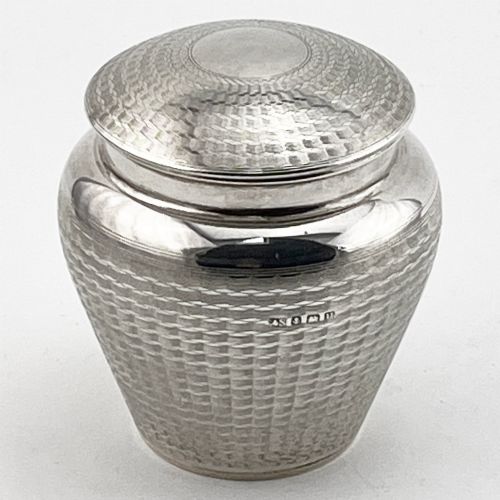
The selection on this page relies heavily on Edwardian and early twentieth century pieces, frequently combining sterling silver mounts with glass or enamel bodies. Alongside standard circular trinket boxes, the inventory includes dressing table jars, vanity jars, tea caddies, and pot pourri baskets.
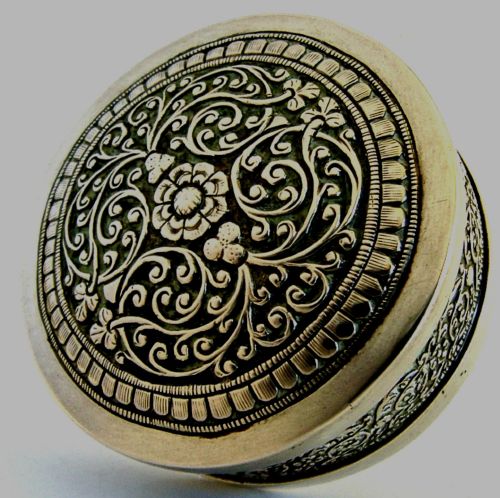
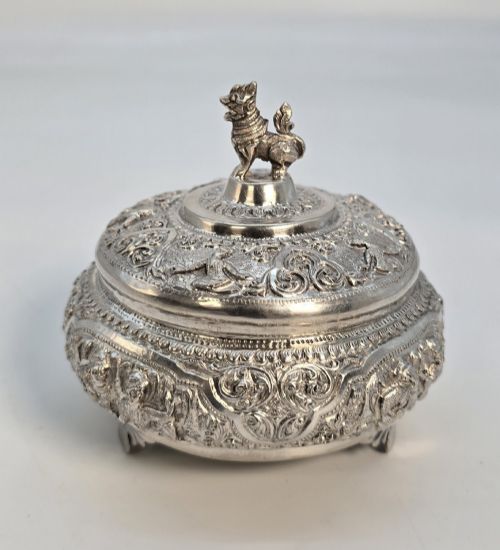
Regional variations appear alongside domestic British wares, featuring solid silver boxes from the Raj period in India and French glass vessels. These diverse origins provide collectors with options ranging from heavy cut glass containers to intricately patterned colonial silver boxes.
How they were made
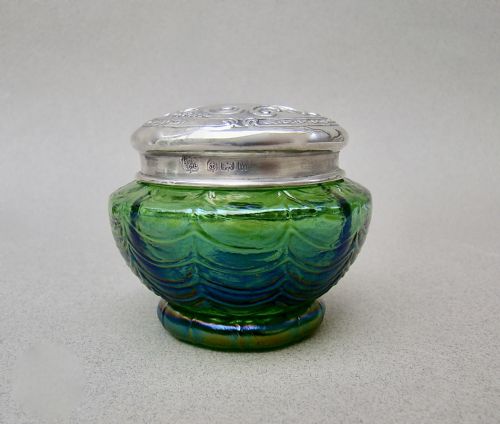
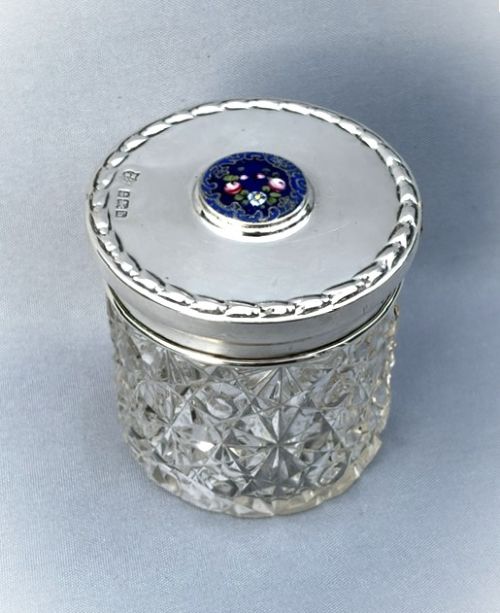
The construction typically pairs a solid sterling silver lid with a body formed from cut glass, crystal, satin glass, frosted glass, or coloured glass such as cranberry, amethyst, and Kralik glass. Metalwork elements often incorporate hand-applied enamel decoration, while certain pieces substitute glass bodies entirely with solid silver or incorporate tortoiseshell panels.
Silversmiths utilised traditional stamping, chasing, and mounting techniques to secure the silver rims and lids onto the glass or organic bodies. Makers marked these sterling silver components with hallmarks denoting the assay office, such as Birmingham or Chester, alongside date letters spanning the Edwardian era to the mid-century.
Materials represented across these listings include sterling silver, glass, enamel, cut glass, tortoiseshell, satin glass, and frosted glass.
What varies in quality
Quality in a silver lid trinket pot reveals itself in the weight of the metal, the clarity and depth of the glass cutting, and the crispness of any enamel work. Heavy, thick crystal or satin glass bodies provide a substantial feel that distinguishes them from lighter, simpler pressed glass alternatives.
The integration between the silver lid and the vessel body also indicates standard, where a snug, well-fitted mount shows careful craftsmanship by the silversmith. Furthermore, intricate hand-applied guilloche enamel or detailed repoussé decoration on Indian colonial silver boxes elevates the artistic merit of the piece.
A. J. Pepper & Co·A. Bromet & Co
The Silver Lid Trinket Pot Glossary
- Sterling silver
- A silver alloy containing 92.5 percent pure silver by mass and 7.5 percent other metals, usually copper. This standard composition forms the metal lids and mounts for the majority of these pots.
- Cut glass
- Glass decorated by cutting facets or patterns into the surface using a rotating wheel. This technique adds considerable weight and sparkle to vanity jars and dressing table pots.
- Guilloche enamel
- A decorative engineering technique where a precise, intricate pattern is mechanically engraved into a metal surface beneath a translucent layer of enamel. It appears frequently on the lids of dressing table pieces.
- Tortoiseshell
- The shell of certain turtle species used historically as an ornamental material inset into silver lidded boxes. Its rich amber and brown mottling provides a striking contrast against polished sterling silver.
- Pot pourri basket
- An open or lidded receptacle designed to hold dried flowers and plant material scented with oils. These perforated or woven silver baskets serve a similar decorative vanity function to standard trinket pots.
Silver Lid Trinket Pot: Frequently Asked Questions
What were silver lidded trinket pots used for?
These lidded vessels served primarily on dressing tables and vanity surfaces to store small personal items such as hairpins, rings, brooches, and loose powder or rouge. Wealthy owners kept them close at hand for daily grooming routines.
Over time, their uses expanded to include desktop storage for stamps and trinkets, or as decorative containers for dried flower petals in the case of pot pourri baskets.
How do I date an Edwardian glass trinket box?
Dating relies primarily on the hallmarks stamped into the sterling silver lid or mount, which indicate the specific assay office and the active year of the silversmith. Style indicators also help, as Edwardian pieces often favour flowing Art Nouveau contours or bright-cut floral engraving.
Comparing the glass manufacturing style, such as heavy cut crystal or satin glass, further narrows the production window to the early twentieth century.
How should I clean a silver lid and glass pot?
Cleaning requires separating the maintenance of the silver mount from the glass body to avoid damaging fragile enamel or tortoiseshell inserts. Use a soft cloth and a gentle, non-abrasive silver polish on the metal while keeping moisture away from glued joints.
The glass portion can be washed gently in warm soapy water and dried thoroughly with a lint-free cloth to restore its original clarity.
How do I distinguish British hallmarked pieces from colonial silver?
British pieces feature official town marks, date letters, and the lion passant sterling standard mark applied by assay offices like Birmingham or Chester. These punches provide a precise record of origin and year of manufacture.
Colonial items, such as those from the Raj period in India, often feature local artisan stamp marks or makers' names rather than standard British assay office hallmarks, showing denser repoussé work depicting local flora and fauna.