



Silver Keepsake Casket
A silver keepsake casket guards personal treasures with enduring British craftsmanship and weight.
Silver Keepsake Casket
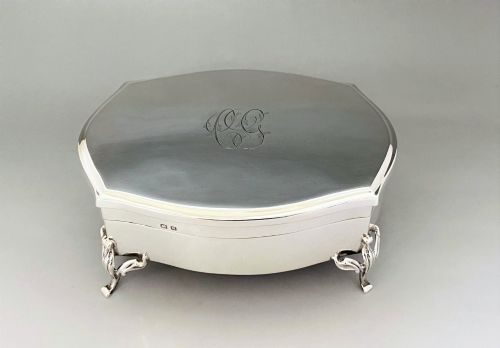
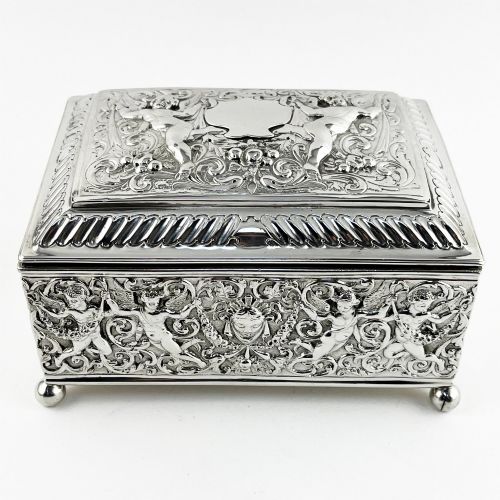
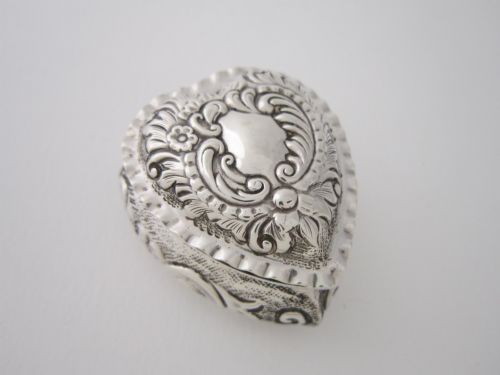
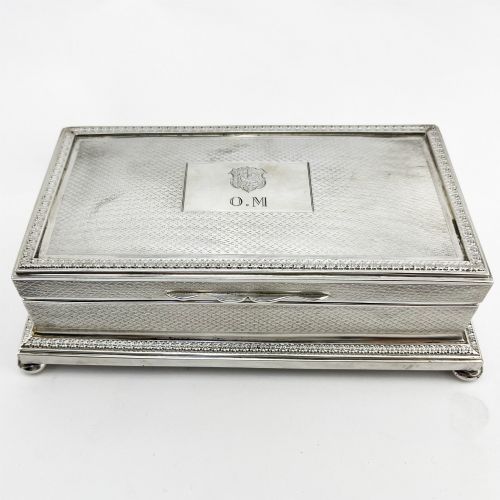
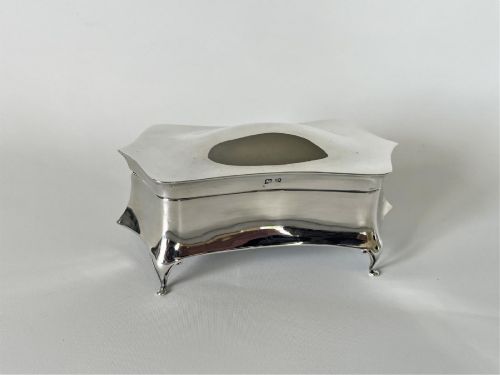
A silver keepsake casket serves to hold jewellery, trinkets, and small valuables upon a dressing table or desk. Buyers seeking a silver keepsake casket encounter diverse forms ranging from compact heart-shaped receptacles to substantial fitted table boxes.
The selection encompasses Victorian and Edwardian examples alongside Art Deco and Arts and Crafts designs. Most pieces on this page originate from the nineteenth and twentieth centuries in sterling silver, silver plate, and mixed media.
Makers frequently shaped these receptacles to house specific items such as rings, cufflinks, or cigars. Their domestic purpose combined practical storage with decorative display in the period interior.
Materials and Construction Methods
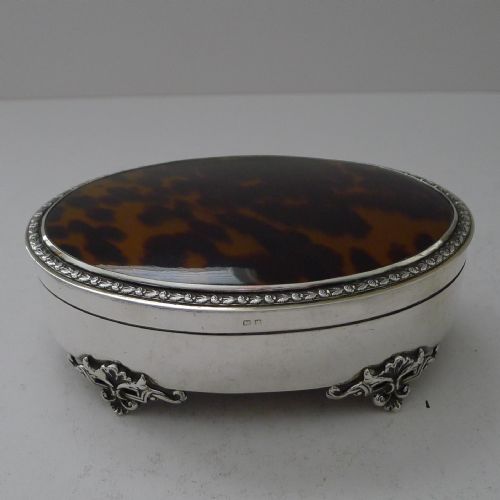
Silversmiths utilised sterling silver and solid silver alongside silver plate, often mounting the metal over wooden or steel carcases. Tortoiseshell, mother-of-pearl, and ebonised wood frequently appear as contrasting panels or inlay work.
Techniques varied from hand-beaten and riveted surfaces seen in Arts and Crafts examples to engraved floral scrolls on Edwardian boxes. Makers also employed casting, piercing, and cloisonné enamel to enrich the exterior of the caskets.
Listings feature sterling silver, silver plate, tortoiseshell, wood, and steel across Victorian, Edwardian, and Art Deco styles.
Distinctions in Quality
Quality rests upon the thickness of the silver sheet and the precision of the joinery in the underlying box structure. Superior pieces retain well-fitted hinges and intact interior velvet or silk linings.
The artistic merit of surface decoration distinguishes finer examples from utilitarian containers. Hand-chased motifs and signed maker's marks elevate a box above standard mass-produced output.
Mappin and Webb·A and J Zimmerman Ltd·Walker and Hall·Deakin and Francis
The Silver Keepsake Casket Glossary
- Sterling silver
- An alloy containing 92.5 percent silver by mass, with other metals constituting the remainder. This standard ensures durability while maintaining high purity.
- Tortoiseshell
- The mottled shell of certain turtle species utilised as an overlay on boxes. It provides a rich brown and amber backdrop for silver mounts.
- Silver plate
- A layer of silver applied to a base metal core such as copper or brass. This method offered a bright metallic finish at a lower cost than solid silver.
- Cloisonné
- An ancient technique where enamel powder is fired within wire compartments soldered to a metal base. It creates vibrant coloured patterns across the casket surface.
Silver Keepsake Casket: Frequently Asked Questions
What fits inside a silver keepsake casket?
These caskets hold small personal valuables such as rings, brooches, cufflinks, and keepsakes. Many feature fitted interiors specifically designed for table storage.
Larger variations accommodate cigars, tobacco, or letters depending on the original domestic function of the box.
How do I identify the period?
Hallmarks stamped on the metal provide the most reliable guide to the date and origin of silver caskets. Assay office marks and maker's stamps narrow down the year of manufacture.
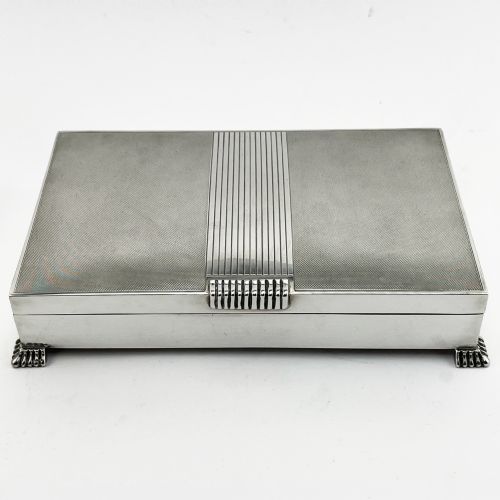
Stylistic cues such as geometric Art Deco lines or flowing Victorian floral scrolls further indicate the era.
Are these boxes lined with fabric?
Many surviving examples retain their original velvet, silk, or satin linings to protect delicate jewellery. Some interiors include fitted trays or compartments for specific accessories.
Over time, original fabrics may show wear or require replacement depending on the handling of the piece.
Did other materials besides silver get used?
Makers frequently combined silver with tortoiseshell, mother-of-pearl, wood, and steel. Arts and Crafts pieces often utilise beaten pewter and enamel alongside base metals.
These mixed-media constructions provided visual contrast and texture to the exterior of the casket.