


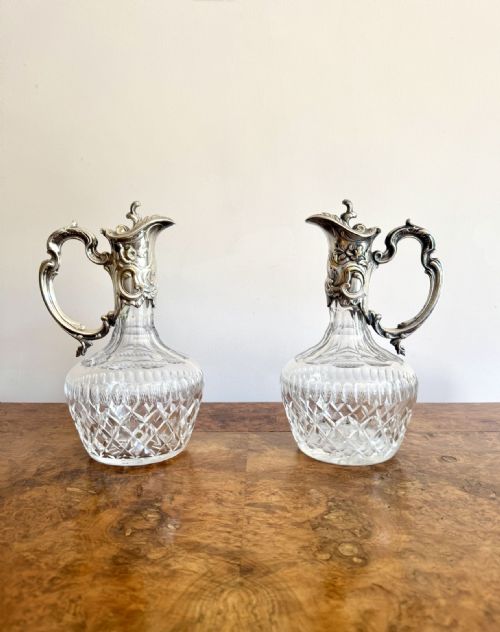
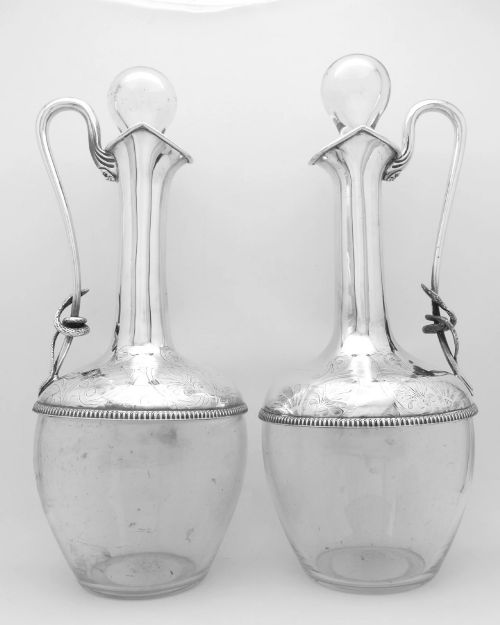
Silver Glass Wine Decanter
A silver glass wine decanter brings together heavy crystal and gleaming metal for the dining table.
Silver Glass Wine Decanter
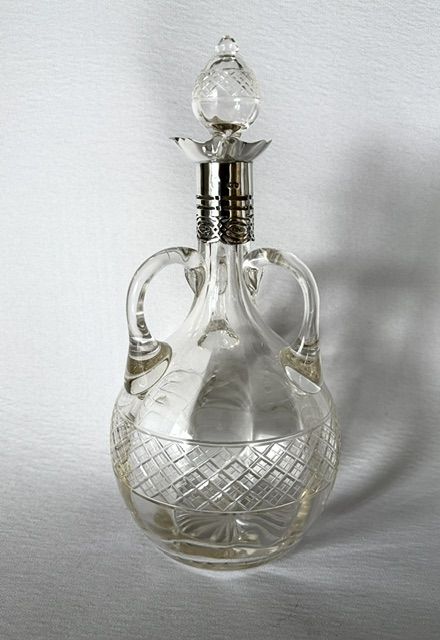
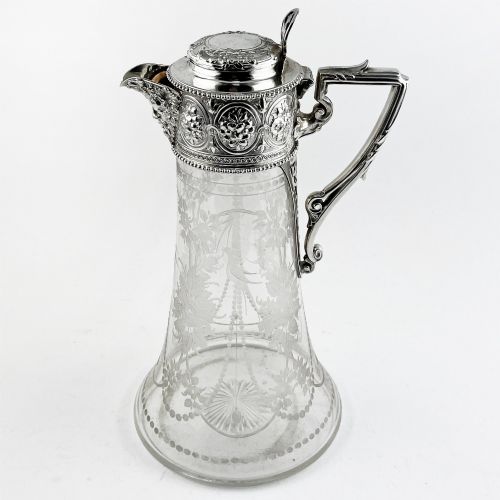
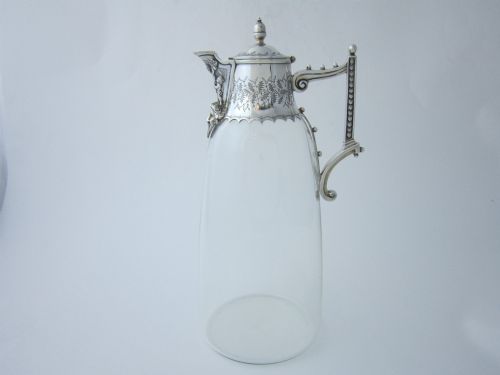
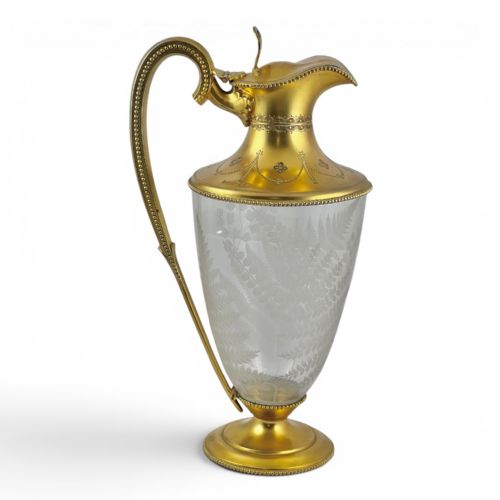
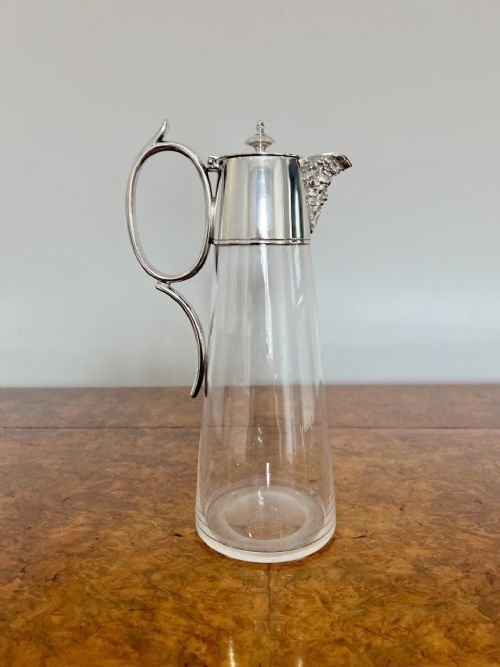
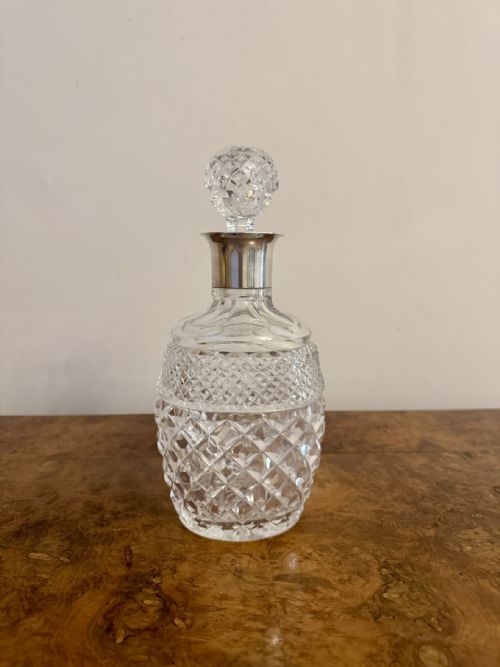
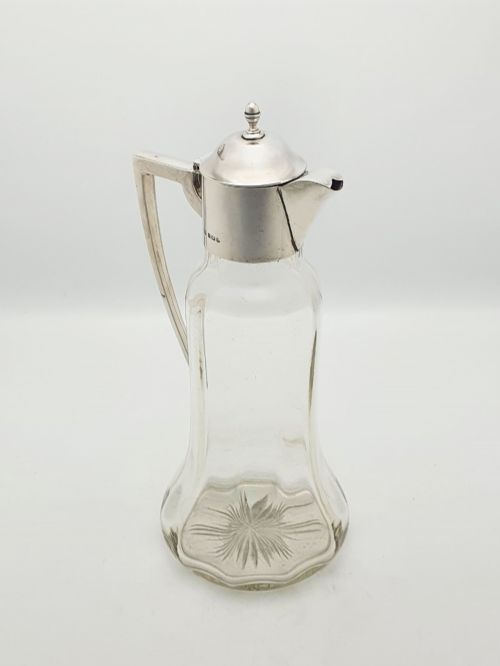
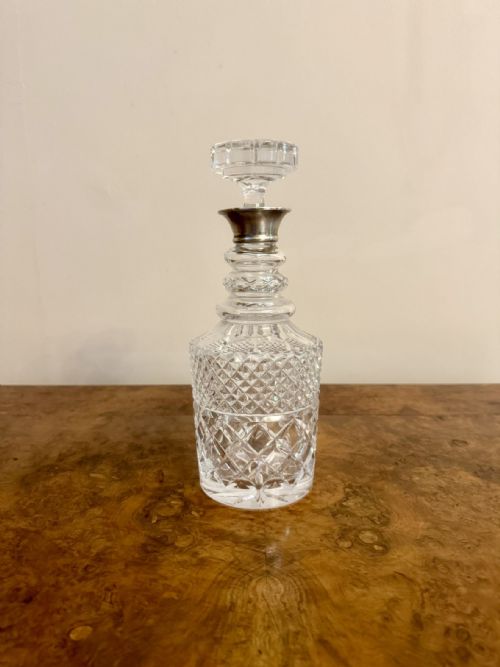
A silver glass wine decanter combines a glass or crystal body with silver or silver-plated mounts, collars, and handles. These serving vessels span the Victorian and Edwardian periods, alongside pieces from 1860, 1870, 1880, 1890, 1900, 1910, and 1920.
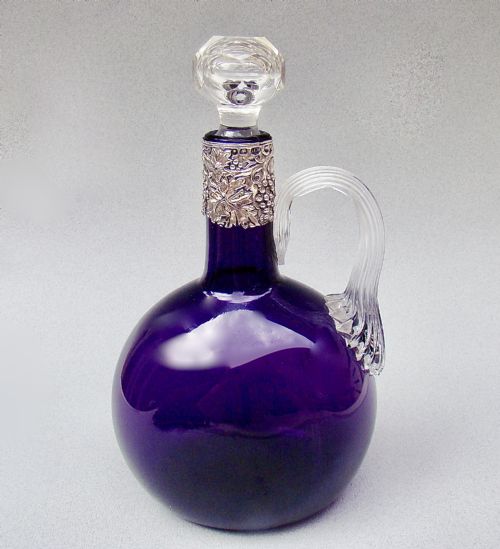
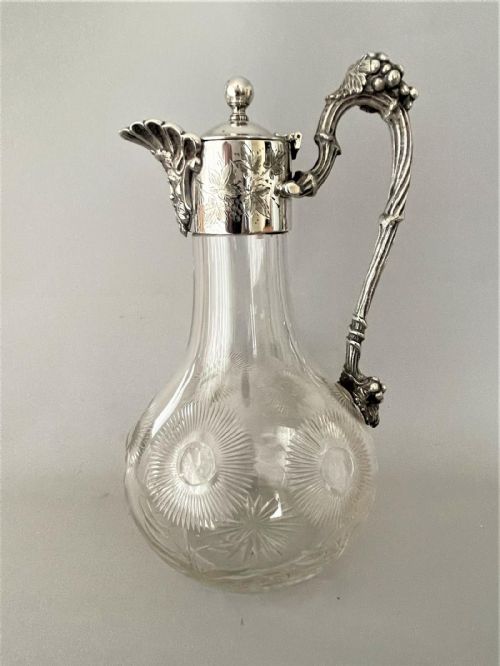
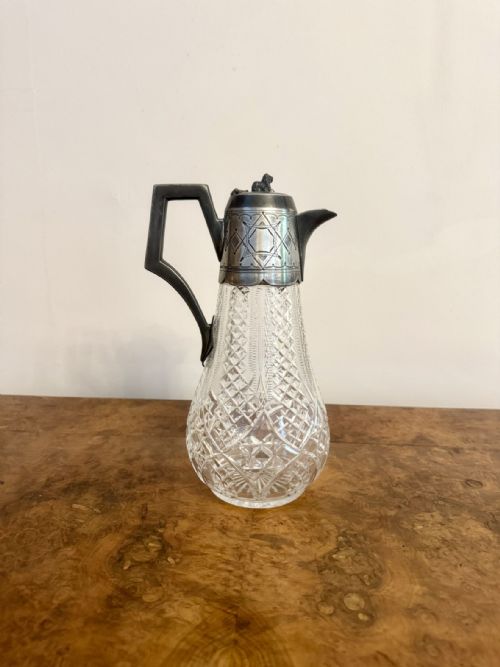
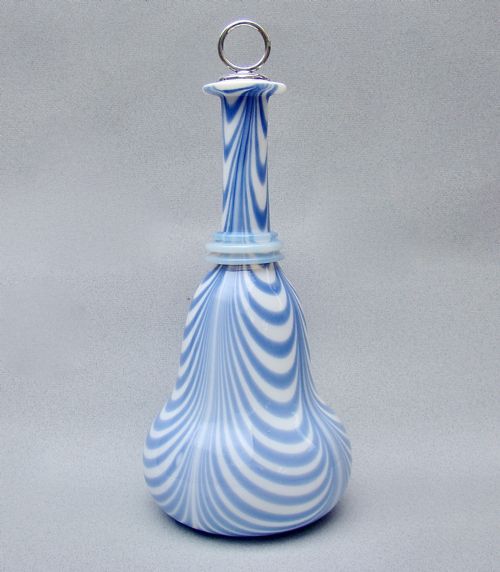
The selections here range from tall claret jugs and spirit bottles to shaped carafes, ewers, and wine pitchers. Collectors encounter standard clear cut glass alongside colourful bodies in amethyst, cranberry, green, and blue glass.
Victorian examples often feature elaborate floral engraving and rococo revival styling, while Edwardian pieces lean towards cleaner collars and simpler cut crystal forms. Makers such as Henry Matthews and firms like Asprey and Co. Ltd contributed notable marked examples to this tradition.
How they were made
Makers shaped the glass bodies using blowing techniques, sometimes incorporating Nailsea patterns or introducing metal oxides to colour the molten material in shades of green, blue, and amethyst. Workers then cut geometric patterns into the cooled crystal surfaces using heavy wheels.
Silversmiths formed the mounts, spouts, and hinged lids from sterling silver, silver gilt, or silver plate over a base metal. Artisans attached these collars securely to the glass necks, often adding cast handles shaped like serpents or mythological masks.
Some Victorian decanters feature fierce Bacchus masks or winding serpents gripping the handle as if guarding the wine.
What varies in quality
The clarity and depth of the cut crystal body distinguish standard vessels from finer specimens, where sharper facets catch the light more cleanly. Heavier glass weights and well-balanced proportions indicate superior production standards.
The execution of the silver mount marks the divide between utilitarian items and exceptional works. Crisp chasing on floral motifs, secure hinge mechanisms, and clear hallmarks from makers like Henry Matthews elevate the overall standard of a piece.
Asprey and Co. Ltd·Henry Matthews
The Silver Glass Wine Decanter Glossary
- Claret jug
- A tall pouring vessel specifically designed for serving red wine at the dining table. These pieces usually feature a hinged silver lid and a sturdy handle attached to a glass body.
- Silver plate
- A manufacturing method where a thin layer of silver is fused to a base metal core such as copper or Britannia metal. This technique provided the appearance of solid silver at a lower cost during the nineteenth century.
- Sterling silver
- An alloy consisting of ninety-two point five percent silver and seven point five percent other metals, typically copper. British pieces made from this standard bear official assay office hallmarks.
- Cranberry glass
- A transparent red glass created by adding gold chloride to the molten batch. It appears frequently in Victorian tablewares and decanters.
- Ewer
- A large jug with a wide spout and a curved handle, traditionally used for holding and pouring liquids. In antique dining contexts, these vessels function similarly to decanters.
Silver Glass Wine Decanter: Frequently Asked Questions
What is the difference between a claret jug and a decanter?
A claret jug incorporates a handle and a hinged pouring spout designed for immediate service at the table. Decanters typically feature a stopper and a flat base intended for storing and pouring various spirits.
Both forms utilise glass bodies paired with silver collars, though jugs require more complex metalwork around the lid mechanism.
How do I date a silver glass wine decanter?
Examine the silver mounts for British hallmarks, which include date letters indicating the precise year of assay. Stylistic clues such as Aesthetic Movement engraving or Edwardian proportions also help narrow down the decade of production.
Compare the depth of the glass cutting and the weight of the metal components against known production periods. Pieces without hallmarks rely entirely on material characteristics and design style for attribution.
Are coloured glass decanters older than clear ones?
Coloured glass appeared across multiple eras, with rich amethyst, green, and blue vessels produced throughout the nineteenth and early twentieth centuries. Specific hues often correlate with particular revival styles rather than strict age.
Clear cut crystal remained popular across both the Victorian and Edwardian periods alongside tinted alternatives. Makers selected colours based on contemporary dining fashions rather than chronological progression.