



Silver Food Dome
A silver food dome keeps a roasted joint warm at the table, bringing nineteenth-century splendour to grand dining.
Silver Food Dome
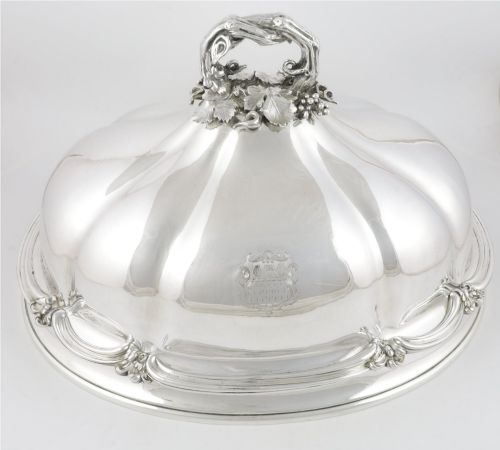
A silver food dome covers roasted meat, poultry or entrees at the dining table, retaining heat between the kitchen and the guests. When searching for a silver food dome, buyers encounter substantial covers shaped as meat domes, game covers and cloches. These impressive serveware items appear in forms ranging from single Georgian examples to graduated sets created for large Victorian feasts.
The material composition spans solid silver, Old Sheffield Plate and later silver-plated base metals such as EPNS and electroplated nickel silver. Pieces frequently display styles from the Georgian, Regency, Victorian and Edwardian periods, alongside French works by makers like Durand and Christofle. Most items date from the nineteenth century, reflecting an era when elaborate dining rituals demanded polished metal covers on the sideboard.
Materials and construction methods
Early examples utilise Old Sheffield Plate, a technique fusing a thin sheet of silver onto a thick copper core, often leaving visible copper edges where the metal was worked. Later nineteenth-century pieces rely on electroplating, depositing a layer of silver onto nickel silver or base metal using electrical current. Solid silver iterations remain less common, reserved for the highest social ranks and major domestic commissions.
Smiths formed these large domes by hammering or spinning sheets of metal over wooden or iron stakes before chasing and engraving surface decoration by hand. Handles, crests and borders were cast separately and soldered or riveted securely to the top of the dome, ensuring the piece could withstand heavy daily use in busy dining rooms.
Listings feature items from the Georgian, Victorian and Edwardian periods, utilising Old Sheffield Plate, silver plate and copper.
Judgments of quality in domes
Quality rests upon the weight of the metal and the integrity of the plating, distinguishing heavy, durable forms from light, easily dented items. Superior pieces retain substantial silver content over their copper or nickel cores, avoiding the base metal breakthrough that occurs through excessive polishing over generations.
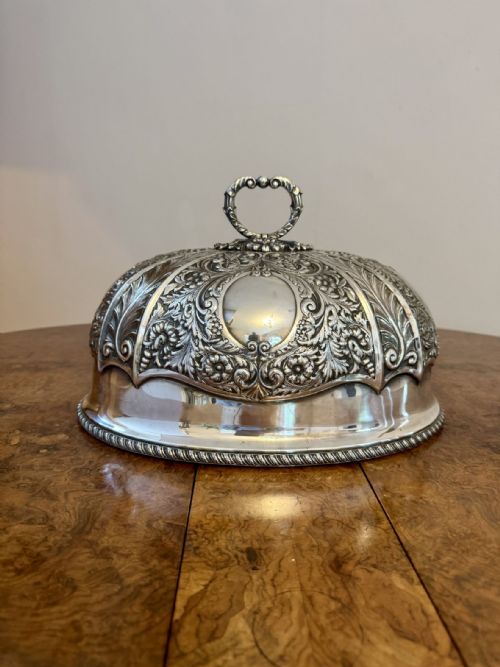
Artistry in the decorative work separates standard production from exceptional pieces. The finest examples feature crisply cast handles, deeply chased foliage, heraldic crests and hand-engraved fern or scroll motifs executed with precision by skilled silversmiths.
Roberts Cadman·Henry Wilkinson·Mappin and Webb·Boulton·Durand·Christofle·Atkin Brothers
The Silver Food Dome Glossary
- Old Sheffield Plate
- An early method of fusing silver to a copper ingot before rolling them into sheets together. This technique produces characteristic copper lines along cut edges.
- EPNS
- Electroplated nickel silver, a nineteenth-century manufacturing process that applied a thin coating of silver onto a durable copper, nickel and zinc alloy base.
- Cloche
- A bell-shaped cover designed to keep food warm on a plate or platter. The term derives from the French word for a bell.
- Entree Dish
- A shallow serving vessel often accompanied by a matching cover for presenting courses between the main joints at formal dinners.
- Game Cover
- A smaller domed cover specifically intended for presenting wildfowl, partridge or pheasant at the table. These items frequently display chased foliage or animal motifs.
Silver Food Dome: Frequently Asked Questions
What is a silver food dome used for?
These covers kept roasted joints warm while being transported from the kitchens to the dining table. They also protected the food from dust and insects in large country houses.
Today, collectors use them as decorative sideboard centrepieces or repurpose them for modern dinner parties to serve large roasts.
How do I tell Old Sheffield Plate from silver plate?
Old Sheffield Plate reveals a thin line of reddish copper where the base metal shows through wear along the edges or seams. Electroplated pieces show a dull grey base metal rather than warm copper beneath worn silver.
Sheffield plate manufacture ceased after the introduction of electroplating around the middle of the nineteenth century.
Were these pieces made in sets?
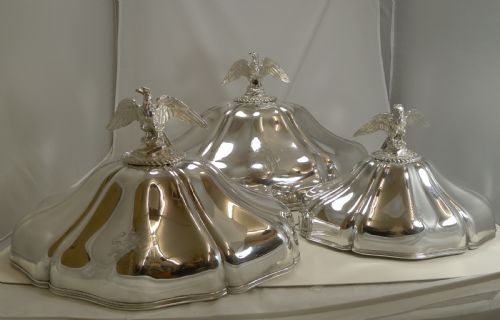
Domes were frequently manufactured in graduated sets, where several covers fit neatly inside one another for storage. Single large meat domes were also made individually for specific households.
Complete matched sets bearing identical family crests or monograms command particular interest among collectors.
How should I clean my silver dome?
Wash the dome gently in warm water using mild soap and a soft cloth to remove dust and oils. Avoid abrasive pastes, especially on silver-plated items, to prevent wearing through the thin silver layer.
Store the piece in a dry environment away from direct sunlight to minimise tarnishing over time.