



Silver Meat Cloche
A silver meat cloche is a grand table dome used to keep joints and roasts warm, bringing formal dining history straight to the sideboard.
Silver Meat Cloche
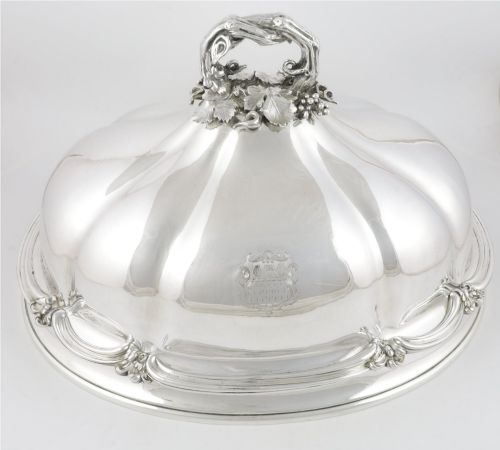
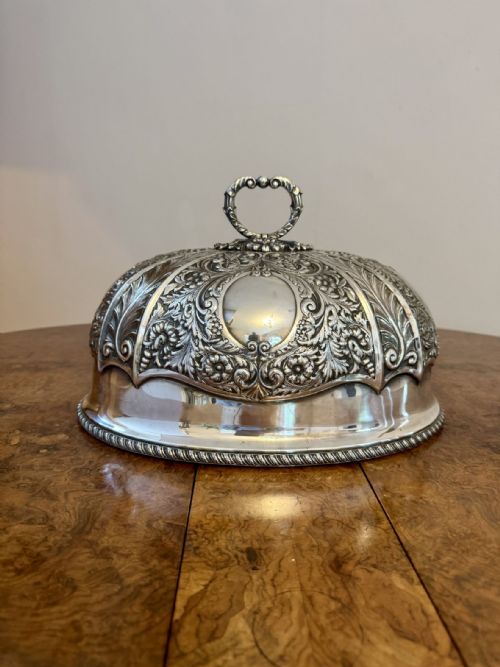
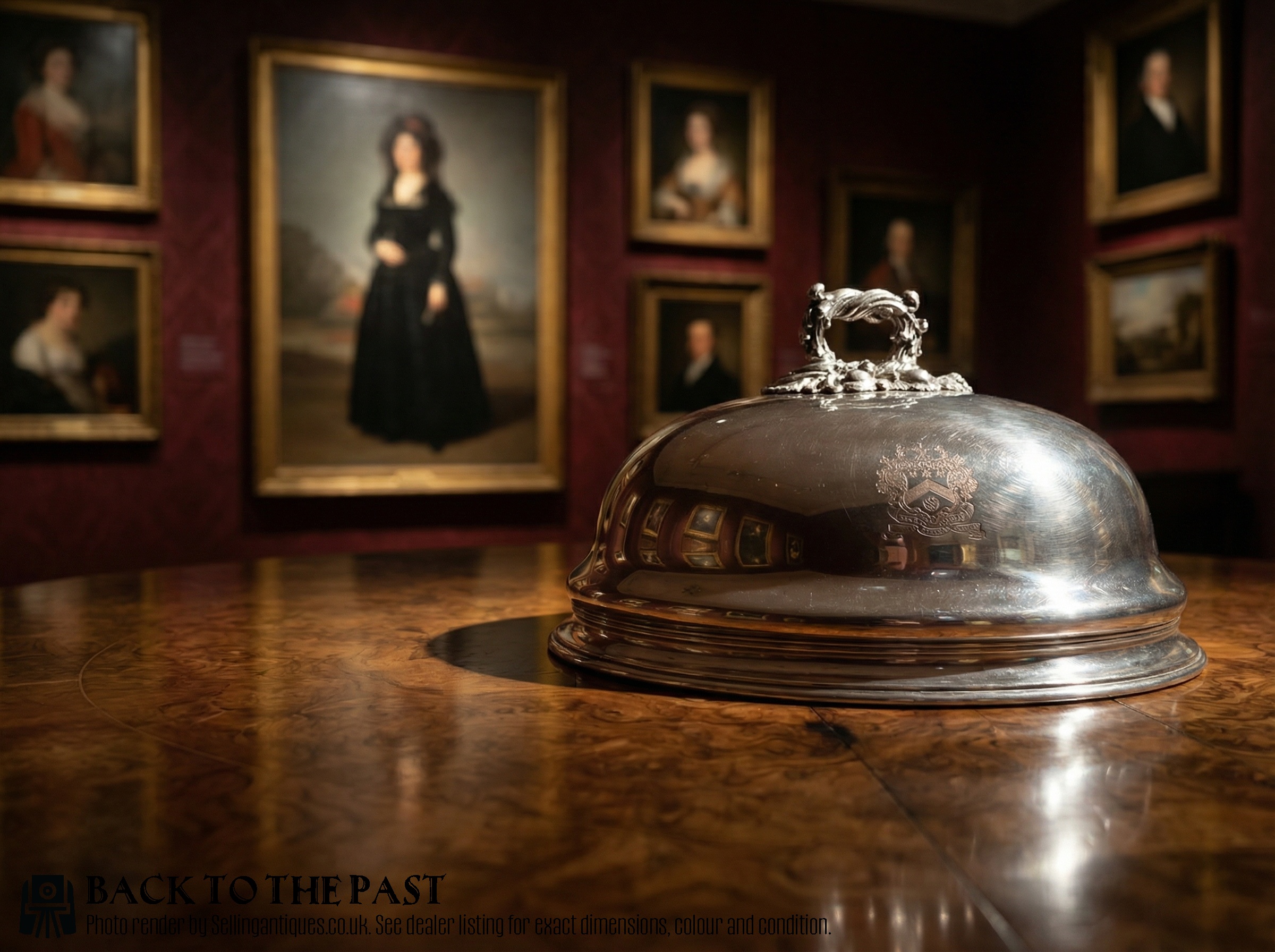
A silver meat cloche appears on the table as a substantial dome designed to cover roasts, joints, and game before carving. These pieces arrive in forms such as meat domes, serveware, meat covers, and dish covers, spanning periods from the Georgian era through to the Edwardian period and Victorian times.
The versions most commonly met on this page include Old Sheffield Plate and silver plate examples, often fashioned during the 19th century. Makers and houses like Roberts Cadman, Henry Wilkinson, Boulton, and Durand of Paris produced these domes in Regency, Georgian, Victorian, Edwardian, William IV, and French Restoration styles.
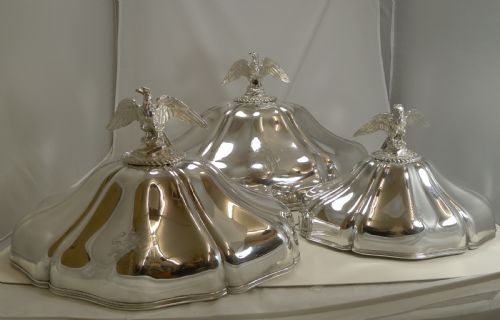
Buyers encounter single domes alongside pairs and graduated sets that fit neatly over platters of decreasing size. Each piece reflects the formal dining habits of past centuries, when large joints arrived at the table concealed beneath heavy metal covers.
How they were made
Makers formed these domes using silver, silver plate, Old Sheffield Plate, EPNS, copper, and base metal, frequently applying methods that fused silver layers to copper cores. This Old Sheffield technique created durable surfaces where the underlying metal shows only through decades of careful polishing.
Engraving often adorns the body, displaying family crests or decorative borders that mark the status of the original owners. Handles cast in heavy metal provide a secure grip for lifting the dome from the hot platter.
Listings feature pieces spanning the Georgian, Regency, Victorian, and Edwardian periods, utilising silver plate, Old Sheffield Plate, and copper.
What varies in quality
The weight of the metal and the crispness of cast handle details separate standard production from exceptional pieces. Heavier domes maintain heat more effectively and retain their structural integrity over generations of service.
The presence of rubbed-in silver hallmarks, maker stamps like Boulton or Wilkinson, and original heraldic crests elevate an example. Graduated sets that remain complete with matching proportions command particular attention.
Roberts Cadman·Henry Wilkinson·Boulton·Durand Paris
The Silver Meat Cloche Glossary
- Old Sheffield Plate
- A fused composite material made by melting a thin sheet of silver onto a thicker copper base before rolling them together. This method predates modern electroplating and leaves characteristic copper edges.
- EPNS
- Electroplated Nickel Silver, a base metal alloy coated with a layer of pure silver through an electrical process. This technique became common during the Victorian era for domestic serveware.
- Cloche
- A bell-shaped cover traditionally placed over food dishes to retain heat and aromas on the dining table. The term derives from the French word for a bell.
- Game Cover
- A specialised dome intended for smaller birds and venison rather than large joints of meat. These pieces often appear in graduated sets.
Silver Meat Cloche: Frequently Asked Questions
How do I clean a silver meat cloche?
Use a gentle silver cream and a soft cloth to preserve the plating and any underlying copper or base metal. Avoid harsh dips that strip away age and character.
Take care around engraved crests and cast handles where polish can accumulate in the recesses.
Were meat cloches used every day?
These domes belonged to formal dining rooms where large joints of meat were brought to the table before carving. They helped retain heat in large houses during lengthy meals.
Servants lifted the heavy domes simultaneously to reveal the main course to diners.
How do I date an Old Sheffield Plate cloche?
Examine the edges and interior for visible seams where the copper layer peeks through the silver. Pieces from the Georgian and Regency periods often display distinct fused characteristics.
Maker marks and stylistic details like Regency handles also help narrow down the manufacturing decade.
What is the difference between EPNS and Old Sheffield Plate?
Old Sheffield Plate involves physically fusing silver to copper through heat and pressure. EPNS relies on an electrical current to bond silver onto a nickel-silver alloy base.
Plated items generally date from the Victorian period onwards, while fused plate points to earlier Georgian manufacture.