




Antique Silver Cloche Dome
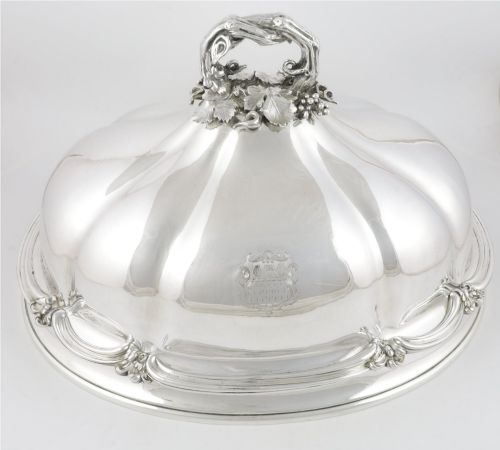
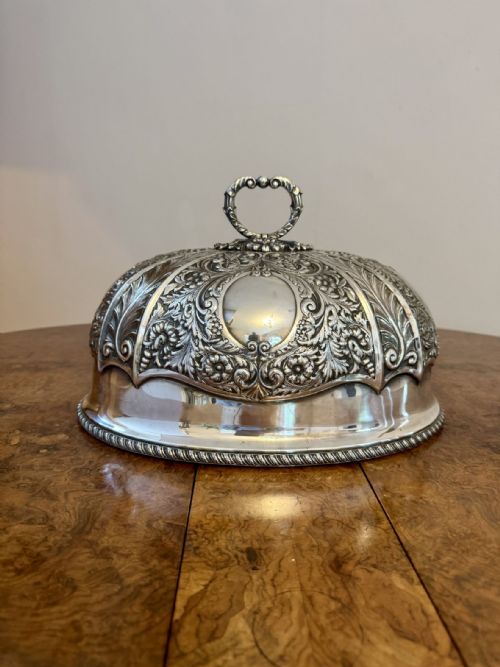
These antique silver cloche dome pieces are grand dining table covers designed to keep roast joints warm, prized for their weight and craftsmanship.
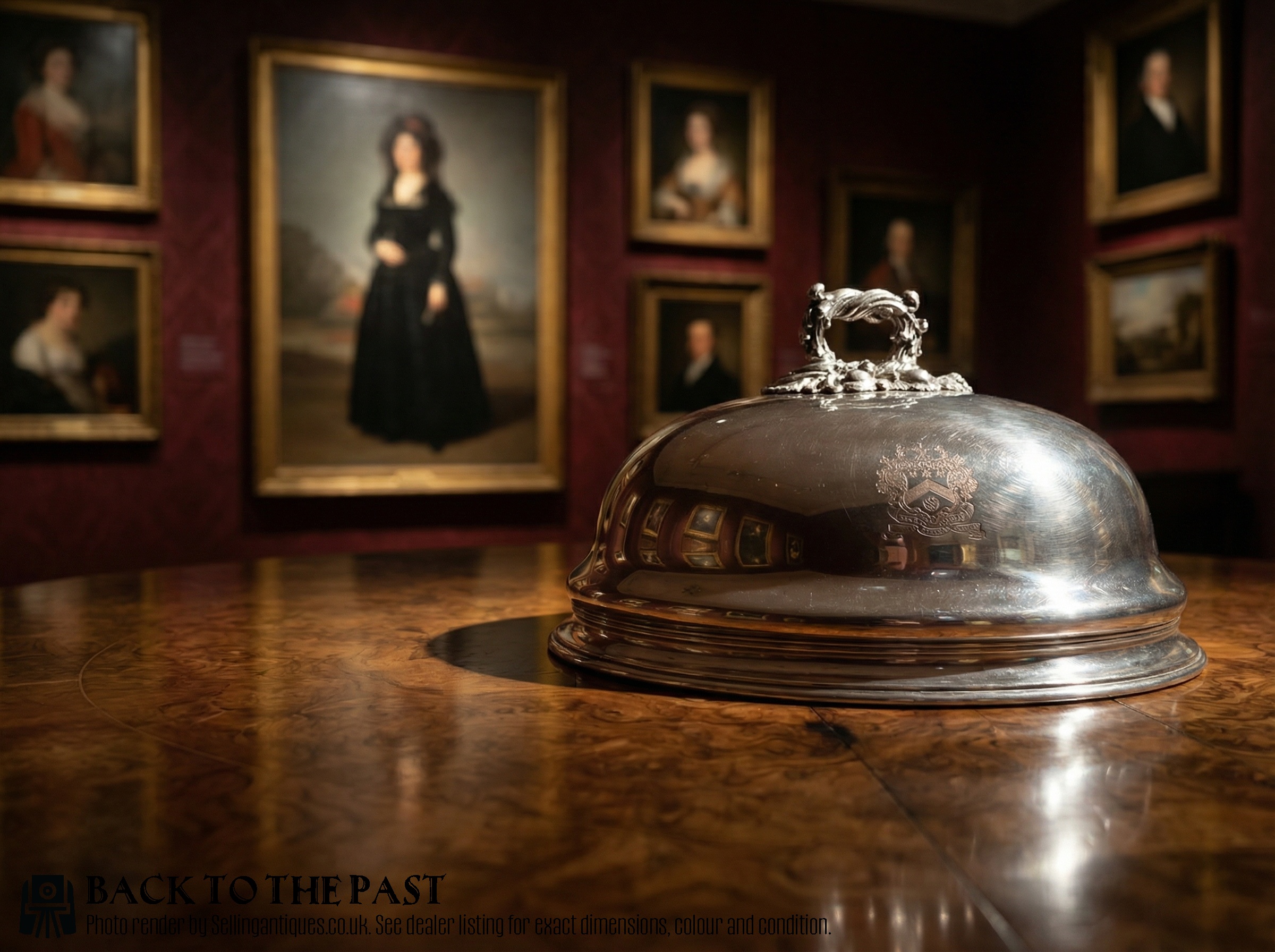
Antique Silver Cloche Dome
When you search for antique silver cloche dome, you encounter substantial serving covers created to sit over meat platters and dishes on the dining table. These pieces originate across the Georgian, Victorian, and Edwardian eras, spanning the nineteenth century.
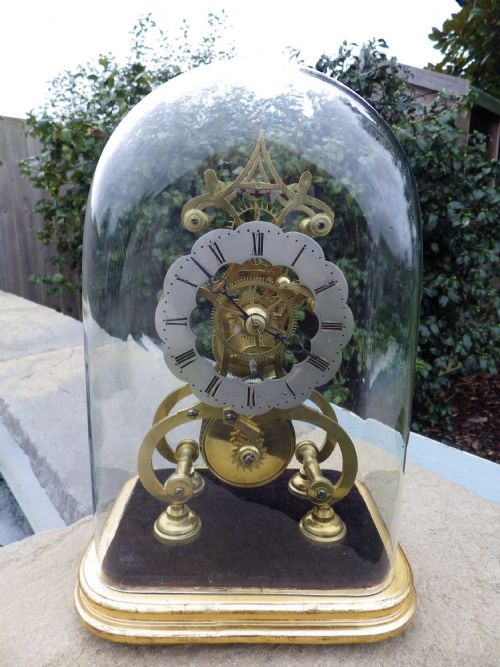
The selection here encompasses meat domes, meat covers, game covers, and dish covers, alongside occasional related forms like mantel clocks housed under glass domes. Most examples take the form of heavy metal covers shaped to fit over large platters during formal meals.
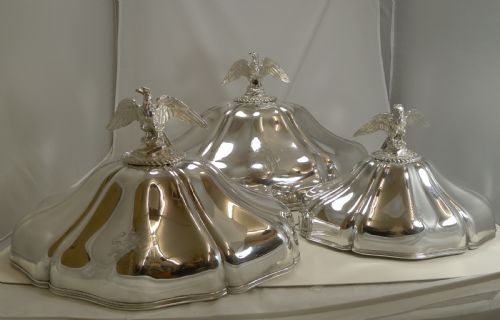
Originating from British workshops and French makers such as Durand in Paris, these dome covers reflect the formal dining habits of the nineteenth century. You find single covers as well as graduated sets designed to nest together.
How they were made
Makers constructed these covers using Old Sheffield Plate, silver plate, EPNS, and base metal, frequently combining copper with a silver layer or applying silver plating over a base metal foundation. Certain pieces incorporate brass, glass, and copper elements.
Smiths formed the large curved bodies through skilled metal spinning and hand beating, soldering seams and attaching cast handles, finials, or armorial crests. The edges often feature applied wire borders or chased decorative mounts.
Listings span the Georgian, Victorian, and Edwardian periods, showcasing materials from Old Sheffield Plate and silver plate to copper, brass, and glass.
What varies in quality
The distinction between ordinary and exceptional pieces rests on the weight of the metal, the crispness of chased or engraved heraldic decoration, and the integrity of the original plating. Heavier gauge Old Sheffield Plate exhibits a deeper richness where the underlying copper shows subtly through wear.
Superior examples bear the marks of notable makers like Boulton, Roberts Cadman, Henry Wilkinson, or Durand, adding historical significance. The presence of cast handles shaped as animals or crests, alongside matching graduated sets, elevates a piece considerably.
Roberts Cadman·Henry Wilkinson·Boulton·Durand Paris
The Antique Silver Cloche Dome Glossary
- Old Sheffield Plate
- A fused composite material made by melting a sheet of silver to a thick copper ingot before rolling them together into thin sheets. This technique predates modern electroplating and leaves characteristic copper edges.
- EPNS
- Electroplated nickel silver, a common base metal manufacturing method introduced in the nineteenth century. This process replaced older fusion methods by using an electrical current to deposit a silver coating.
- Game Cover
- A specialised serving dome intended specifically for smaller poultry or game dishes rather than large roasts. These often appear in matched sets.
- Fusee Clock
- A timepiece movement driven by a spring and chain wound around a conical drum to maintain even tension. Such movements occasionally appear housed beneath glass domes in nineteenth-century settings.
- Regency
- A stylistic period spanning the early nineteenth century defined by classical restraint and substantial proportions. Pieces from this era often feature clean architectural lines.
Antique Silver Cloche Dome: Frequently Asked Questions
How do I date an Old Sheffield Plate dome?
Dating relies on stylistic clues, construction methods, and visible copper showing through the worn silver layer on older fused pieces. Pieces made before the introduction of electroplating around the mid-nineteenth century typically display distinct seam characteristics.
Maker marks and stamped registry numbers also help pinpoint the decade of manufacture during the nineteenth century.
Are these domes solid silver?
Almost none of these pieces are solid silver, as solid domes would be prohibitively heavy and expensive. Makers used Old Sheffield Plate, silver plate over copper, or electroplated nickel silver to achieve the desired appearance and durability.
This layered construction provided the necessary strength to withstand daily use in grand Victorian and Georgian households.
How can I use a meat dome today?
These domes serve as striking decorative centrepieces on sideboards, dining tables, or kitchen islands. Collectors also utilise them functionally to cover large platters during dinner parties or feasts.
Their polished metal surfaces reflect light and add period character to both traditional and modern interiors.