



Silver Platter Dome
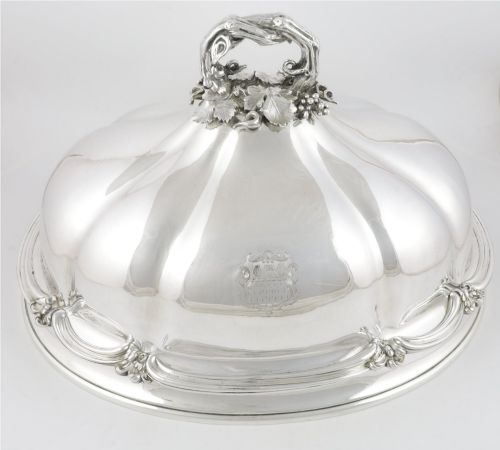
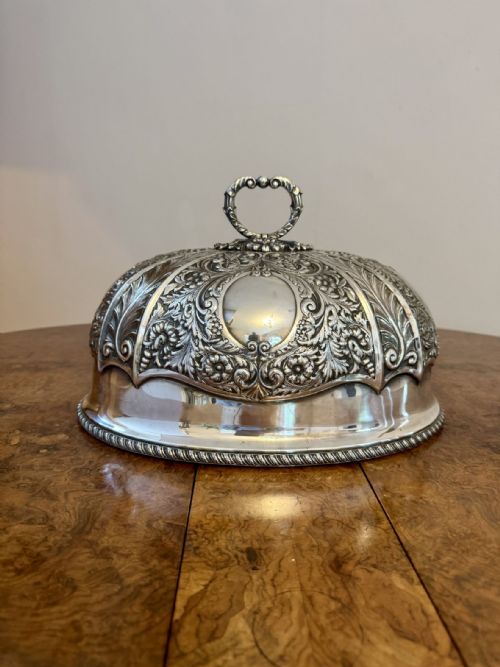
These silver platter dome pieces keep joints warm at table, bringing Regency and Victorian weight to your dining room.
Silver Platter Dome
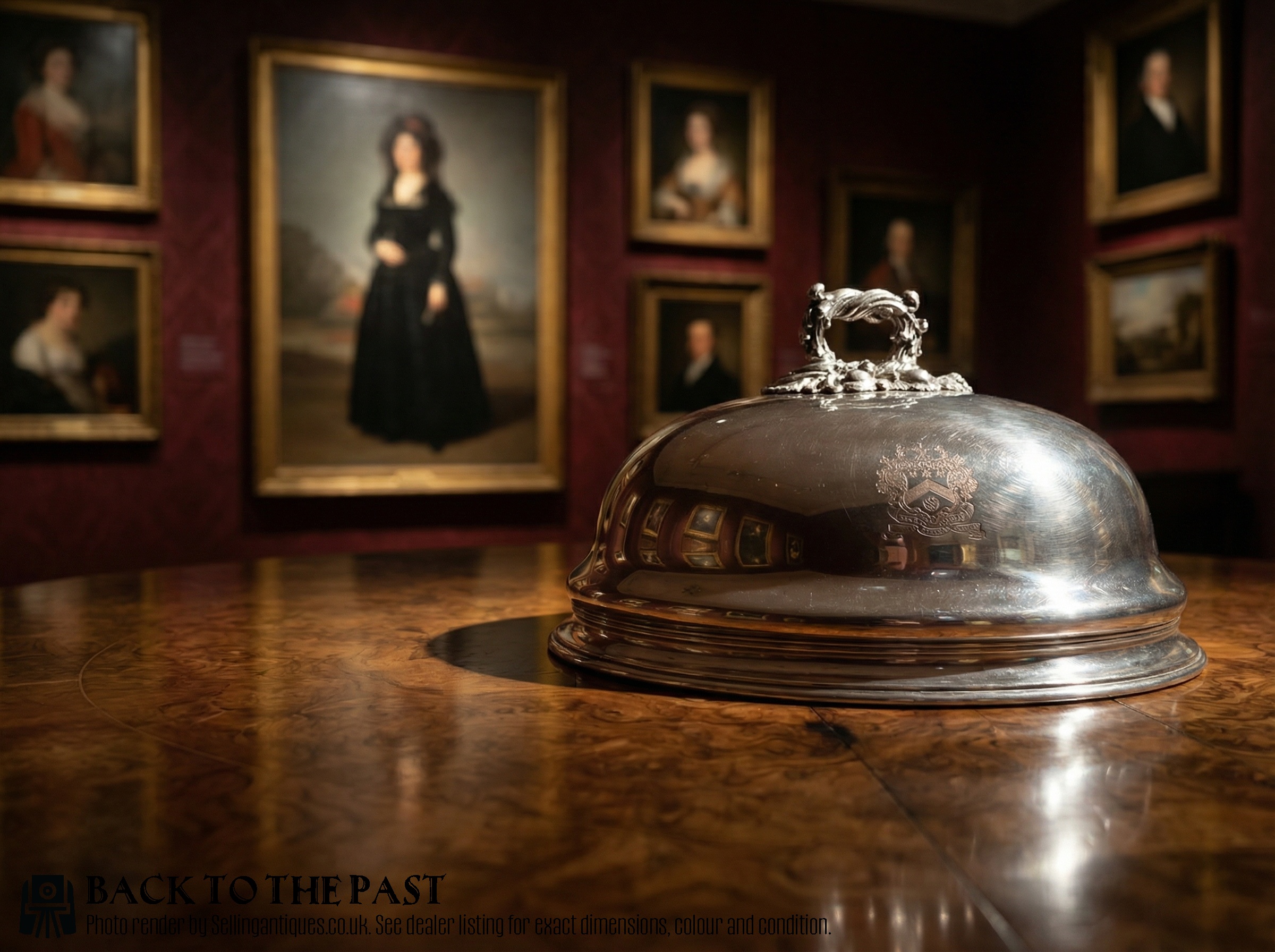
When you search for silver platter dome, you are looking at substantial serveware designed to cover roasts, game, and large joints on the dining table. These pieces retain heat and present food with the formality expected in Georgian and Victorian households.
You are most likely to meet silver plated or Old Sheffield Plate examples on this page, taking the form of meat domes, meat covers, and dish covers. Forms range from small game covers to large Georgian and Regency serving domes.
Origins span English and French workshops, encompassing periods from the Georgian era through to Edwardian times. Styles include Regency, William IV, and French Restoration designs.
Materials and construction
Maker's workshops built these pieces primarily using Old Sheffield Plate, silver plate, copper, EPNS, and base metal. Old Sheffield Plate combines a thin sheet of silver fused to a thicker copper core, often showing the underlying copper bleed through on high points over time.
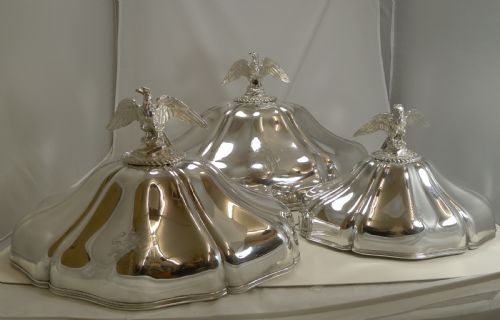
Silversmiths formed the large dome bodies by hammering or rolling metal sheets over stakes, then soldered or riveted cast handles and crests to the top. Handles frequently take naturalistic forms such as foliage, branches, or heraldic birds like eagles.
Some domes feature detachable cast eagle handles, allowing the bird to survey the dining table with fierce vigilance.
Judging quality in silver platter domes
Quality rests in the weight of the metal and the integrity of the fusion between silver and base metal. Finer examples maintain substantial gauge metal that resists flexing under pressure.
The crispness of cast handle details and armorial engravings distinguishes standard production from exceptional workshop output. Makers who invested in heavy casting and careful chasing produced pieces that retain their architectural presence.
Roberts Cadman·Henry Wilkinson·Boulton·Durand Paris
The Silver Platter Dome Glossary
- Old Sheffield Plate
- A fused laminate of silver and copper produced before electroplating was invented. It is prized for the warm way the base copper glows through worn silver highlights.
- EPNS
- Electroplated nickel silver, a base metal alloy introduced in the nineteenth century that provided a bright silver surface by electrical deposition. This technique superseded older fusion methods.
- Meat dome
- A large vaulted cover placed over a platter of joint meat to keep it warm at table. These items often feature heavy cast handles to aid lifting.
- Regency
- A style period spanning the early nineteenth century defined by classical restraint and robust proportions. Pieces from this era often display clean lines and bold decorative mounts.
Silver Platter Dome: Frequently Asked Questions
What is the difference between Old Sheffield Plate and silver plate?
Old Sheffield Plate involves physically fusing a sheet of silver to copper through heat and pressure before shaping the metal.
Silver plate relies on passing an electrical current to bond a thin coat of silver onto a base metal or nickel substrate later in the nineteenth century.
How were meat domes used historically?
Servants brought roasts and large joints to the table shielded under these heavy covers to retain heat and impress guests.
The host or butler lifted the dome only when carving was about to begin.
Can I use these domes for modern dining?
These pieces function well for serving warm dishes at large dinner parties, provided you warm the metal beforehand.
Their substantial weight also makes them striking decorative centrepieces when displayed on sideboards.