



Silver Plated Meat Cover
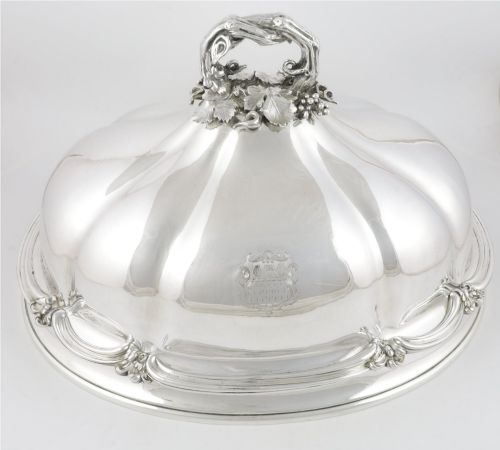
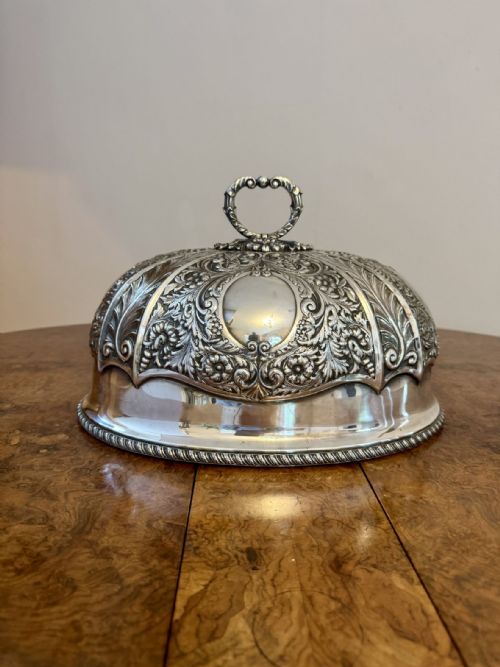
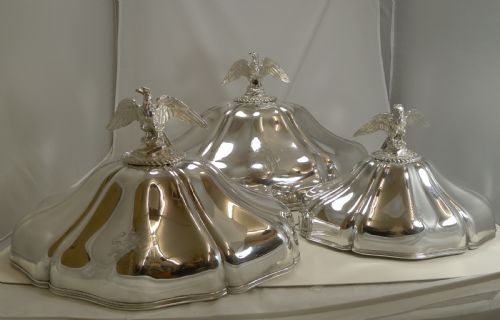
These silver plated meat cover pieces are grand dining room domes designed to keep joints warm at table.
Silver Plated Meat Cover
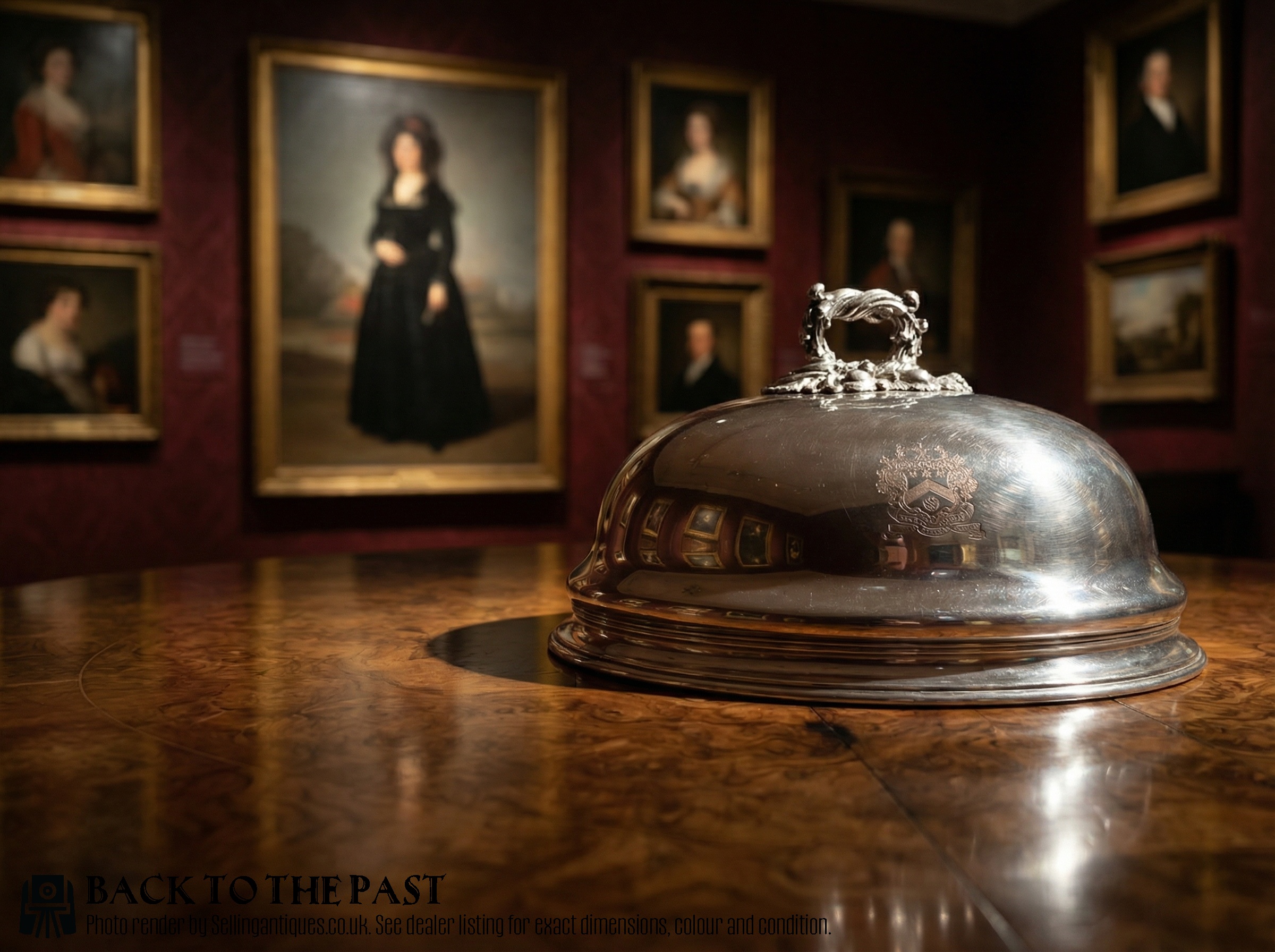
When you search for a silver plated meat cover, you look at large serving domes designed to shield joints of meat and maintain warmth on grand dining tables. The pieces on this page span the Georgian, Victorian, and Edwardian eras, taking the form of heavy domes, cloches, and warming dishes.
You are most likely to meet Victorian and Old Sheffield Plate examples, often bearing engraved crests or handles formed as naturalistic motifs. These serving pieces range from small game covers to massive twenty-inch domes intended for substantial feasts.
How they were made
The earlier pieces utilise Old Sheffield Plate, a method where a thin sheet of silver is fused to a thicker copper core by heat and pressure. Later items rely on electroplating, known as EPNS, depositing a layer of silver over a base metal foundation.
The makers formed these heavy domes by raising metal from a single sheet or assembling shaped sections with soldered seams. Handles and crests were typically cast separately and securely attached to the crown of the cover.
Silver Plated Meat Cover Retail Price Guide 2026
Typical asking prices for silver plated meat cover among the pieces listed under this phrase on Sellingantiques today, from the lower quarter to the upper quarter. They describe what is for sale here now, not the wider market.
Listings feature pieces in Old Sheffield Plate, copper, EPNS, and silver, spanning the Georgian, Victorian, and Edwardian periods.
What varies in quality
The distinction between ordinary and exceptional pieces lies in the weight of the metal and the crispness of the chased or engraved ornament. Heavy gauge metal ensures the dome retains heat effectively and resists dents from centuries of service.
Proportion and balance define the finest items, where handles harmonize with the scale of the body. Maker marks from established workshops also elevate a piece, alongside clear armorial crests or detailed cast motifs.
Roberts Cadman·Henry Wilkinson·Boulton·Dan Holy·Durand Paris·Elkington Co
The Silver Plated Meat Cover Glossary
- Old Sheffield Plate
- A composite material made by fusing silver to a copper ingot before rolling them into sheets. This early technique often reveals thin lines of copper along cut edges.
- EPNS
- Electroplated Nickel Silver, a process introduced in the nineteenth century that superseded Old Sheffield Plate. It provides an even silver coating over a base metal alloy.
- Cloche
- A bell-shaped cover used in table service to keep food warm. The shape mirrors glass garden cloches utilised for protecting plants.
- Warming Dish
- A specialised base or vessel designed to hold hot water beneath a meat cover. This arrangement keeps joints heated during prolonged dining courses.
Silver Plated Meat Cover: Frequently Asked Questions
How were meat covers used?
These domes were placed over large roasts and joints on the dining table to retain heat between the kitchen and the dining room. Servants lifted them just before carving.
Some pieces were paired with warming dishes filled with hot water to prolong the effect during lengthy formal meals.
What is Old Sheffield Plate?
Old Sheffield Plate is an early fusion method where a thin layer of silver is bonded to a copper core through heat. It predates electroplating and is identified by subtle copper lines visible at seams or wear points.
Pieces made this way possess a distinct warmth and considerable heft.
How do I date a meat cover?
Dating relies on stylistic clues, maker marks, and the underlying metal technology. Georgian and early nineteenth-century pieces often use Old Sheffield Plate, while later Victorian and Edwardian examples employ EPNS.
Engraved crests and handle designs also reflect the fashion of their specific decade.
Can I use these for modern dining?
These covers function well for serving roasts at modern dinner parties, adding theatrical flair to a dining table. They keep food warm and protect dishes while transporting them.
Careful hand washing preserves the historic silver surface.
Why do some covers have crests?
Engraved crests or coats of arms denoted the ownership of wealthy aristocratic households. Families commissioned silversmiths to mark their tableware with heraldic symbols.
These additions provide valuable provenance and tie the pieces to specific historical lineages.