



Silver Meat Cover
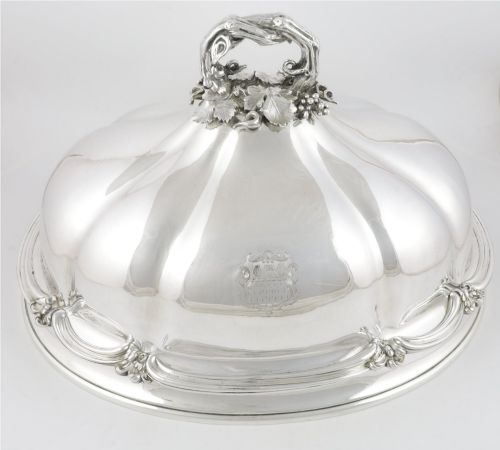
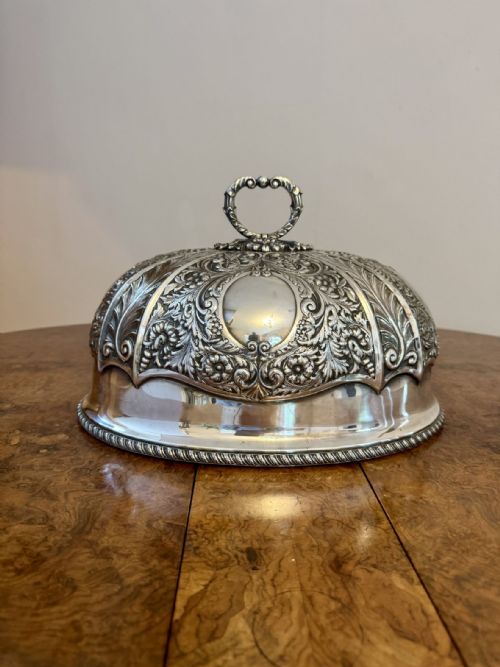
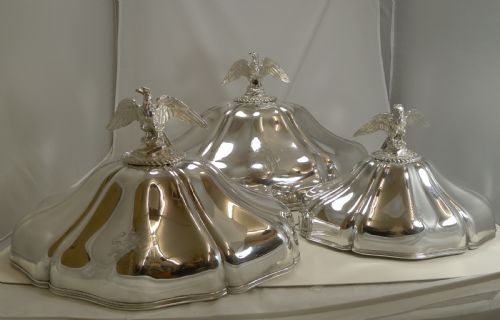
These silver meat cover pieces are substantial dining domes designed to keep joints warm at the table, offering both practical utility and grand historical presence.

Silver Meat Cover
A silver meat cover is a domed serving accessory designed to sit over large joints of meat or poultry on a platter. These pieces protect food and retain heat between the kitchen and the dining room table.
Buyers searching for a silver meat cover will encounter forms ranging from small game covers to massive turkey domes and warming dishes. Pieces appear across periods including Georgian, Regency, Victorian, and Edwardian styles.
How they were made
Makers constructed these domes using copper, base metal, or silver plate, applying fusion methods such as Old Sheffield Plate where a thin sheet of silver fuses to a copper core. Electroplating methods like EPNS appear in later Victorian and Edwardian examples.
Workshops shaped the metal into substantial hollow domes, often incorporating applied cast handles, beaded rims, and hand-engraved armorial crests. Finished pieces required careful soldering and polishing to achieve a seamless reflective surface.
Silver Meat Cover Retail Price Guide 2026
Typical asking prices for silver meat cover among the pieces listed under this phrase on Sellingantiques today, from the lower quarter to the upper quarter. They describe what is for sale here now, not the wider market.
Listings feature pieces spanning the Georgian, Regency, Victorian, and Edwardian periods, utilising silver plate, copper, and Old Sheffield Plate.
What varies in quality
Quality in a silver meat cover rests upon the gauge of the metal, the crispness of the chased or engraved decoration, and the substance of the cast handle. Heavier domes maintain their structural integrity and retain heat far better than thinner counterparts.
The distinction between standard production items and pieces by notable makers involves the precision of the silver fusion, the balance of the dome, and the detailing of applied crests or cast handles.
Roberts Cadman·Henry Wilkinson·Boulton·Dan Holy·Durand Paris·Elkington And Co·Christofle
The Silver Meat Cover Glossary
- Old Sheffield Plate
- A fused metal technique where a sheet of silver is thermally bonded to a copper base. This method creates a durable material visible where copper edges show through natural wear.
- Cloche
- A bell-shaped cover utilised for serving food. The term describes the domed silhouette shared by meat covers and dish covers.
- EPNS
- Electroplated Nickel Silver. A manufacturing process introduced in the nineteenth century that replaced older fusion methods.
- Warming Dish
- A specialised base or well-and-tree platter designed to hold hot water beneath a meat cover. This keeps large joints at serving temperature throughout a meal.
Silver Meat Cover: Frequently Asked Questions
What is a silver meat cover used for?
These large domes were placed over roasts, poultry, and meat platters as they travelled from the kitchen to the dining table. They trapped heat and protected the food from dust or cooling draughts.
In grand dining rooms, they also hid the joint until the host chose to reveal the main course to assembled guests.
How do I display a meat cover?
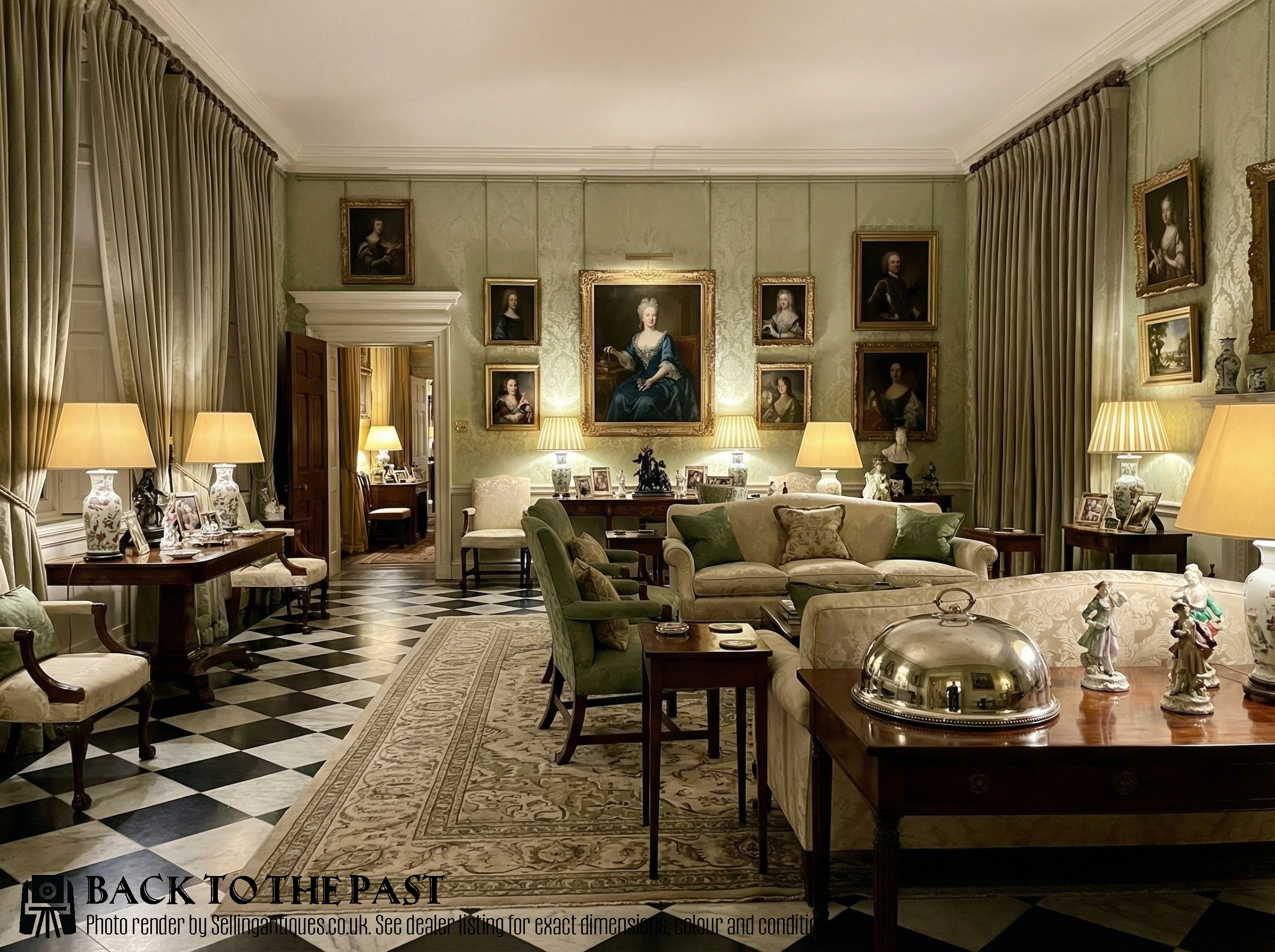
Many collectors place these large domes on sideboards, mantels, or atop matching warming platters where their reflective surfaces and engraved crests stand out. They suit both traditional dining spaces and larger kitchen displays.
Because of their scale, a single dome makes a strong focal point on a furniture piece.
How do I tell Old Sheffield Plate from later silver plate?
Old Sheffield Plate reveals a subtle hint of copper bleeding through the silver surface along high points and cut edges due to the fusion manufacturing process. Later nineteenth-century electroplated pieces typically show a base metal like nickel silver beneath worn areas.
Examining the weight and construction seams also helps distinguish the older fused technique from later dipped plating.
Are these covers heavy?
Most examples possess a noticeable heft, particularly those dating from the Georgian and Victorian periods that utilise thick copper cores or heavy silver plating. Smaller game covers are lighter, while turkey domes require two hands to lift.
Cast handles on top are securely attached to support the substantial weight of the domed body.