



Silver Plate Cloche
These silver plate cloche pieces are substantial table domes that keep roasts warm, and every serious dining room needs one.
Silver Plate Cloche
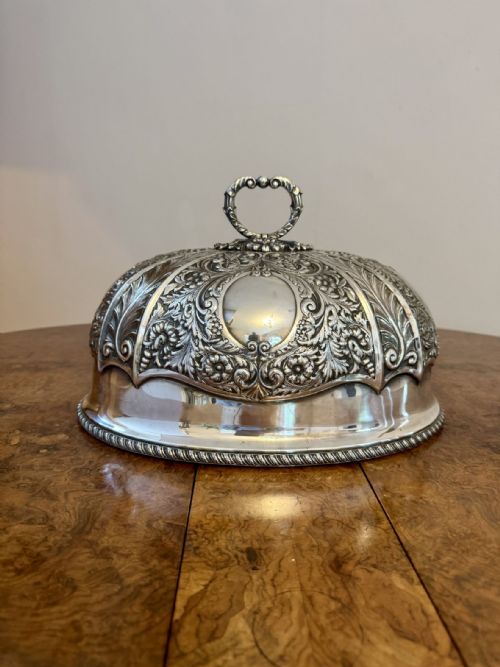
A silver plate cloche serves as a heavy protective cover for joints of meat and game at the dining table, keeping food hot between the kitchen and the guests. Buyers seeking a silver plate cloche will find meat domes and dish covers originating from the Georgian, Victorian, and Edwardian eras.
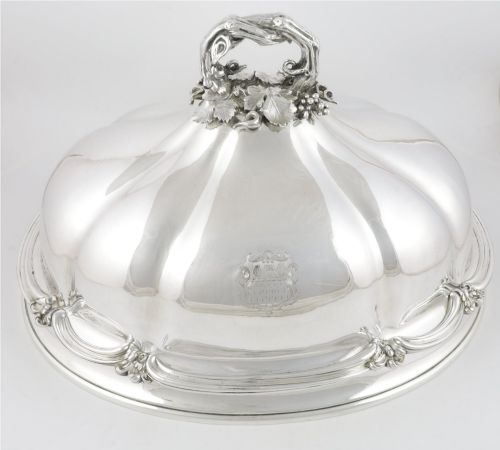
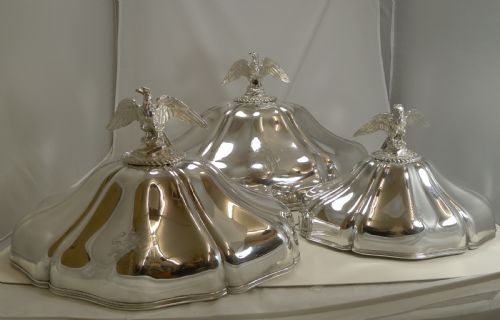
The selections span from compact game covers to large multi-piece graduated sets intended for grand feasts. Forms include simple domed shapes as well as pieces decorated with heraldic crests, such as the Macfie clan crest.
Makers from Paris to Sheffield produced these serving pieces in styles ranging from Regency and William IV to French Restoration. The most common survivals on this page are single Victorian meat covers and Old Sheffield plate domes.
Materials and construction
Makers formed these domes from base metal or copper fused with a thin layer of silver in Old Sheffield plate pieces, or utilised electroplated nickel silver in later EPNS items. The underlying metals provided structural rigidity to support the heavy domed shapes required for large meat joints.
Silversmiths shaped the metal sheets into sweeping curves, applying cast handles and applied borders to finish the rims. Engraving and crest work were often added by hand to personalise the serving pieces for aristocratic households.
Some domes kept the Duke of Somerset's roast warm before travelling to the dining room.
Assessing quality and craftsmanship
Quality rests upon the weight of the metal and the crispness of the applied decoration, distinguishing heavy Old Sheffield plate from lighter later items. Finer examples retain intact silver layers where the base copper does not show through the wear.
The presence of maker marks, crests, and cast handles of distinct form elevates a piece above standard utilitarian serveware. Graduated sets that remain together as a complete group represent a higher tier of historic dining silver.
Roberts Cadman·Henry Wilkinson·Boulton·Durand
The Silver Plate Cloche Glossary
- Old Sheffield Plate
- An early fusing technique where a sheet of silver is fused to a copper core before shaping. This method creates a warm tone and shows copper wear on high points over time.
- EPNS
- Electroplated nickel silver, a method introduced in the nineteenth century that replaced older fusing techniques. It provided a uniform silver surface over a base metal body.
- Meat Dome
- A large domed cover designed to fit over a meat platter on the dining table. These pieces kept food warm and added theatre to formal dining.
- Game Cover
- A smaller domed cover specifically proportioned for birds and smaller cuts of game. These items appear in single pieces or matched sets.
- Graduated Set
- A collection of covers in decreasing sizes designed to nest together. Such sets served multiple courses at large banquets.
Silver Plate Cloche: Frequently Asked Questions
How do I clean a silver plate cloche?
Use a gentle silver cream and a soft cloth to maintain the shine without scrubbing away the plating. Avoid harsh dips that strip the historic patina from the metal.
For Old Sheffield plate pieces, take extra care around edges where the underlying copper may show through the historic surface.
Can I use these for modern dining?
These domes function well on modern dining tables for keeping roasts warm during family meals or dinner parties. Their substantial weight and historic presence add character to any table setting.
Ensure food does not sit directly against unprotected worn plating for extended periods during service.
What is Old Sheffield plate?
Old Sheffield plate is an early material made by fusing silver to a copper base before hammering and shaping the metal. This technique predates electroplating and creates a distinct layered appearance.
Pieces made this way often exhibit a soft glow and subtle copper telegraphing on prominent edges.
How do I date a meat dome?
Dating relies on the manufacturing technique, style of handles, and any engraved crests or maker marks present on the piece. Old Sheffield plate generally indicates an earlier Georgian or Regency origin.
Later Victorian and Edwardian examples often utilise EPNS bases and heavier machine finishing.