



Antique Food Dome
An antique food dome protects a joint of meat or a wedge of cheese at table, bringing a grand and practical presence to formal dining.
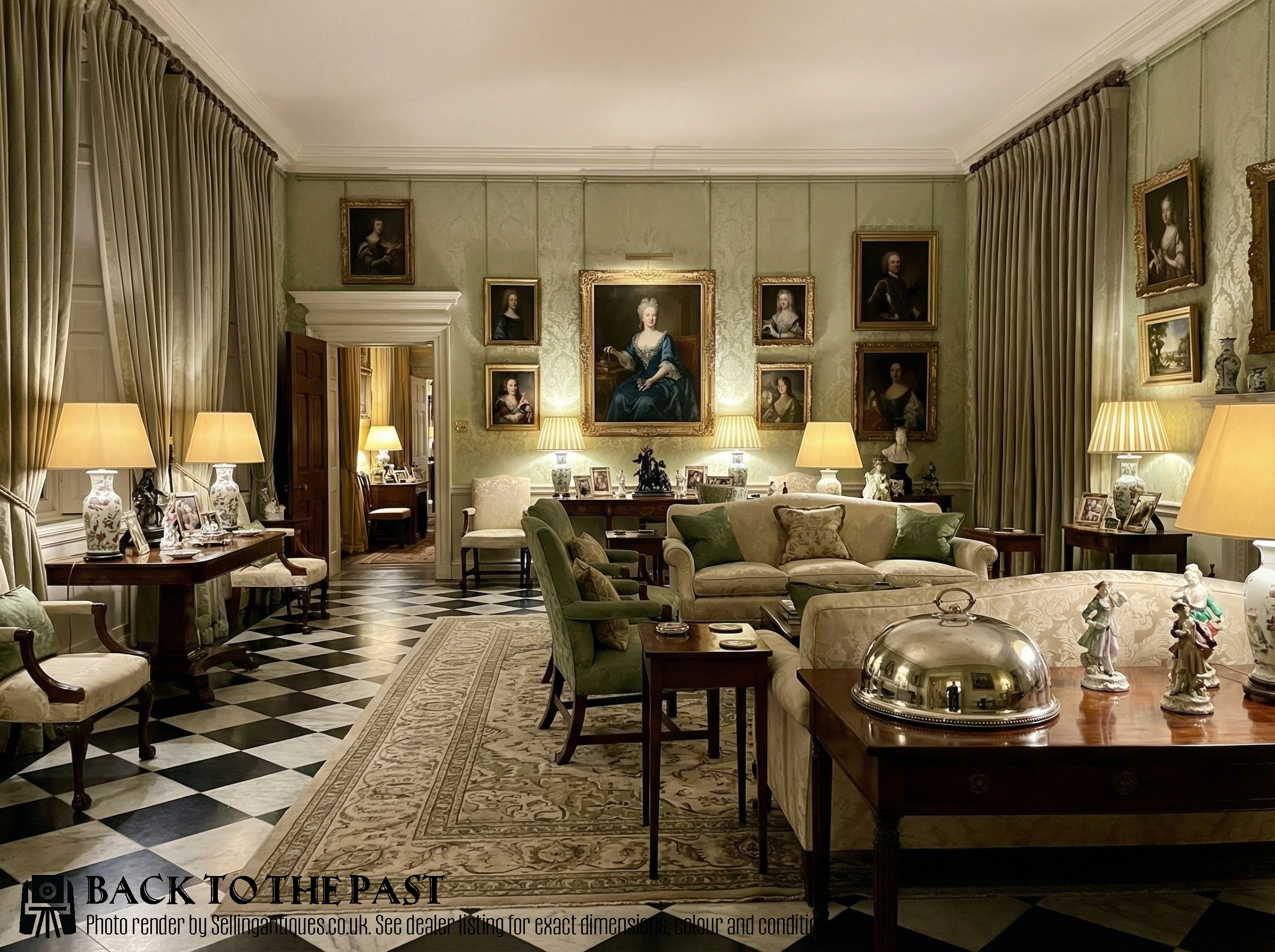
Antique Food Dome
When you search for an antique food dome, you encounter substantial serveware designed to keep hot dishes warm or preserve cheese on the sideboard. These pieces primarily take the form of meat domes, meat covers, cheese domes, dish covers, and entree dishes spanning the Georgian, Victorian, and Edwardian periods.
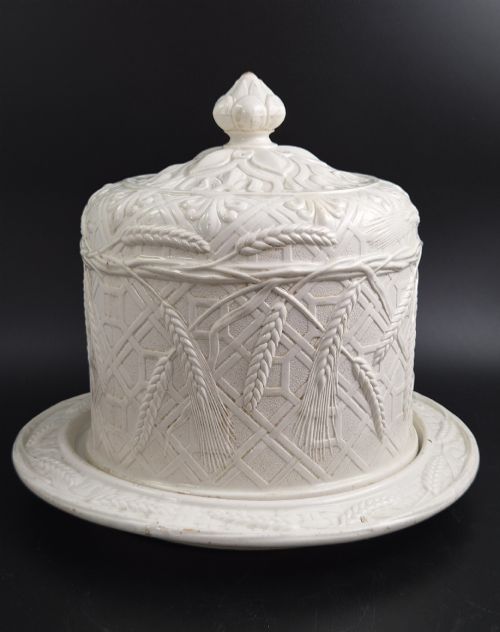
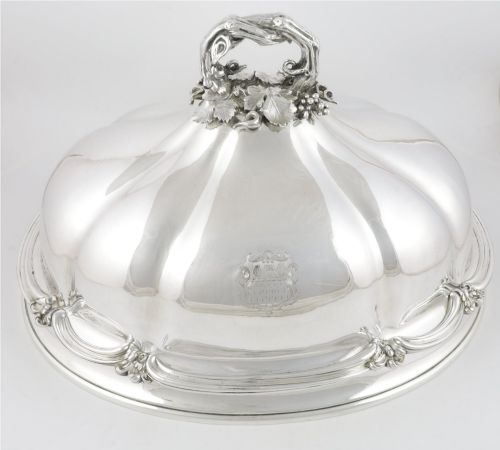
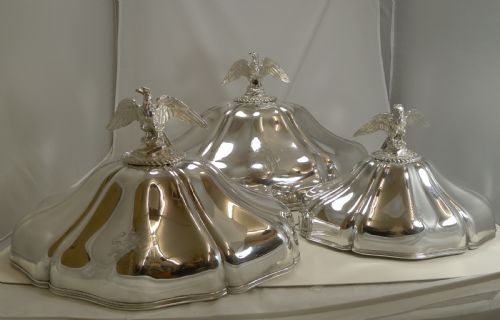
The material selection on this page ranges from heavy Old Sheffield Plate and silver plate to glazed ceramic and white ironstone. Metal covers frequently feature cast handles shaped as acorns, oak leaves, or eagles, while ceramic versions often display moulded patterns such as wheat and lattice.
You meet both individual covers intended for single platters and graduated sets that nest together for storage. Revolving breakfast dishes and fitted stands provide specialised variations for the nineteenth-century dining table.
Assessing quality in metal and ceramic covers
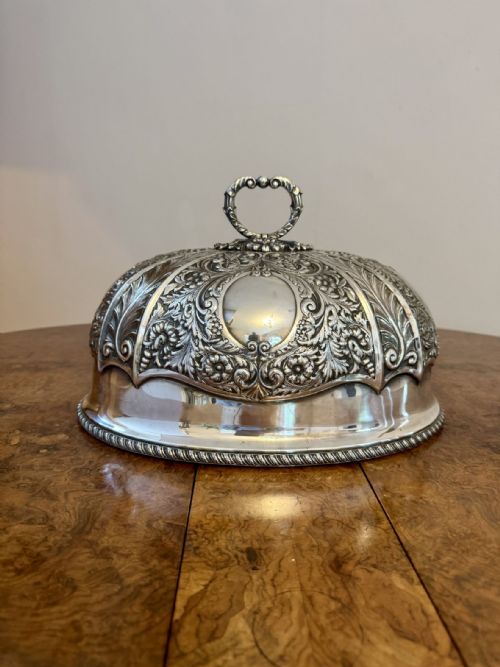
The distinction between standard and superior pieces rests on the crispness of chased or engraved decoration and the weight of the metal. Hand-chased fern motifs and heavily cast handles show superior workmanship compared to plain, mechanically stamped surfaces.
In metal domes, the quality of the plating and the thickness of the underlying Old Sheffield Plate dictate durability and appearance. For ceramic cheese domes, the preservation of the glaze and the precision of the moulded lattice work define the better examples.
Listings feature meat domes and cheese stands in materials ranging from Old Sheffield Plate and EPNS to white ironstone and earthenware.
Roberts Cadman·Henry Wilkinson·Boulton·Mappin and Webb·Copeland·Durand Paris·Martin Hall And Co·Atkin Brothers
The Antique Food Dome Glossary
- Old Sheffield Plate
- A method of fusing silver and copper together before hammering and shaping the sheet. This technique predates modern electroplating and produces pieces with distinct edge seams of exposed copper.
- EPNS
- Electroplated Nickel Silver. A common nineteenth-century process that coats a base metal alloy with a thin layer of pure silver using electrical current.
- Ironstone
- A dense, durable ceramic perfected in the nineteenth century. It resists chipping and serves as a strong body for heavy cheese domes and tableware.
- Cloche
- A bell-shaped cover designed to fit over a plate or dish. The term applies to both glass and metal variants used in food service.
- Entree dish
- A shallow serving vessel with a removable lid. These pieces form matched pairs or sets for multi-course meals.
Antique Food Dome: Frequently Asked Questions
What is the difference between a meat dome and a cheese dome?
Meat domes are tall, domed metal covers designed to fit over large platters of roast meat to retain heat and juices at the dining table. Cheese domes are typically manufactured from white ironstone or earthenware and include an accompanying ceramic stand to preserve cheese.
Metal meat domes often feature heavy cast handles shaped like acorns or foliage, while ceramic cheese domes display decorative moulded patterns such as wheat and lattice across the cover.
How do I date an Old Sheffield Plate meat dome?
Old Sheffield Plate pieces date primarily from the Georgian and early Victorian periods, generally between 1800 and 1840. You can often identify the period through the presence of copper lines where the fused silver sheet has worn thin at the edges.
Maker marks, registration numbers, and stylistic cues like Regency proportions or heavy cast handles also help narrow the decade of manufacture.
Can I use an antique food dome for daily dining?
Metal and ceramic food domes remain fully functional for serving meals or displaying cheese at the table. Their robust ironstone and plated metal construction withstands regular handling during dinner service.
Careful hand washing preserves the delicate silver plating and nineteenth-century ceramic glazes against modern detergent wear.
What does graduated mean in a set of meat covers?
A graduated set consists of multiple meat domes of descending sizes designed to nest neatly inside one another for storage. This configuration allowed dining households to store three or four covers efficiently in a single sideboard compartment.
Graduated sets were produced by makers across the nineteenth century to accompany large collections of serving platters.