



Silver Plate Dish Cover
A silver plate dish cover keeps formal dining warm, transforming a simple table into an organised display of heavy plate.
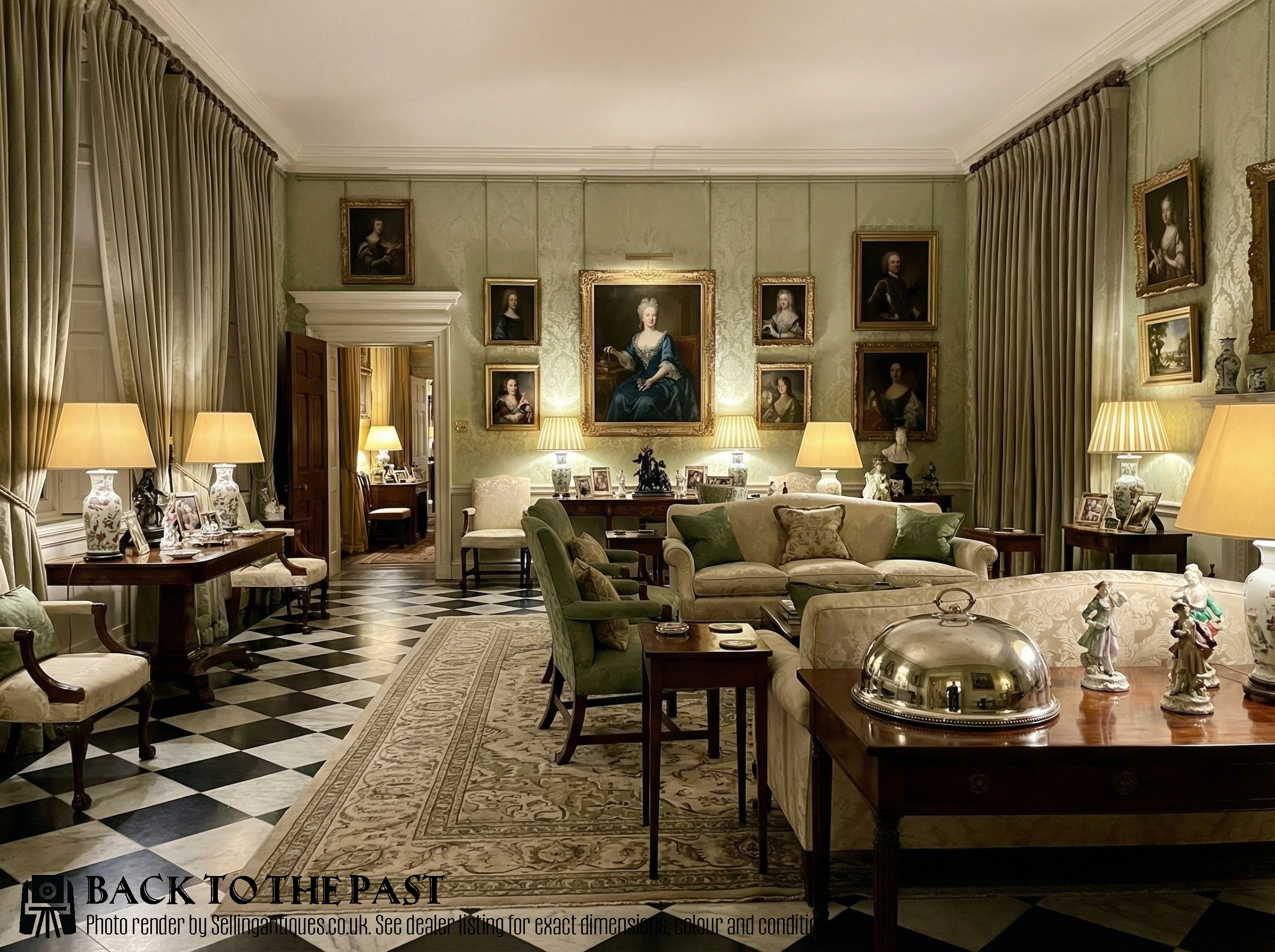
Silver Plate Dish Cover
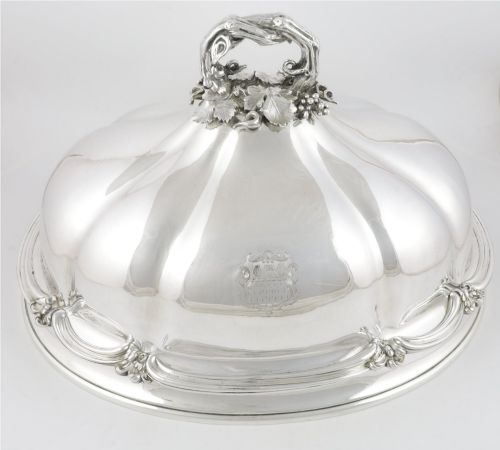
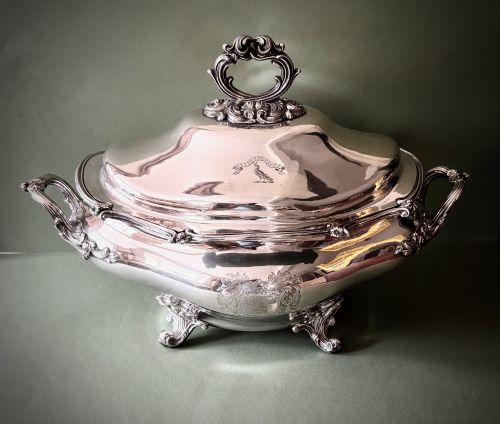
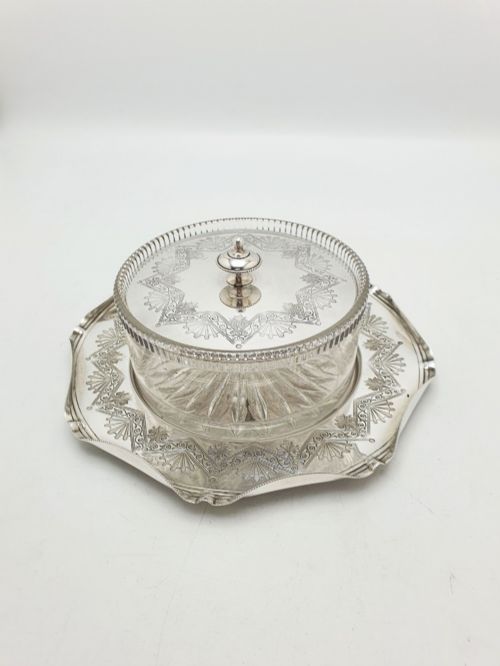
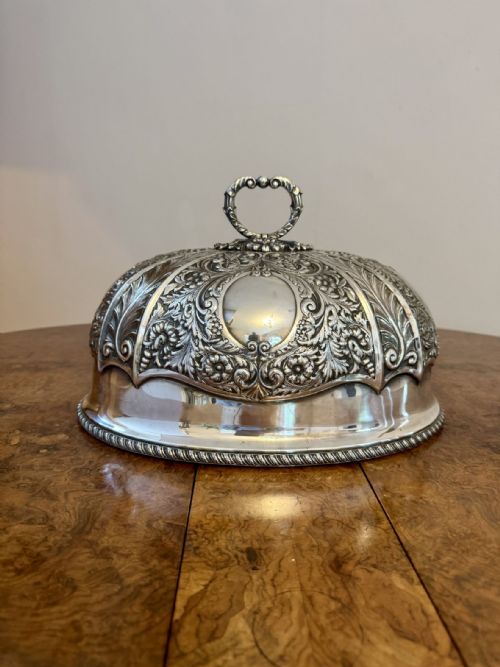
A silver plate dish cover serves to protect food and maintain heat on the dining table, encompassing forms from large meat domes to smaller entree dishes, butter dishes, and tureens. When buyers search for a silver plate dish cover, they encounter variations that span the Georgian, Victorian, and Edwardian eras.
The material composition of these pieces ranges from early Old Sheffield Plate to later electroplated nickel silver and standard silver plate over copper, often accompanied by glass liners or stands. Styles extend from classical Georgian and Regency lines to ornate Victorian designs, Edwardian restraint, and later Art Deco items.
Materials and construction
Early examples utilise Old Sheffield Plate, a process fusing a thin sheet of silver to a thicker copper base, which often reveals hints of copper along exposed edges and wear points. Later pieces rely on electroplated nickel silver, known as EPNS, depositing a layer of silver onto a nickel-brass alloy through an electrical current.
Makers shaped these metals by hand-beating or rolling sheets before soldering applied handles, rims, and crests. Interior elements frequently incorporate cut glass liners, particularly in butter and cheese dishes from the Victorian and Edwardian periods.
The inventory includes meat domes, entree dishes, warming dishes, and tureens produced by prominent nineteenth-century workshops.
Judging the manufacture
The weight of the metal and the integrity of the plating distinguish heavier, sturdier serving pieces from lighter items. Substantial gauge silver plate or Old Sheffield Plate retains its form and plating better through decades of cleaning and use.
Refinement in the cast handles, applied borders, and engraved family crests separates standard production ware from superior workshop output. The crispness of chased decoration and the snug fit of the cover to its base indicate higher standards of silversmithing.
Roberts Cadman·Henry Wilkinson·Mappin and Webb·Hamilton and Inches·Boulton·Daniel and Arter·Dan Holy·Walker and Hall·Elkington·Cresswick·Christofle Gallia·Hukin and Heath·Atkin Brothers
The Silver Plate Dish Cover Glossary
- Old Sheffield Plate
- A method of fusing silver to a copper core before rolling into sheets, produced primarily before the invention of electroplating. This technique creates a distinctive appearance where the base copper shows subtly beneath the silver layer.
- Electroplated Nickel Silver
- A process of depositing silver onto a nickel brass alloy using electricity, commonly abbreviated as EPNS. This method largely replaced older plating techniques during the nineteenth century.
- Entree Dish
- A shallow serving vessel with a removable cover, used for individual courses at formal meals. These often feature shaped rectangular or oval bodies with interchangeable handles.
- Meat Dome
- A large, domed cover designed to fit over a meat platter to preserve heat. These substantial pieces frequently feature cast handles and prominent armorial engravings.
- Cloche
- A bell-shaped cover utilised for serving individual portions or keeping dishes warm at the table. The term derives from the French word for a bell.
Silver Plate Dish Cover: Frequently Asked Questions
How do I clean a silver plate dish cover?
Wash the item gently in warm water using a mild, non-abrasive detergent and a soft cloth. Avoid harsh chemical dips that strip the thin layer of silver from the base metal.
Dry the piece thoroughly with a soft lint-free towel to prevent water spots. Store the item in a dry environment wrapped in acid-free tissue.
What is the difference between Old Sheffield Plate and EPNS?
Old Sheffield Plate involves mechanically fusing a thin layer of silver to a copper block before rolling them together into sheets. This older method often reveals the underlying copper showing through on high points and rims.
Electroplated nickel silver, or EPNS, uses an electrical current to bond silver onto a nickel alloy base. This later process creates a more uniform silver coating without copper showing underneath.
How were meat domes used historically?
Meat domes sat over large joints of meat or poultry on heavy platters to preserve heat and aromas as servants transported food from the kitchen to the dining room. They were lifted away at the table just before carving.
In grand households, these domes bore engraved family crests and matched the style of the surrounding tableware. Their substantial weight helped retain warmth during long multi-course meals.
How can I tell a Georgian piece from a Victorian one?
Georgian pieces often display the characteristics of Old Sheffield Plate or heavy hand-raised silver over copper with restrained classical lines. They frequently date from the late eighteenth century up to the eighteen-thirties.
Victorian items tend to feature heavier electroplated finishes, more elaborate ornamentation, and diverse forms like butter dishes with glass liners. Their design vocabulary embraces revival styles and heavier cast decorative mounts.