



Silver Plated Meat Dome
A silver plated meat dome keeps roast joints hot at table while signalling serious hospitality.
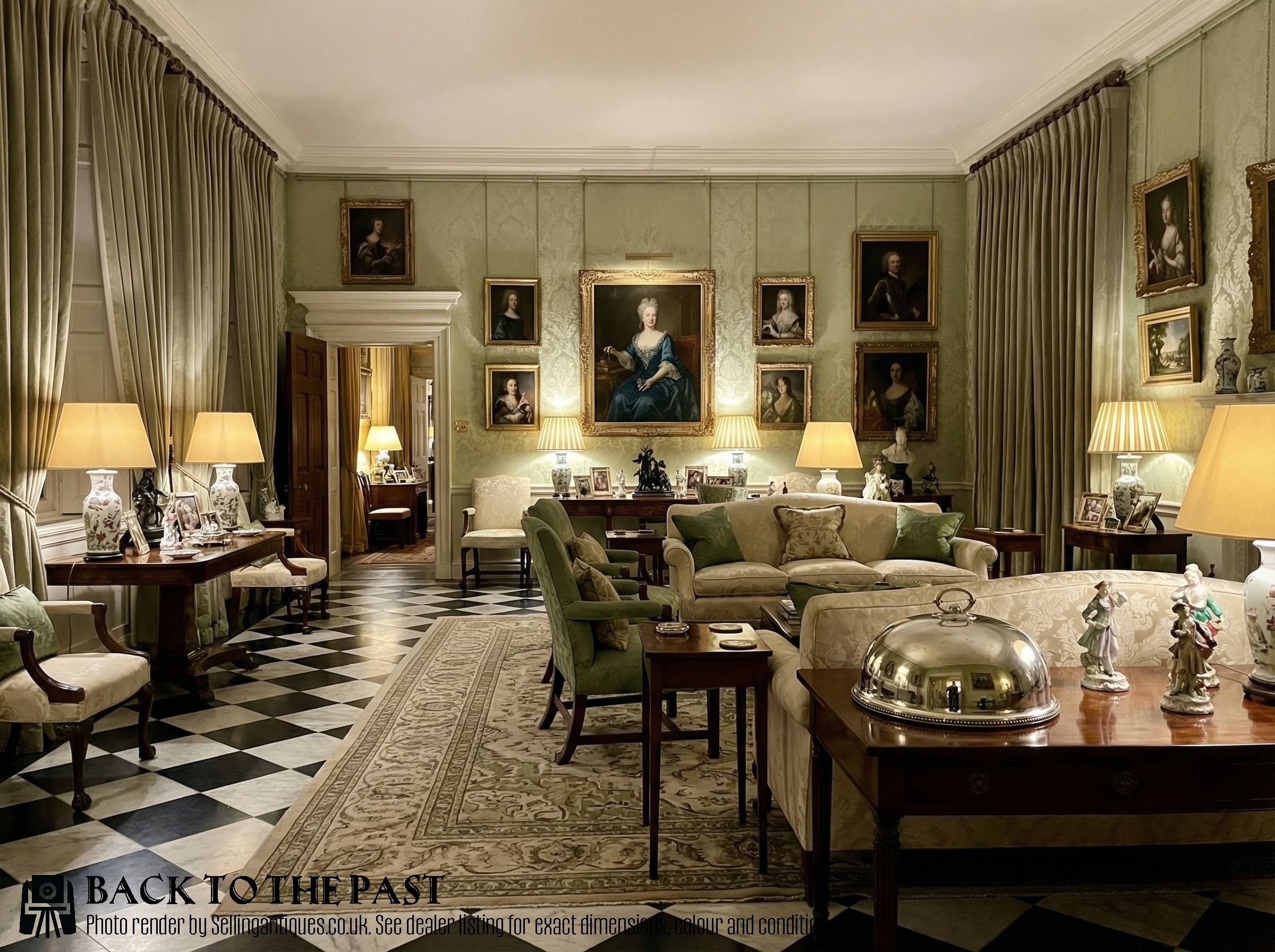
Silver Plated Meat Dome
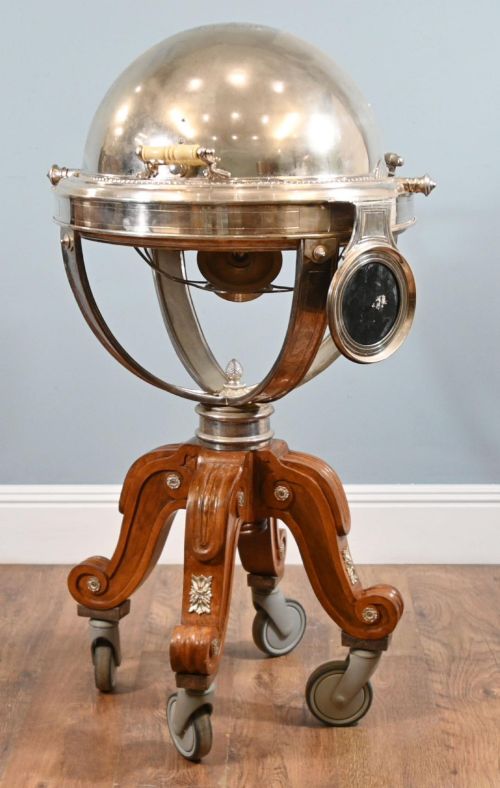
A silver plated meat dome is a heavy cover designed to shield roast joints, poultry or game on a platter until carving begins. These grand serveware pieces appear in styles spanning the Georgian, Regency, William IV, Victorian and Edwardian periods.
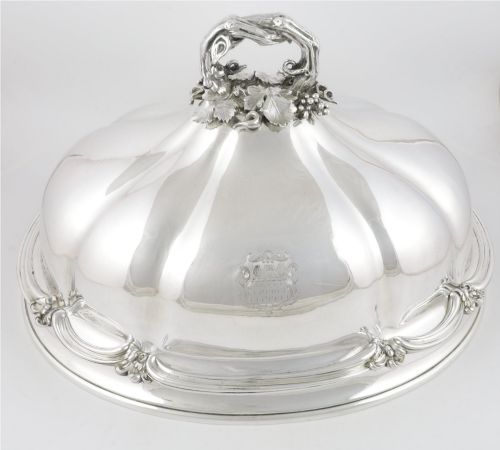
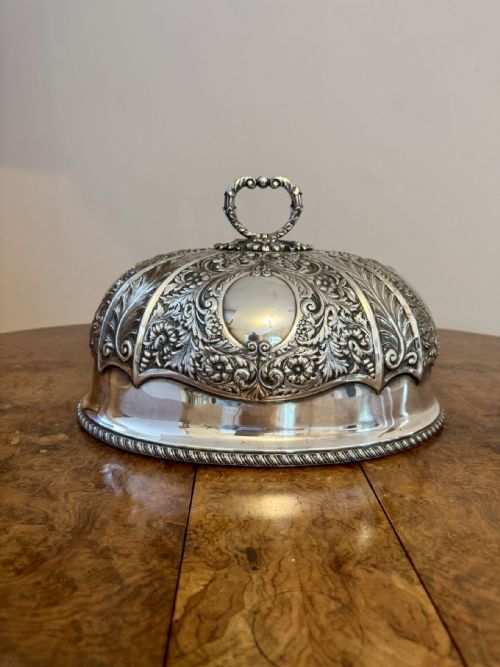
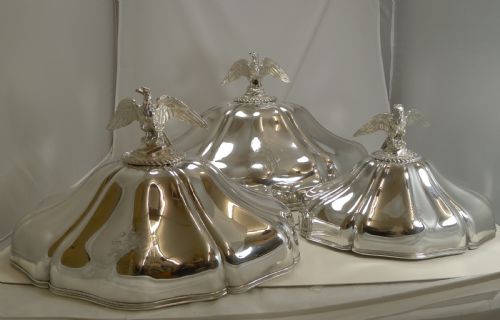
The version most commonly met on this page is the Victorian or 19th Century silver plated meat dome, often featuring robust handles and engraved decoration. Collectors also encounter early Old Sheffield Plate examples alongside French variants and coordinated sets of graduated covers.
Makers utilised resilient base metals fused or electroplated with silver to create weighty dish covers that could withstand daily service in grand dining rooms.
Materials and construction
Early examples employ Old Sheffield Plate, a process fusing a thin sheet of silver to a thicker copper core, often leaving the base metal visible at cut edges or seams. Later pieces rely on base metals finished with silver plate or EPNS, reflecting industrial shifts in plating techniques.
Silversmiths shaped these large forms by hand-raising or spinning metal before applying cast handles, finials and chased or engraved embellishments such as crests and fern motifs.
Silver Plated Meat Dome Retail Price Guide 2026
Typical asking prices for silver plated meat dome among the pieces listed under this phrase on Sellingantiques today, from the lower quarter to the upper quarter. They describe what is for sale here now, not the wider market.
Judging quality and craftsmanship
The distinction between standard service pieces and top-tier items rests upon the weight of the metal, the crispness of chased detailing and the presence of makers' marks or armorial engravings. Heavier Old Sheffield Plate specimens and signed pieces by prominent makers display superior heft and balance.
Finials and handles reveal much about original expenditure; cast and applied ornamentation demonstrates greater skill than simpler soldered attachments, while complete sets and paired domes command particular attention for their matching proportions.
Roberts Cadman·Henry Wilkinson·Boulton·Durand Paris·Walker Hall·Elkington Co
The Silver Plated Meat Dome Glossary
- Old Sheffield Plate
- An early fusing technique where a sheet of silver is fused to a copper ingot before rolling. This method creates a distinct layered appearance visible on older pieces.
- EPNS
- Electro Plated Nickel Silver. A mid-nineteenth century development that replaced older plating methods by depositing silver onto a nickel alloy base using electricity.
- Cloche
- A bell-shaped cover used for food service. The term is frequently applied interchangeably with meat domes and dish covers.
- Base Metal
- The underlying metal beneath the silver plating, typically copper or nickel brass. Wear over decades reveals this substrate.
- Graduated
- A set of covers varying systematically in size to nest together on a sideboard. These sets were designed for large multicourse banquets.
Silver Plated Meat Dome: Frequently Asked Questions
How were silver plated meat domes used?
These domes were placed over large joints of meat, game or poultry on platters to retain heat as they travelled from the kitchens to the dining table. Once seated, the host removed the cover to carve before guests.
In grand houses, matching bases accompanied the domes to catch juices and maintain presentation standards throughout the meal.
How do I clean my meat dome?
Maintenance requires gentle silver polish and a soft cloth to preserve the underlying plating, particularly on older Old Sheffield pieces where copper might show through. Avoid harsh abrasives that strip the silver layer.
Regular dusting and dry storage prevent tarnish accumulation in intricate engraved areas and cast handle crevices.
How can I tell Old Sheffield Plate from later silver plate?
Old Sheffield Plate reveals a subtle copper line where the edges meet or where wear occurs, due to the fusing method used before electroplating was invented. This technique predates mid-nineteenth-century innovations.
Electroplated pieces, marked EPNS or produced by firms like Elkington, present a uniform metallic substrate beneath any worn silver areas.
Can I use a meat dome for modern dining?
These pieces function admirably on modern dining tables for serving large roasts, keeping food warm and adding traditional theatre to family dinners. Their generous proportions accommodate modern joints with ease.
When not in use at the table, they serve as striking decorative statement pieces on sideboards or open shelving.