



Antique Silver Serving Cover
An antique silver serving cover brings grand presentation to the dining table, keeping roasts, entrees and vegetables warm with considerable style.
Antique Silver Serving Cover
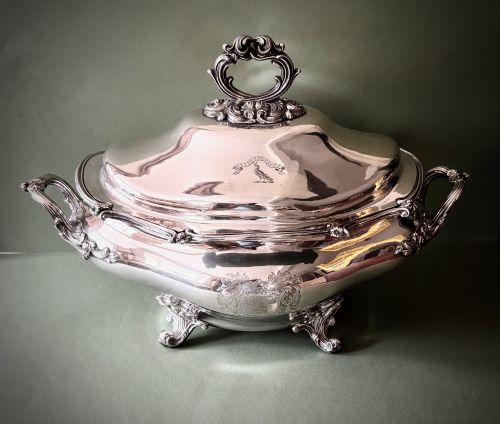
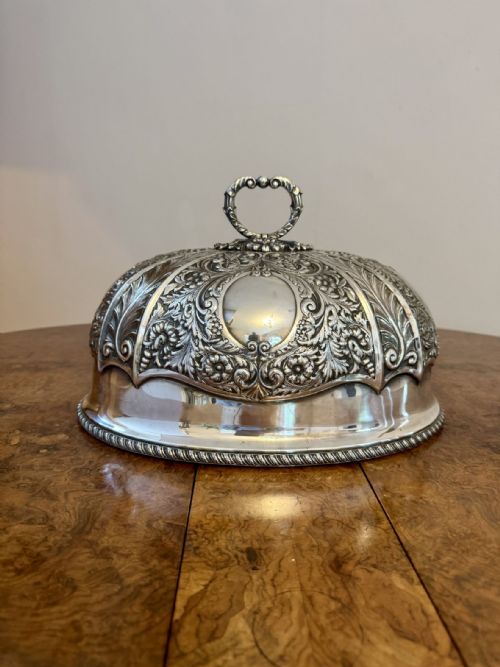
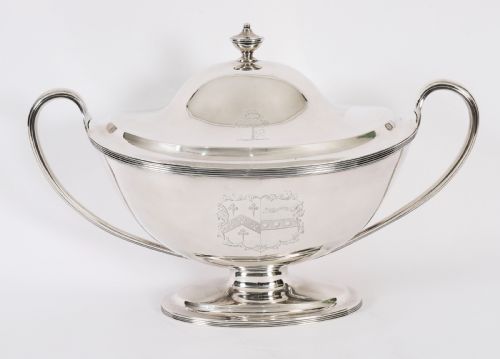
An antique silver serving cover encompasses meat domes, game covers, entree dishes and tureens designed to shelter food before carving or serving. They appear across Georgian, Regency, Victorian and Edwardian periods, taking rectangular, oval and round forms.
The versions most common here are silver plated and Old Sheffield plate entree dishes and meat domes from the nineteenth and early twentieth centuries. Sterling silver examples also occur, often originating from Georgian workshops.
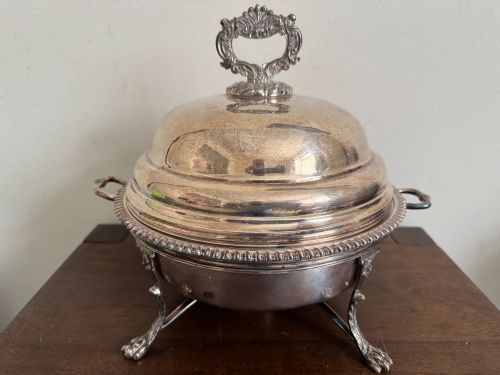
Makers produced these pieces for formal dining, pairing them with warm water bases or lampstands to maintain food temperature. They range from small game covers to large souptureens and two-handled punch bowls.
What varies in quality
The weight of the metal and the crispness of cast chased borders determine the calibre of a piece. Substantial gauge silver and thick Old Sheffield plate resist denting and maintain integrity through centuries of polishing.
Refinement in the detailing of handles, finials and armorial engravings distinguishes standard production items from masterworks. Interior gilding, known as vermeil in some vessels, and the structural integration of warming compartments further elevate the standard.
Listings span the Georgian, Regency, Victorian and Edwardian periods, utilising materials from sterling silver and Old Sheffield plate to silver plate and copper.
William Bennett·Mappin and Webb·Hamilton and Inches·Daniel and Arter·Edward and John Barnard·Walker and Hall·Elkington·Matthew Linwood·William Hutton and Sons·Cresswick·Dan Holy·Christofle Gallia
The Antique Silver Serving Cover Glossary
- Old Sheffield plate
- A fusion method where a thin layer of silver is bonded to a copper base before rolling. This technique predates electroplating and often reveals a sliver of copper showing through at high points.
- Entree dish
- A shallow container with a removable lid used for serving main courses or side dishes at table. They frequently incorporate double-handled bases designed to fit into warming stands.
- Meat dome
- A high-domed cover designed to fit over joints of meat on a platter to retain heat and juices. They are also known as meat covers or game covers depending on their scale.
- EPNS
- Electroplated nickel silver, a base metal of copper, nickel and zinc coated with pure silver through an electrical bath. This process became widespread during the Victorian era.
- Cloche
- A bell-shaped cover utilised for keeping individual plates or dishes warm at table. The term derives from the French word for bell.
Antique Silver Serving Cover: Frequently Asked Questions
How do I clean an antique silver serving cover?
Wash the piece gently in warm, soapy water using a soft cloth, then dry it thoroughly with a lint-free towel. Avoid harsh abrasive dips, particularly on Old Sheffield plate where excessive polishing can wear through the thin silver layer to the copper beneath.
Store the item in a dry environment away from direct sunlight and rubber materials which can accelerate tarnishing. Regular, gentle application of a reputable silver polish maintains the finish without harming antique surfaces.
Were these covers used with warming stands?
Many serving covers and entree dishes were designed to sit over hot water compartments or lampstands. Georgian and Victorian dining habits required food to remain warm across long courses, prompting makers to produce dual-purpose vessels with heating bases.
Some pieces include original fitted stands featuring burners or compartment trays. When a cover sits atop a warming dish, it forms a complete service unit for grand dining rooms.
What is the difference between Old Sheffield plate and silver plate?
Old Sheffield plate involves physically fusing a sheet of silver to a copper core by heat and pressure before rolling them into sheets. This eighteenth and early nineteenth-century method yields a deep, rich lustre with characteristic copper edges.
Later silver plate, including EPNS, applies silver to a base metal using an electrical current. This method coats objects evenly and leaves no exposed copper seams on the edges.
How can I tell the period of a serving cover?
Examine the style of the handles, feet and engraved crests, which follow the prevailing design movements of Georgian, Regency, Victorian and Edwardian eras. Rococo scrolls, neoclassical urns and clean Edwardian lines each point to specific decades of manufacture.
Maker marks, registration diamonds and hallmarks stamped on the silver provide definitive dating evidence. Comparing the weight and construction method further clarifies whether a piece belongs to the early fusion period or later electroplated decades.