


Sheffield Plate Dish Cover
A sheffield plate dish cover keeps your roast piping hot at the dining table while bringing genuine Georgian and Regency grandeur to the board.
Sheffield Plate Dish Cover
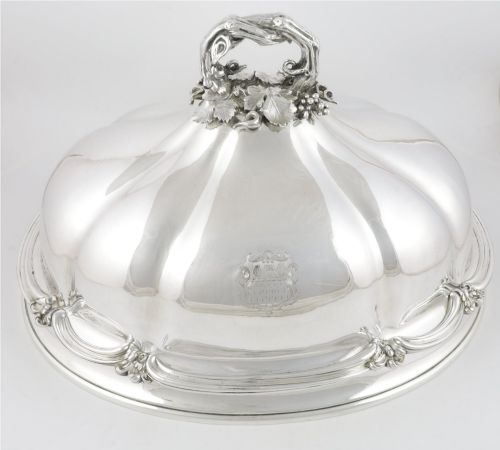
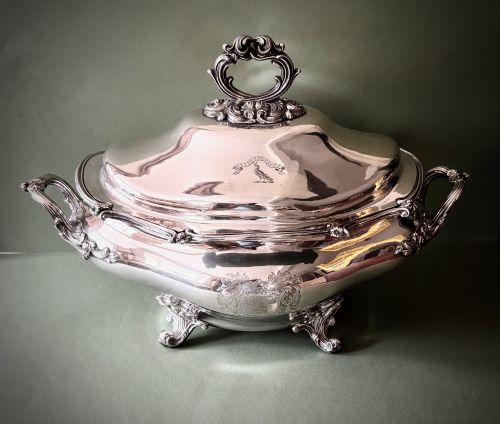
A sheffield plate dish cover is a substantial piece of serveware designed to shelter meats, game, and soups upon the dining table. These covers appear in forms ranging from large meat domes and game covers down to entree dishes, warming dishes, and soup tureens.
You are most likely to encounter nineteenth century examples, particularly from the Georgian and Regency periods. These pieces include single covers, paired entree dishes, and multi-piece tureens fashioned for formal dining.
How they were made
Makers fused a thin sheet of silver to a thicker body of copper, a process that created the distinctive material known as old sheffield plate. Craftsmen then shaped these fused metals into large domes and covers, often incorporating applied silver borders and decorative handles.
Base metal and plain silver plate also appear across the surviving pieces, while certain serving dishes incorporate wooden elements. Smithwork and plating techniques allowed makers to produce robust covers that retained heat for the dining table.
Listings feature items from the Georgian, Regency, and William IV periods, alongside nineteenth-century and 1920s examples.
What varies in quality
The distinction between ordinary and exceptional work rests on the crispness of the applied silver mounts and the weight of the underlying copper. Finer pieces retain their original silver fusion without excessive bleeding of the base copper through wear.
Provenance and maker attribution elevate certain items, particularly those bearing maker marks from recognised workshops or historic crests. The integrity of the original form, from the sweep of a meat dome to the balance of a tureen handle, dictates the standing of the piece.
Roberts Cadman·Henry Wilkinson·Boulton·Cresswick·Dan Holy
The Sheffield Plate Dish Cover Glossary
- Old Sheffield Plate
- A material created by fusing silver to a copper core before shaping. This technique preceded modern electroplating.
- Meat Dome
- A large domed cover used to keep joints of meat warm on the dining table. These often feature an insulated handle at the top.
- Entree Dish
- A shallow serving vessel with a removable cover, used for individual courses. Pairs of these dishes were standard on formal dining tables.
- Tureen
- A deep serving bowl with a matching cover, utilised for soups or sauces. They frequently rest on matching warming bases.
- Warming Dish
- A specialised serving vessel designed to hold hot water beneath the food chamber. This kept dishes warm throughout lengthy meals.
Sheffield Plate Dish Cover: Frequently Asked Questions
What is a sheffield plate dish cover?
A sheffield plate dish cover is a domed serving accessory designed to keep roasts, game, and entrees warm on the dining table. These pieces date primarily from the Georgian and Regency eras.
They combine a copper core fused with silver, creating durable vessels that were essential for formal nineteenth century dining.
How were these dish covers used?
Hosts placed these covers directly over roasted meats, fowl, or soups at the table to preserve heat between courses. Servants lifted the domes when carving or serving.
Larger meat domes and warming dishes ensured food remained hot during long, multi-course dining occasions.
How do I care for old sheffield plate?
Care requires gentle cleaning with non-abrasive silver polishes to preserve the thin layer of silver over the copper base. Avoid harsh scrubbing that might expose the underlying metal.
Store the pieces in dry conditions and handle them by their main bodies rather than relying solely on decorative finials.
How do I date a sheffield plate dish cover?
Dating relies on stylistic clues such as Georgian or Regency aesthetic details, along with maker marks stamped into the metal. The weight of the copper and the manufacturing method also point to specific periods.
Earlier pieces typically display fused silver construction, whereas later nineteenth century items may show different plating methods.