
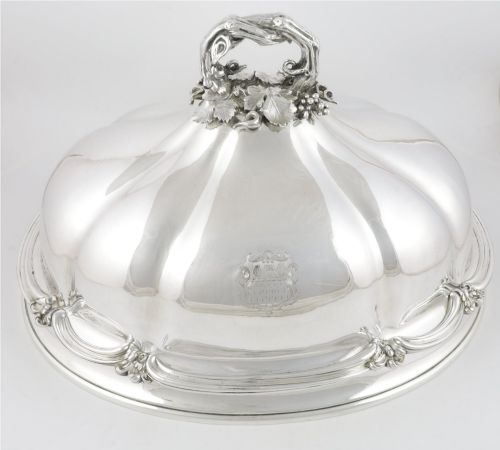

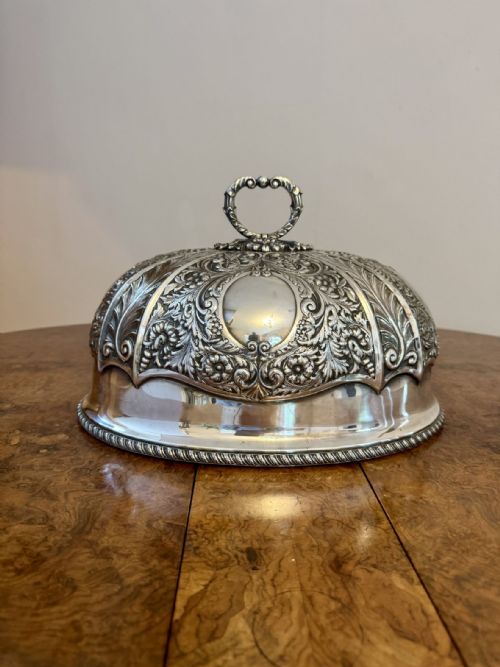


Vintage Silver Platter Cover
These vintage silver platter cover selections bring period elegance to the table, offering practical warmth and traditional style for grand dining displays.
Vintage Silver Platter Cover
A vintage silver platter cover serves to keep large joints and individual courses warm on the dining table before carving or serving. These pieces appear in forms such as meat domes, game covers, warming dishes, and rectangular or oval entree dishes.
The selections available here range across several distinct periods, including Georgian, Victorian, Edwardian, and the early twentieth century. Buyers encounter classic serving dishes and heavy domes bearing the marks of traditional British craftsmanship.
How they were made
Many of the earliest examples utilise Old Sheffield Plate, a technique fusing a thin sheet of silver onto a copper base, often visible along cut edges or worn highlights. Later pieces turn to electroplating, applying silver onto nickel silver or base metal substrates.
Silversmiths shaped these metals by hand hammering, rolling, and soldering components together to form rigid domes and fitted dishes. Handles and cast borders were produced separately and securely attached to the main body.
The listings span multiple eras from the Georgian period through the Edwardian age, featuring Old Sheffield Plate and electroplated nickel silver.
What varies in quality
The weight of the metal and the thickness of the original silver layer set superior examples apart from lighter utilitarian wares. Heavy gauge Old Sheffield Plate exhibits a deeper lustre and greater durability through decades of polishing.
Fine craftsmanship shows in the crispness of cast handle details, well-balanced proportions, and tight-fitting lids. Makers who invested care in seamless joints and substantial handles produced pieces that retain their structural integrity.
Roberts Cadman·Henry Wilkinson·Hamilton & Inches
The Vintage Silver Platter Cover Glossary
- Old Sheffield Plate
- An early method of fusing silver to a copper ingot before rolling into sheets. This technique predates electroplating and leaves characteristic copper edges.
- EPNS
- Electroplated Nickel Silver. A common industrial process developed in the nineteenth century to coat a base alloy with a thin layer of pure silver.
- Meat Dome
- A large, domed cover designed to trap heat over joints of meat on a serving platter. These items often feature robust loop handles on top.
- Entree Dish
- A shallow serving vessel with a fitted cover used for side dishes or secondary courses. They frequently appear in oval or rectangular formats.
- Warming Dish
- A specialised serving vessel featuring a compartment for hot water to keep food warm at the table. These pieces often include internal liners or base reservoirs.
Vintage Silver Platter Cover: Frequently Asked Questions
What is a vintage silver platter cover used for?
These items were traditionally placed over roasted meats, fowl, or side dishes on the dining table. Their primary purpose was to retain heat and protect the food until carving or serving commenced.
Today, collectors use them primarily for display in dining rooms or as functional serving pieces during formal dinner parties. They add an authentic period aesthetic to traditional table settings.
How do I tell Old Sheffield Plate from later electroplate?
Old Sheffield Plate reveals a thin line of red-brown copper where the silver layer has worn away along high points or cut edges. This fusion method creates a warmer tone than later chemical plating.
Electroplated pieces, marked as EPNS or silver plated, typically show base metal rather than copper where wear occurs. The silver coating on electroplated items is usually uniform across the entire surface.
How should I clean and maintain these silver covers?
Maintenance requires gentle washing with mild soapy water and drying with a soft cloth to prevent water spots. Avoid abrasive cleaning pads that can strip thin silver layers.
Use a quality silver polish sparingly only when necessary to remove tarnish. Store pieces in a dry environment away from direct sunlight and humidity.
How do I date a silver meat dome or entree dish?
Dating relies on stylistic clues, manufacturing techniques, and maker marks stamped into the metal. Georgian and early nineteenth-century pieces often utilise Old Sheffield Plate construction.
Later Victorian and Edwardian examples commonly employ electroplating on nickel silver bases. Comparing the form and weight against documented historical styles helps narrow the period further.