



Silver Plate Meat Dome
A silver plate meat dome brings grand dining ritual to the table, keeping roasts hot while lending heavy, polished splendour to the sideboard.
Silver Plate Meat Dome
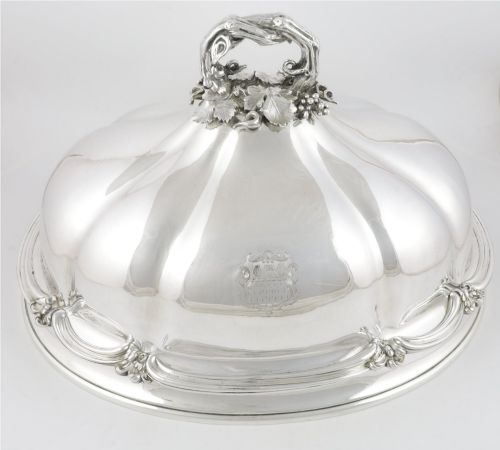
A silver plate meat dome is a large, domed cover designed to shield joints of meat and poultry on the dining table, preserving heat and protecting the roast until carving. These serveware pieces appear across various periods from the Georgian era through to the Edwardian period, with Victorian and nineteenth-century examples forming the core of what you will encounter.
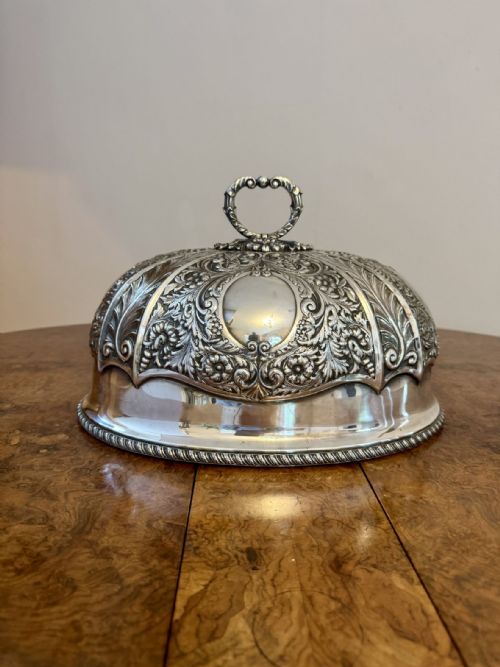
The primary forms include standalone meat covers, game covers, and larger turkey domes, occasionally accompanied by original well and tree warming bases or platters. You will find them shaped in smooth contours or richly engraved with ferns, crests, and armorials, reflecting their high-status origins in large country houses and formal dining rooms.
Materials and construction methods
Early pieces utilise Old Sheffield Plate, a method fusing a thin layer of silver onto a thicker copper base, often visible as a warm reddish undertone where the silver wears thin at high points. Nineteenth-century development introduced electroplating, known as EPNS, which allowed an even coat of silver over a base metal foundation.
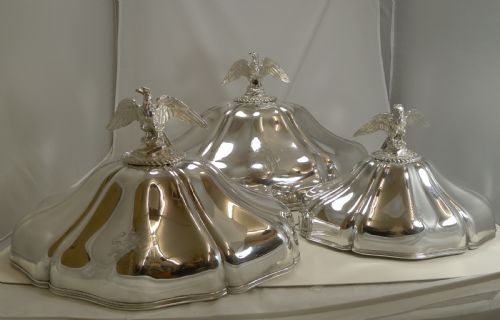
Makers shaped these heavy domes by hand-raising or spinning the metal over wooden blocks, reinforcing the rims with applied wire borders to withstand the rigours of service. Handles were cast separately and securely fixed to the apex, frequently taking the form of detailed branches, foliage, or heraldic creatures.
Several domes proudly bear the crests of dukes and fine London hotels, proving that even a joint of beef deserved aristocratic housing.
Markers of quality and craftsmanship
Quality rests in the weight of the metal and the integrity of the plating, where heavier gauge copper or thick silver deposit prevents denting and resists premature wear. Superior examples display crisp, deep chasing and hand-engraving rather than shallow machine work, maintaining sharp definition in crests and floral motifs.
The joinery of the handle and the finish of the interior reveal the maker's hand, with better domes showing smooth internal soldering and balanced proportions that sit true on a flat surface. Sets of graduated domes demand even greater skill, requiring proportional scaling across multiple pieces while retaining identical detailing.
Roberts Cadman·Henry Wilkinson·Boulton·Durand·Walker And Hall·Elkington And Co·Christofle
The Silver Plate Meat Dome Glossary
- Old Sheffield Plate
- An early composite material made by fusing silver to a copper core before rolling into sheets. This technique predates electroplating and leaves a characteristic copper bleed along edges.
- EPNS
- Electro-Plated Nickel Silver. A mid-nineteenth century and later process that deposits a layer of pure silver onto a nickel brass alloy base.
- Cloche
- A bell-shaped food cover used interchangeably with the term meat dome. The word derives from the French for bell.
- Well and tree base
- A serving platter featuring channels and a central well to catch meat juices. These bases frequently accompany larger meat domes.
- Chasing
- A metalsmithing technique where designs are hammered into the front of the metal from the exterior to create raised ornamentation without removing material.
Silver Plate Meat Dome: Frequently Asked Questions
How were meat domes used on the dining table?
Meat domes were placed over large joints of roast beef, venison, or poultry in the kitchen and carried to the dining table to retain heat during long meals. Guests or hosts removed the cover only when carving commenced.
In grand houses, servants managed the service, lifting the heavy silver plate domes simultaneously to reveal the meal. They frequently rested on matching platters or warming bases filled with hot water.
What is the difference between Old Sheffield Plate and silver plate?
Old Sheffield Plate involves physically fusing solid silver to a copper ingot through heat and pressure before rolling it into workable sheets. This creates a distinct material structure.
Later silver plate uses an electrical current to bond a thin skin of silver onto a base metal like nickel silver or Britannia metal. This twentieth-century method replaced the older fused technique entirely.
Can I use an antique meat dome for modern dining?
These domes function well for serving large roasts at modern dinner parties, provided the silver plate remains intact and clean. They keep food warm effectively while offering a striking tablescape centrepiece.
Care should be taken with older pieces to avoid scratching the surface with heavy carving utensils. Many owners choose to display them on sideboards or plate racks when not in active use.
How can I tell the age of a silver plate meat dome?
Dating relies on maker marks, manufacturing methods, and stylistic cues such as Regency borders or Victorian engraving. Old Sheffield Plate pieces generally point to the late eighteenth or early nineteenth century.
Heavier electroplated pieces with manufacturer stamps often date from the mid-nineteenth century onwards. Unmarked items require careful study of the handle design and construction seams to estimate the period.