
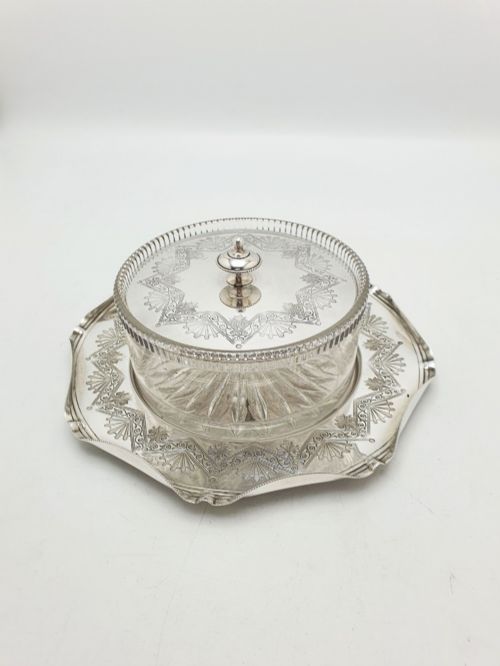
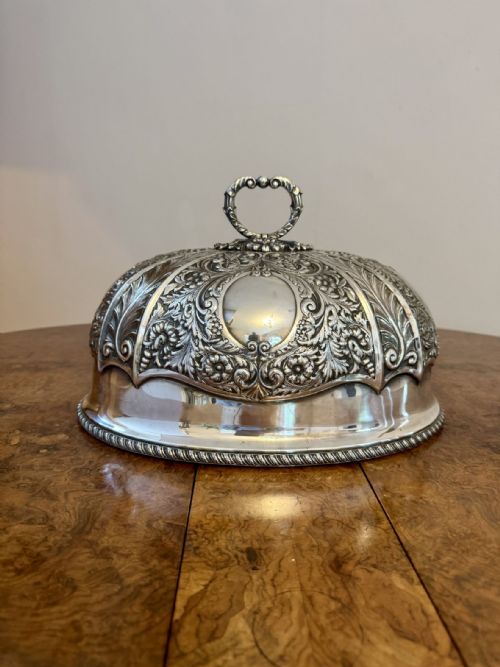


Victorian Silver Dish Cover
A victorian silver dish cover keeps the roast hot on the dining table, combining solid metal weight with brilliant nineteenth-century serveware design.
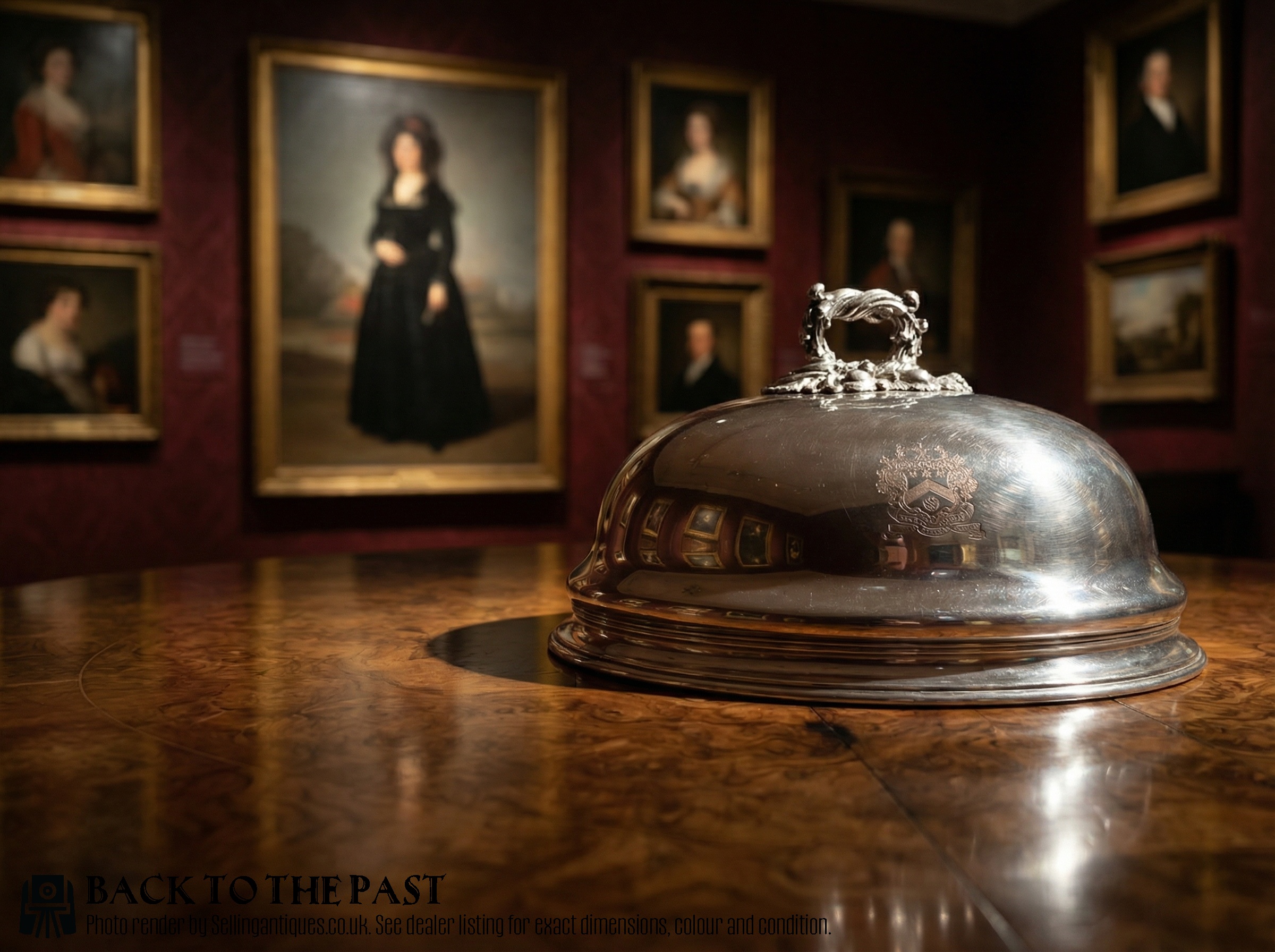
Victorian Silver Dish Cover
A victorian silver dish cover encompasses large meat domes, entree dishes, and specialised butter or cheese dishes designed to protect food at the table. These pieces emerge primarily from the nineteenth century and the Edwardian era, spanning periods from the 1850s through to the 1920s.
The selections found here frequently take the form of heavy silver plated meat covers, warming dishes, and covered vegetable tureens. Alongside these large domes, smaller glass-lined butter dishes and sweet bowls with matching covers appear regularly across the inventory.
Originating largely from British workshops and makers, these serving dishes reflect the formal dining habits of the Victorian and Edwardian periods. Pieces range from grand Regency style meat covers to compact silver plate cloches and egg warmers.
Defining characteristics of quality
Substance and weight separate robust serving vessels from lighter domestic wares, particularly in large meat domes and warming dishes. The thickness of the silver plate over the underlying base metal determines durability across decades of use.
Maker reputation and engraved heraldry or crests distinguish workshop output, alongside the crispness of applied cast handles and decorative borders. Intricate cut glass liners and fully functioning warming mechanisms indicate higher tier production.
Listings feature items spanning the 1850s to the 1920s, constructed from silver, silver plate, glass, copper, and cut crystal.
Hamilton and Inches·Mappin and Webb·Daniel and Arter·Edward and John Barnard·Walker and Hall·Elkington·William Hutton and Sons·Dan Holy·Hukin and Heath
The Victorian Silver Dish Cover Glossary
- Silver Plate
- A thin layer of silver bonded or electroplated onto a base metal such as copper or nickel silver. This technique allowed makers to produce impressive dining wares at a fraction of the cost of solid sterling silver.
- EPNS
- An abbreviation for electroplated nickel silver, a common base material introduced in the nineteenth century for durable tableware. It provides a stable, corrosion-resistant foundation for silver plating.
- Old Sheffield Plate
- An early method of fusing a thin sheet of silver to a thicker copper ingot before rolling them together into sheets. This technique predates modern electroplating and is prized by collectors for its soft lustre.
- Cloche
- A bell-shaped cover designed to fit over a plate or serving dish to retain heat or protect food. These forms are frequently encountered in silver plate from the Edwardian period.
- Entree Dish
- A shallow serving vessel with a removable cover, used for presenting courses during formal nineteenth-century meals. Pairs of these dishes often feature matching handles and crests.
Victorian Silver Dish Cover: Frequently Asked Questions
What is a victorian silver dish cover used for?
These covers kept roasts, entrees, and vegetables warm at the dining table before central heating and modern kitchen service.
They also protected food from dust and insects during long, multi-course Victorian meals.
How do I clean a silver plated dish cover?
Use a gentle cream polish formulated specifically for silver plate, applying it sparingly with a soft cloth.
Avoid harsh abrasive dips that strip the plating, and wash glass liners separately in warm soapy water.
Are these covers made of solid silver?
Most examples utilise silver plate, EPNS, or Old Sheffield plate over a base metal such as copper or nickel.
Solid sterling silver pieces do occur, though they are much less common than plated variants.
How can I tell the date of a piece?
Makers' marks, design styles, and registration numbers stamped into the metal provide clear clues to the decade of manufacture.
Victorian pieces often display specific Victorian registry lozenges or hallmarks corresponding to London or provincial assay offices.
Can I use these dishes for daily dining?
Silver plate serving pieces function well for modern dinner parties, provided they are hand washed immediately after use.
Careful handling prevents scratches to the plating and preserves the antique glass liners.