


Silver Food Cover
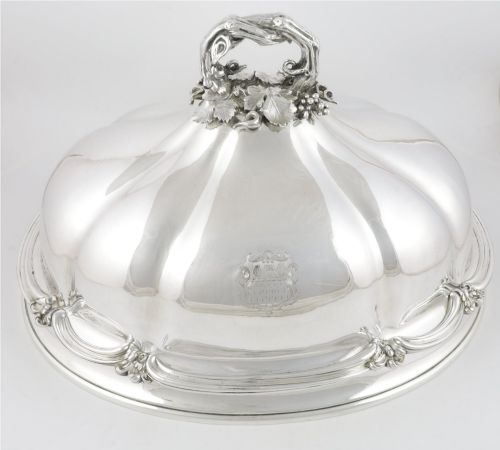
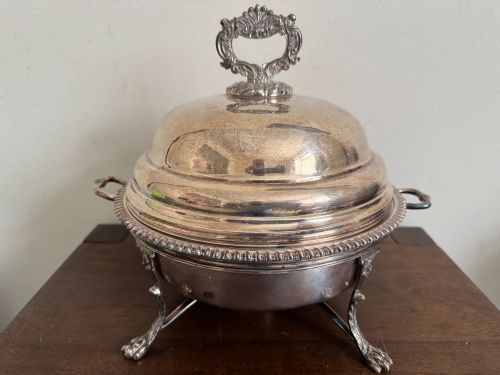
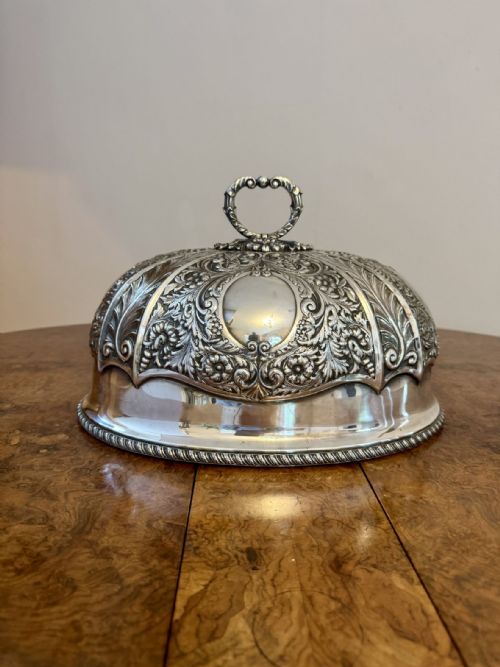
These silver food cover examples are grand dining service domes and dishes designed to keep roast joints and warm courses hot at table.
Silver Food Cover
When you search for a silver food cover, you encounter substantial serving pieces designed to protect and insulate large platters, meat joints, and entree dishes upon the dining table. The items range from tall, domed meat covers and game domes to complete supper sets featuring lampstands.
You are most likely to meet silver plated examples from the Victorian and Edwardian periods, alongside earlier Old Sheffield Plate pieces and occasional sterling silver Georgian items. These serveware forms often appear as rectangular or oval entree dishes, cloches, and graduated sets of domes.
How they were made
Many early pieces utilise Old Sheffield Plate, a method of fusing a thin sheet of silver onto a copper base, which often reveals subtle hints of copper showing through along high wear points and edges. Later pieces employ electroplating techniques, applying silver over base metal or nickel silver alloys like EPNS.
Master silversmiths shaped solid sterling silver by hand for high-status commissions, incorporating chased decoration, applied borders, and cast handles. Makers such as Matthew Boulton and Henry Wilkinson employed skilled metalworking to construct robust domes and warming dishes capable of retaining heat.
Listings feature items spanning the Georgian, Regency, Victorian, and Edwardian eras, executed in materials from sterling silver to copper.
What varies in quality
The distinction between standard utility items and top-tier pieces rests upon the crispness of applied cast mounts, the weight of the metal, and the integrity of the plating. Superior examples display deeply chased crests, armorial bearings, or naturalistic handle motifs such as eagles, which require advanced craftsmanship.
Proportion and scale dictate the visual success of a dome, with finer covers maintaining balanced curves and secure, well-insulated handles. The survival of original silver surfaces without excessive re-plating preserves the integrity and character of the object.
Roberts Cadman·Henry Wilkinson·Mappin and Webb·Boulton·Dan Holy·Durand·Christofle·Atkin Brothers
The Silver Food Cover Glossary
- Old Sheffield Plate
- A composite material made by fusing silver to a copper core before rolling into sheets. This technique predates electroplating and leaves characteristic copper edges.
- EPNS
- Electroplated Nickel Silver, a durable base metal alloy coated with a layer of silver using an electrical current. It became common during the Victorian period.
- Cloche
- A bell-shaped dome cover used to retain heat over individual plates or serving dishes at the table. The term derives from the French word for bell.
- Supper Dish
- A multi-compartment serving vessel often equipped with a central heating lamp or hot water reservoir beneath. These pieces kept entire meals warm during extended dining hours.
- Entree Dish
- A shallow serving dish with a matching removable cover, used for individual courses or side dishes. They frequently feature decorative handles and borders matching larger meat domes.
Silver Food Cover: Frequently Asked Questions
What is a silver food cover used for?
These domes and covers protected roasted meats, poultry, and hot courses from cooling while being carried from the kitchen to the dining table. They trapped heat and steam, ensuring the food remained warm throughout long formal meals.
Beyond practical thermal retention, large domed covers presented an impressive display of wealth and hospitality in grand dining rooms. Wealthy households matched their covers to the size of the serving platter beneath.
How do I date a silver food cover?
Sterling silver pieces carry clear hallmarks indicating the assay office, date letter, and maker's mark. These stamps provide precise years of manufacture for pieces produced in London and other assay towns.
Silver plated and Old Sheffield items rely on maker marks, construction methods, and stylistic cues such as Regency or Victorian decorative motifs. Copper showing through worn silver often points toward earlier Old Sheffield Plate production.
What is the difference between Old Sheffield Plate and silver plate?
Old Sheffield Plate involves physically fusing a sheet of sterling silver to a thick copper base using heat and pressure before shaping. This technique creates a distinct material structure where copper edges become visible over time.
Standard silver plate and EPNS utilise an electrochemical process to bond a thin coating of silver onto a base metal or nickel alloy. This later method creates a more uniform silver appearance without the characteristic copper bleed of fused plate.
How can I display a meat dome at home?
Large domes sit impressively upon sideboards, serving tables, or open shelving when paired with a suitably sized metal or ceramic platter. Their polished surfaces reflect light and add architectural weight to a dining room interior.
Smaller game covers and entree dishes work well as tabletop centrepieces or accent items on modular furniture. They require minimal handling and occasional gentle cleaning to maintain their reflective lustre.