
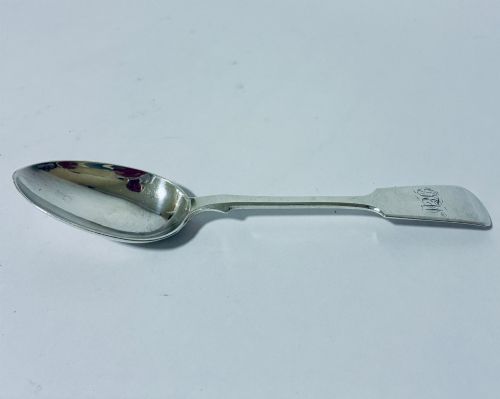
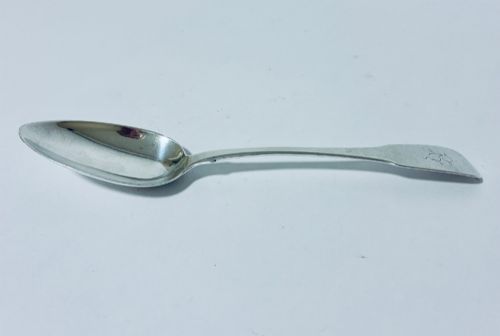
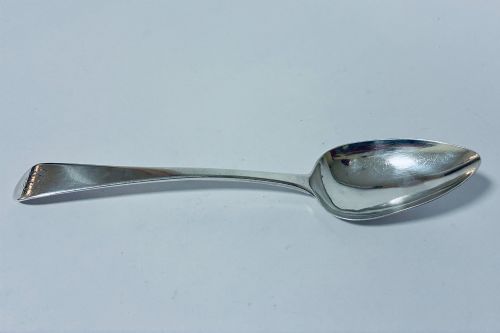
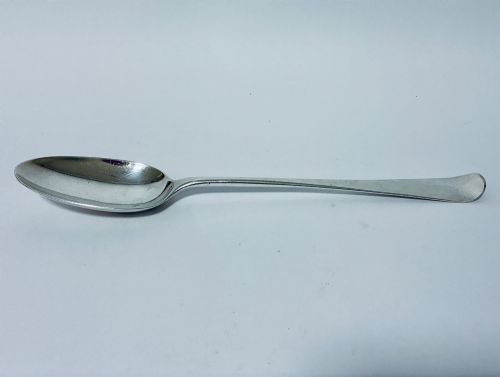
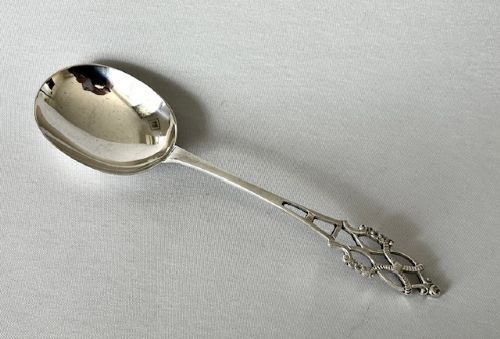


Silver Flatware Tablespoon
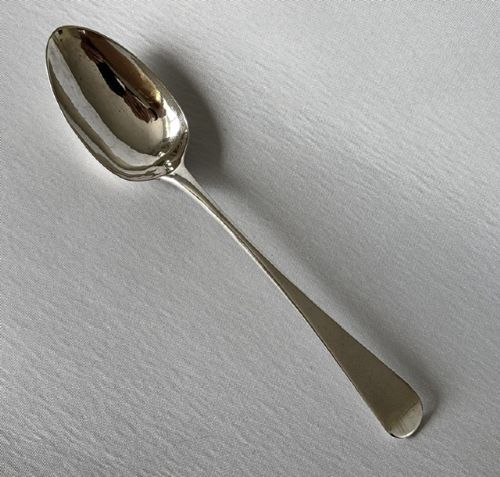
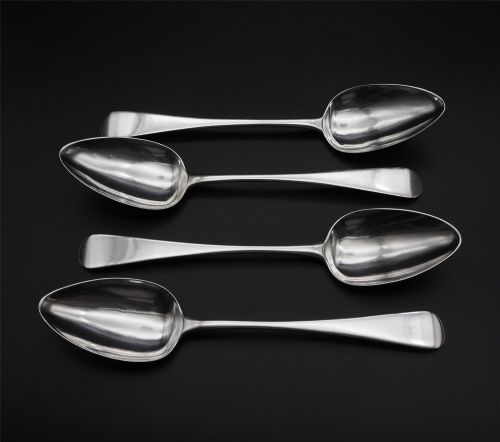
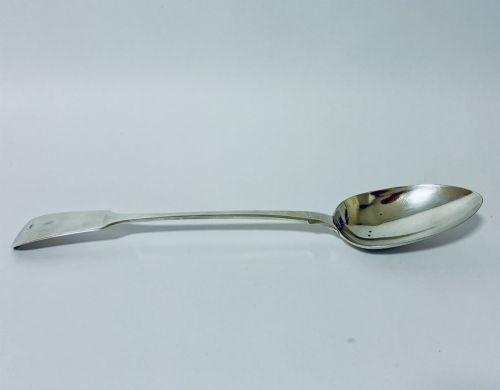
These silver flatware tablespoon examples bring substantial historical weight to the table, offering generous proportions forged in sterling or Britannia standard silver.
Silver Flatware Tablespoon
When you search for silver flatware tablespoon items, you encounter functional dining implements shaped across the seventeenth, eighteenth, and nineteenth centuries. These pieces encompass both single items and matched sets designed for serving or daily dining.
The versions most commonly met on this page span the Georgian era and the eighteenth century, featuring styles such as Dognose, Trefid, Old English, and rat tail patterns. Origins range from London and provincial English workshops to Scottish and Irish centres.
Makers utilised solid silver and sterling silver alongside higher-purity metal like Britannia silver, creating robust handles and deep bowls intended for practical domestic use.
How they were made
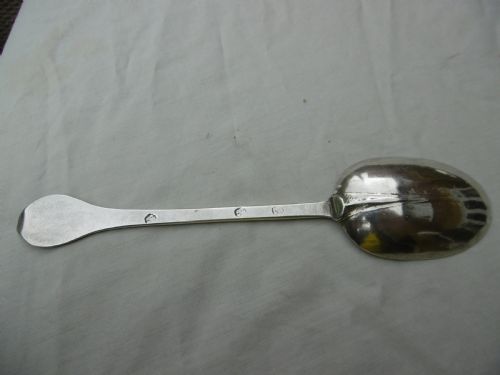
Silversmiths hammered ingots of sterling or Britannia silver into sheet metal before cutting the silhouette of the tablespoon and shaping the bowl by hand. Early examples often incorporate reinforced spines known as rat tails down the reverse of the bowl for added strength.
Hammers, stakes, and files shaped the terminal and stem, while punches applied hallmarks, maker's marks, and occasionally regional town marks or crests directly into the metal.
Geographic origins represented on this page include London, Exeter, Scottish provincial towns like Inverness, and French workshops.
What varies in quality
Quality rests upon the crispness of the original hallmarks, the retention of original bowl depth against decades of polishing, and the overall thickness of the silver stem. Pieces with distinct regional provincial marks or legible crests command greater interest.
The survival of early forms, such as seventeenth-century Trefid or Dognose profiles with unthinned bowls and sharp rattails, represents the upper tier of craftsmanship available in these dining implements.
Peter and Jonathan Bateman·James Tookey·Isaac Davenport·James Tait·Benjamin Prosser·John Pike of Plymouth·Richard Rae·J Ladyman·Jabez Daniell·Henri Soufflot
The Silver Flatware Tablespoon Glossary
- Dognose tablespoon
- An early eighteenth-century spoon style featuring a widened, upturned terminal resembling a dog's nose. This form bridges the gap between the earlier Trefid and the later Hanoverian pattern.
- Trefid tablespoon
- A late seventeenth-century spoon distinguished by a notched, tripartite terminal at the end of the handle. It frequently includes intricate moulded decoration on the upper stem and back of the bowl.
- Rat tail
- A tapering ridge of metal extending down the back of the spoon bowl from the stem. This feature reinforces the joint between handle and bowl on early silver flatware.
- Britannia silver
- A higher standard of silver alloy containing ninety-five point eight percent pure silver, legally mandated in England between 1697 and 1720. It appears on early pieces alongside standard sterling.
Silver Flatware Tablespoon: Frequently Asked Questions
What is the difference between Britannia silver and sterling silver?
Britannia silver contains a higher purity of silver, specifically ninety-five point eight percent, compared to sterling silver's ninety-two point five percent. This standard was legally required for flatware and hollowware in England during the early eighteenth century.
Items made to this standard frequently bear the figure of Britannia and a lion's head erased instead of the traditional lion passant and leopard's head.
How were silver tablespoons used historically?
Silver tablespoons served multiple roles at the dining table, functioning both as personal eating utensils and as serving spoons for communal dishes. Their deep bowls and sturdy stems made them suitable for broths, gravies, and large portions.
Over the centuries, as dining habits evolved, the tablespoon became primarily a serving implement while smaller spoons took over individual dining duties.
Can I use antique silver tablespoons daily?
Antique silver tablespoons can be used for dining provided they are washed by hand promptly after use with mild soap and warm water. Avoid abrasive cleaners or modern dishwashers, which can damage the antique surface and wear away crisp hallmarks.
Regular, gentle handling actually helps maintain a warm patina on the silver without accelerating wear on the bowl edges or engraved crests.