
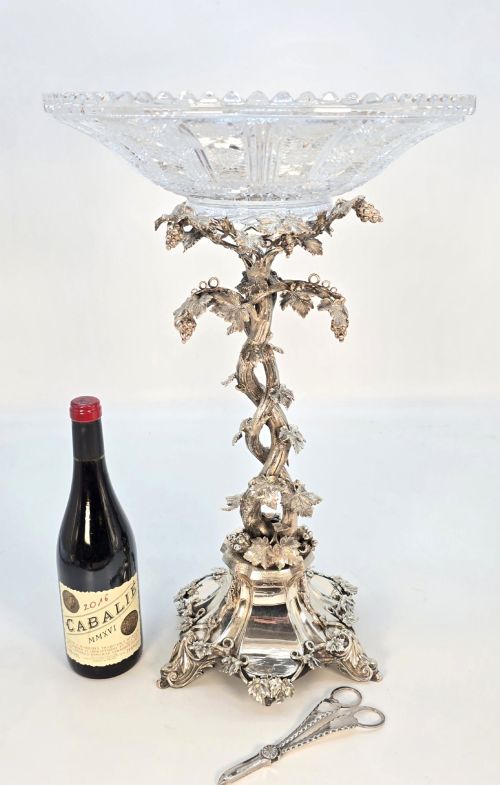


Silver Epergne Stand
These silver epergne stand pieces bring striking height and dramatic centrepiece presence to a dining table.
Silver Epergne Stand
A silver epergne stand combines a supportive metal frame with elevated holders for glass bowls, trumpets or flower pots. When you search for a silver epergne stand, you encounter elaborate table centrepieces designed to hold fruit, sweets or floral displays.
The pieces on this page span the Victorian and Edwardian eras, alongside earlier Regency and Old Sheffield Plate examples. You are most likely to meet silver plated stands fitted with cut glass, etched glass or cranberry glass inserts.
Forms range from twin fluted holders and flower pot stands to grand nautical centrepieces and multi-trumpet epergnes. These objects served as impressive focal points for formal dining rooms during the nineteenth and early twentieth centuries.
Factors that separate examples
Quality rests in the crispness of the metal chasing, the weight of the silver plating and the integrity of the fitted glass components. Superior examples display balanced proportions between the central stand and its detachable arms or trumpets.
The presence of matching original glass inserts significantly elevates an epergne, as replacement vessels often disrupt the design harmony. Maker attribution to notable firms adds another layer of distinction to the finished object.
Sailors and princes once inspired grand nautical centrepiece designs, proving that even a dining table could double as the high seas.
Walker & Hall·James Deakin·James Dixon & Sons
The Silver Epergne Stand Glossary
- Epergne
- A large table centrepiece featuring multiple branching holders for fruit, flowers or sweetmeats. This form dominates the grander dining settings of the nineteenth century.
- Old Sheffield Plate
- A fused composite material made by melting a sheet of sterling silver to a thicker copper base before rolling. This technique predates modern electroplating.
- EPNS
- Electroplated nickel silver, a common base metal method widely utilised for domestic tableware from the mid-nineteenth century onwards. It provides a durable silver coating over a sturdy core.
- Cranberry glass
- A rich red-pink glass coloured through the addition of gold chloride into the molten batch. It became exceptionally popular during the Victorian period for decorative tablewares.
- Centrepiece
- A principal decorative object placed in the middle of a dining table. These items coordinate with the surrounding place settings to establish the room's decorative scheme.
Silver Epergne Stand: Frequently Asked Questions
How do I clean a silver epergne stand?
Use a soft cloth and a gentle silver polish specifically formulated for plated or sterling surfaces to avoid removing the metal layer. Take care to remove glass inserts before cleaning so moisture does not get trapped in the sockets.
Wash the glass components separately in warm soapy water using a non-abrasive sponge. Dry every piece thoroughly before reassembling the stand.
What were epergnes originally used for?
Dining rooms of the nineteenth century utilised these grand structures to serve fruit, sweetmeats and desserts during formal multi-course meals. The vertical tiers allowed hosts to present multiple dishes while conserving crowded table space.
They also functioned purely as decorative floral centerpieces when fitted with trumpet vases or flower pots. Their height encouraged lively conversation underneath the branching arms.
How do I date a silver epergne?
Examine the style of the metalwork, noting whether the piece displays the ornate floral motifs of the Victorian period or the flowing, organic lines characteristic of Art Nouveau. Maker marks stamped into the base often provide a direct link to recorded partnership dates.
Construction methods also offer clues, such as the distinct edge lines of Old Sheffield Plate compared to the uniform finish of later electroplated nickel silver.
Are the glass bowls usually original?
Many surviving pieces retain their matched period glass inserts, though some have acquired sympathetic replacements over the decades. Inspect the fit of the glass within the metal rings to see if the proportions sit naturally.
Colour consistency and wear marks on the base of the glass help determine if the insert belongs to the original manufacture period of the stand.