




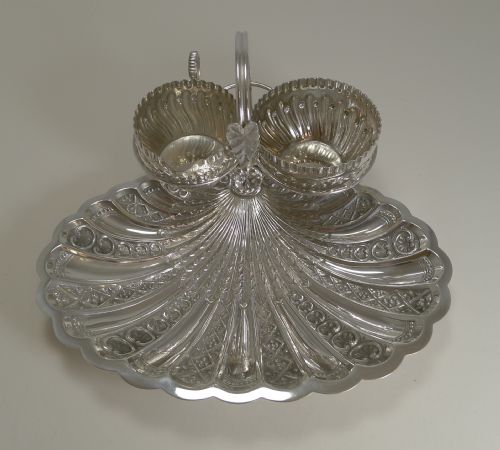
Silver Dessert Bowls
Silver dessert bowls bring formal elegance to the table, combining polished metal with glass liners or matching spoons for serving fruit, berries, and sweets.
Silver Dessert Bowls
When you search for silver dessert bowls, you encounter a range of forms spanning the Georgian, Victorian, Edwardian, and Art Deco periods. These include dedicated dessert dishes, fruit serving sets, strawberry dishes, and sugar bowls accompanied by matching spoons.
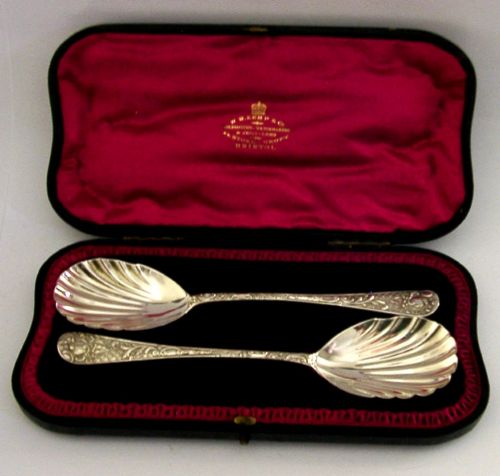
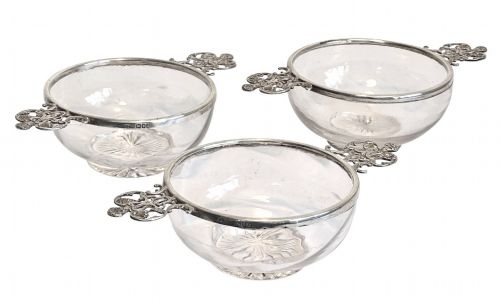
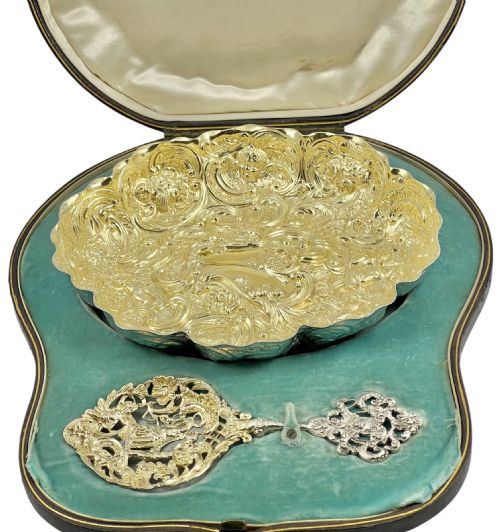
The pieces on this page appear in sterling silver and silver plate, frequently paired with cranberry glass, clear glass liners, or fitted presentation cases. Makers and manufacturers of these items utilised velvet, satin, and leather linings within their original boxes.
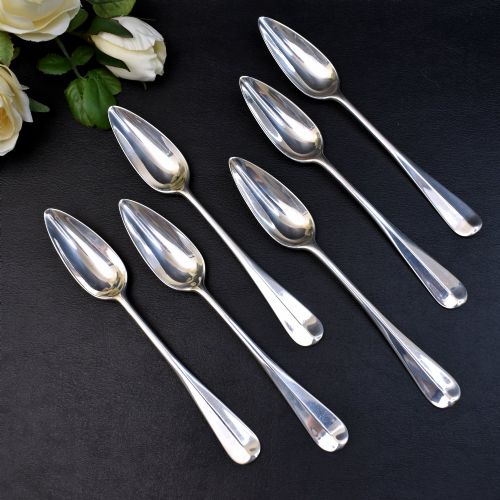
Serving spoons, sifter spoons, and grapefruit spoons often accompany the bowls as part of matched sets or cased pairs. The forms shift from ornate, engraved berry spoons of the nineteenth century to clean, geometric lines of the Art Deco era.
How They Were Made
Silversmiths shaped sterling silver and silver plate through hammering, casting, and piercing, creating intricate openwork patterns on bowl rims and spoon handles. Engravers added detailed foliage and fruit motifs to the surface of berry spoons and serving dishes.
Glass components, including cranberry glass bowls and clear glass liners, were mouth-blown and fitted precisely to metal mounts or pierced silver frames. Manufacturers lined presentation cases in velvet, satin, and leather to protect the polished metal and glass components during storage.
Listings feature sterling silver, silver plate, glass, and gold gilt across Georgian, Victorian, Edwardian, and Art Deco periods.
What Varies in Quality
The weight of the metal and the crispness of the chasing distinguish heavier sterling silver pieces from lighter silver-plated alternatives. Deep, manual engraving on spoon bowls and handles demonstrates a higher level of craftsmanship than surface stamping.
The presence of original fitted cases and matching glass liners elevates the integrity of a set. Maker marks from established firms indicate higher standards of period production compared to unmarked items.
Hamilton & Inches·William Comyns·William Chawner II·Viners·Roberts and Belk
The Silver Dessert Bowls Glossary
- Sterling silver
- An alloy containing 92.5 percent silver by mass, with the remainder composed of copper or other metals. This standard marks quality British tablewares across the Georgian and Victorian periods.
- Silver plate
- A base metal coated with a thin layer of silver through electroplating or older mechanical methods. It offers the visual appeal of solid silver at a different production level.
- Silver gilt
- Silver that has been coated with a thin layer of gold on its surface, often seen on the interior of sugar bowls and the bowls of berry spoons. This technique protects the silver from tarnishing by acidic foods.
- Berry spoon
- A large serving spoon with an embossed and engraved bowl decorated with fruit and foliage. These spoons were often retrofitted or manufactured during the Georgian and Victorian periods for serving soft fruits.
- Cranberry glass
- A rich pinkish-red glass produced by adding gold chloride to the molten glass batch. It appears frequently in late-nineteenth-century serving sets paired with pierced silver spoons.
Silver Dessert Bowls: Frequently Asked Questions
What are silver dessert bowls used for?
These bowls served discrete courses at the end of a formal meal, specifically for fresh fruit, berries, stewed plums, or sweetmeats. Sets often included specialised spoons or glass liners to handle acidic foods without damaging the metal.
Over time, their domestic function expanded from dining rooms to general display and occasional entertaining, particularly when paired with matching presentation cases.
How do I identify a Georgian silver bowl?
Georgian pieces display hallmarks indicating production between 1714 and 1830, featuring monarch duty marks and specific maker initials. The craftsmanship relies on hand-hammered sterling silver, often featuring crisp, heavy chasing rather than machine stamping.
Designs from this era emphasise classical proportions, weighty handles, and hand-engraved fruit motifs on accompanying berry spoons.
What is the difference between sterling and plate?
Sterling silver is a solid precious metal alloy regulated by strict purity standards, carrying official assay office hallmarks. Silver plate consists of a base metal, such as nickel silver or copper, coated with a thin layer of pure silver.
Plated items generally show base metal beneath worn spots through heavy use, while sterling maintains its metal composition throughout.
How should I clean silver dessert bowls?
Clean sterling silver and silver plate using a specialised non-abrasive silver polish and a soft cloth to remove tarnish without scratching the surface. Wash glass liners separately in warm, soapy water and dry them completely before reassembly.
Avoid soaking pieces that feature velvet, satin, or leather presentation cases, as moisture damages the historic lining materials.
Are glass liners original to the bowls?
Original glass liners fit the contours of the pierced metal frame precisely, showing matching age-related wear or tiny bubbles from period glass production. Replacements often sit loosely or exhibit modern glass characteristics.
Examining the rim and base of the glass helps determine whether it was blown to fit the specific silver mount.