

Silver Condiment Mustard Pot
A silver condiment mustard pot brings formal dining history to the table, offering a small, hinged vessel designed to serve table mustard.
Silver Condiment Mustard Pot
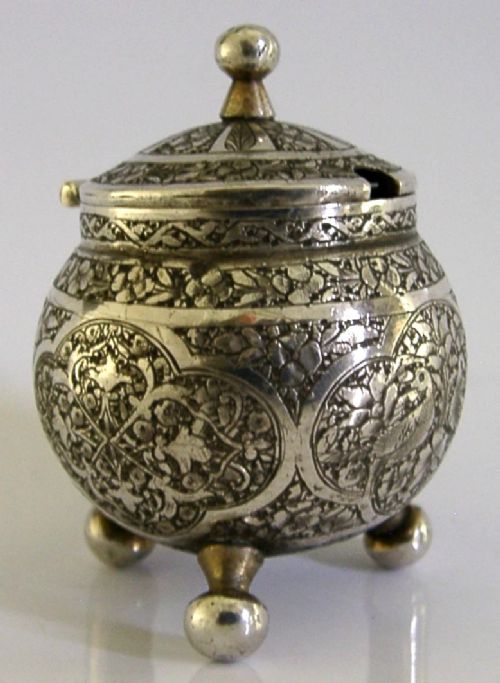
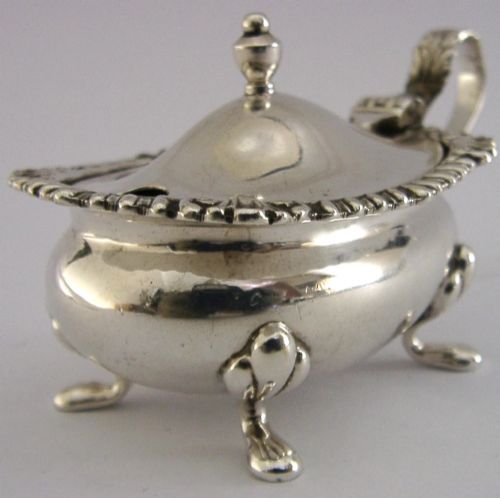
A silver condiment mustard pot is a table vessel created to hold and serve prepared mustard during formal meals. When you browse this page, you encounter pieces spanning from the Georgian period through the Victorian, Edwardian, and Art Deco eras, alongside mid-century examples.
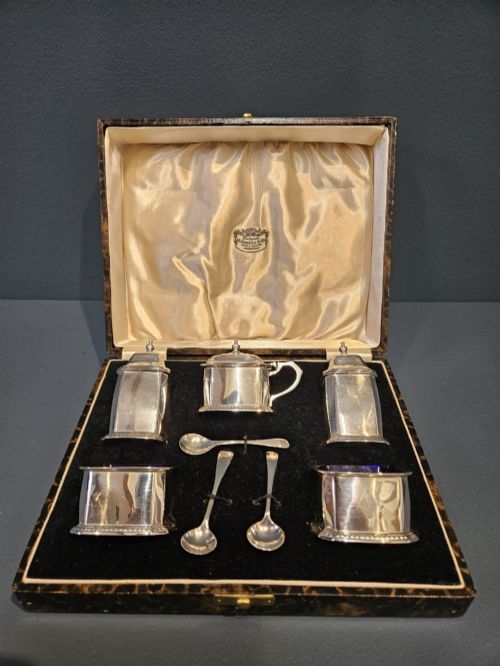
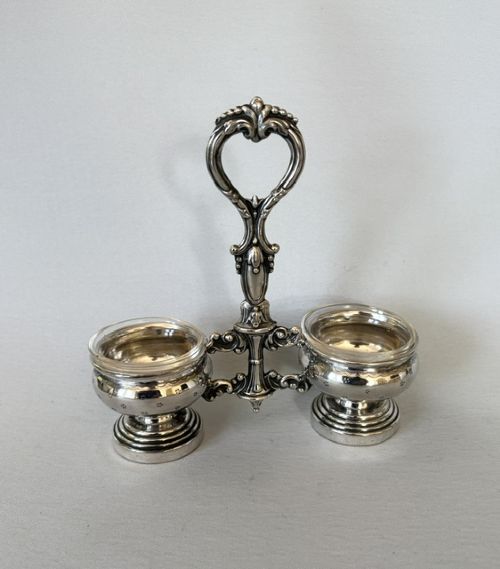
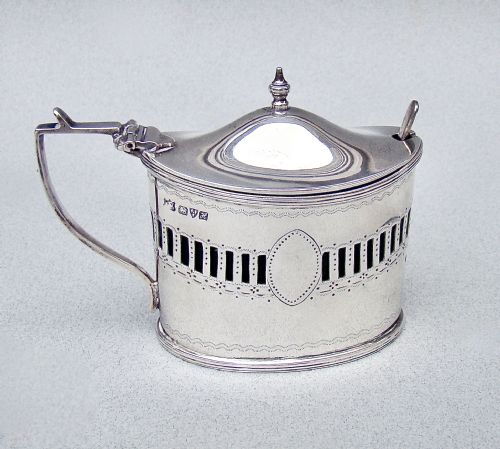
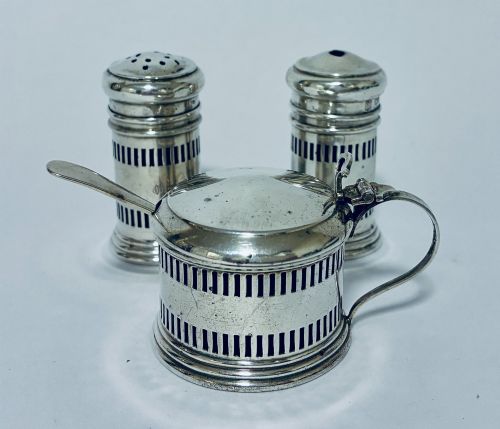
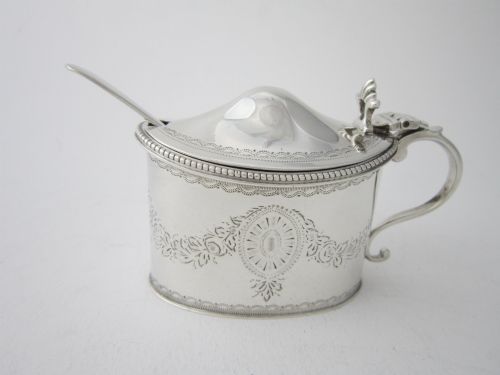
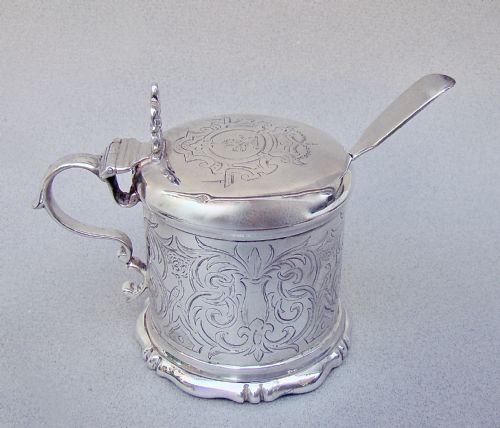
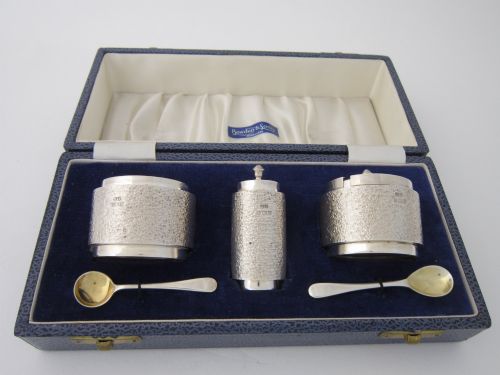
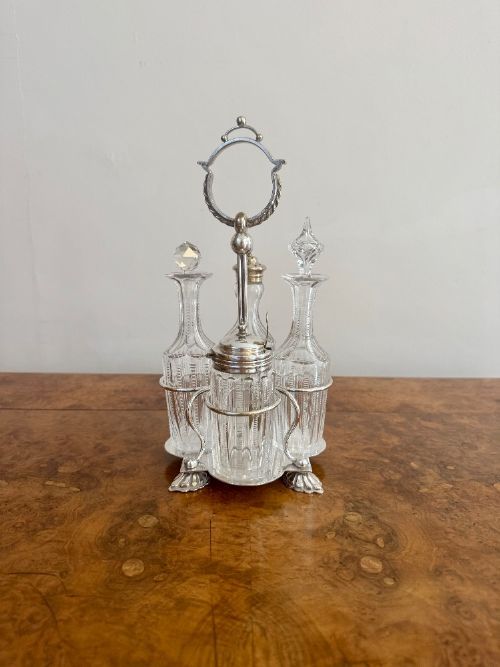
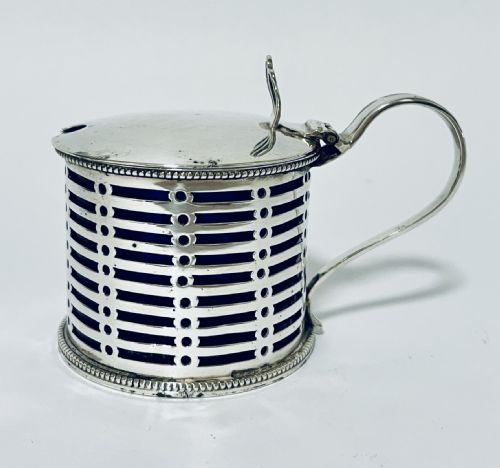
The most common forms on this page include standalone mustard pots and those housed within larger cruet sets or condiment sets. These range from plain cylindrical drums and octagonal bodies to pierced silver designs fitted with contrasting liners.
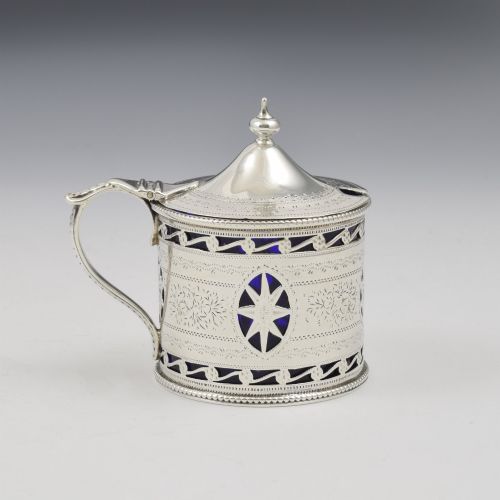
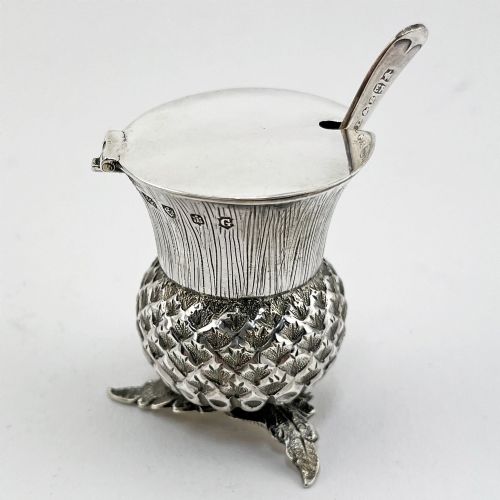
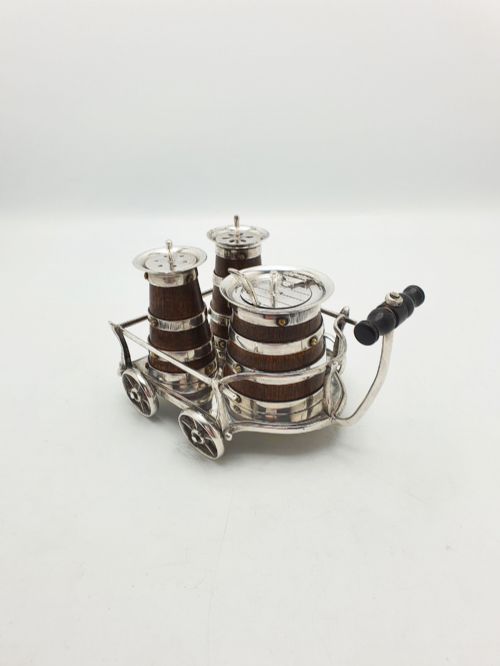
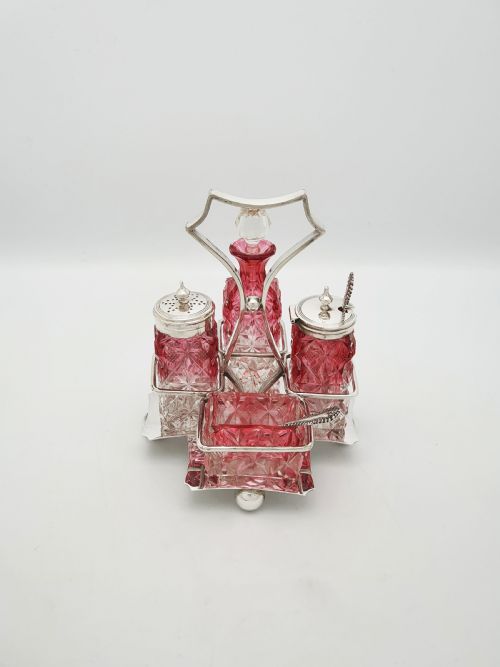
Makers produced these dining items in sterling silver and silver plate, frequently pairing the metal framework with glass or cobalt glass inserts. Some examples take distinct novelty forms, including thistle shapes or oak barrels.
How They Were Made
Silversmiths utilised sterling silver and silver plate to form the body of each mustard pot, often employing piercing techniques to create decorative geometric or floral patterns in the metalwork. Master craftsmen hammered, spun, or cast the silver components before assembling hinged lids and sturdy handles.
Internal liners made from clear, cranberry, or cobalt glass were shaped to fit snugly inside pierced or solid silver frames. Additional materials such as velvet, satin, walnut, and oak occasionally appeared in the construction of accompanying stands and presentation boxes.
Materials appearing across these condiment vessels include cobalt glass, walnut wood, and cut crystal.
What Varies in Quality
Quality rests upon the weight of the silver and the crispness of the silversmith's piercing and engraving work. Thicker gauge sterling silver provides a substantial feel in the hand, whereas lighter plated items exhibit less rigidity.
The presence of an original, undamaged glass liner greatly influences the integrity of a piece. Well-preserved maker marks and clear hallmarks stamped by regional assay offices confirm the origin and silver standard of the vessel.
Goldsmith & Silversmith's·Alfred Marston·Nathan & Hayes·Charles & George Fox·William Neale·Mappin Brothers·Charles Fox II·Matthew Boulton·Alexander Macrae
The Silver Condiment Mustard Pot Glossary
- Cruet set
- A matched collection of bottles, jars, and pots designed to hold condiments like mustard, oil, vinegar, salt, and pepper on the dining table. These sets sit within a dedicated metal frame or stand.
- Hallmark
- A series of official marks stamped onto silver items to guarantee the purity of the metal, the maker, and the year of assay. These marks provide definitive historical dating for British pieces.
- Liner
- A removable glass insert placed inside pierced silver mustard pots to protect the metal from vinegar and mustard acids. Liners frequently feature cobalt or cranberry hues.
- Piercing
- A decorative technique where silversmiths cut openwork patterns through the sheet metal of a mustard pot wall. This method reveals the coloured glass liner housed within.
- Drum mustard pot
- A cylindrical form of mustard pot popular during the Georgian and Victorian periods, characterised by straight vertical sides and a flat hinged lid.
Silver Condiment Mustard Pot: Frequently Asked Questions
What is a silver mustard pot?
A silver mustard pot is a small tabletop container utilised for serving prepared mustard during meals. These vessels typically feature a hinged lid and an integrated spoon slot.
Most examples include a glass liner to protect the silver metal from the corrosive properties of mustard.
How do I use a mustard pot today?
A vintage mustard pot functions effectively on the modern dining table to serve specialty mustards, condiments, or even jams. Simply insert a small condiment spoon through the lid cutout for serving.
Careful hand washing preserves the interior glass liner and the polished silver exterior.
How do I date a silver mustard pot?
Dating relies upon the assay office hallmarks stamped into the silver body or lid. These tiny struck symbols indicate the specific year the piece was tested and certified.
Stylistic elements such as Georgian drum shapes or Art Deco geometric lines also point toward specific manufacturing decades.
What is a cruet set?
A cruet set combines multiple condiment containers, such as mustard pots, salt cellars, and oil cruets, mounted together in a metal frame. These sets kept table seasonings organised during formal dining.
They appear in silver plate and sterling silver across Victorian and Edwardian dining rooms.