


Silver Collar Stick
A silver collar stick combines practical daily support with concealed utility or decorative silver mounts from the nineteenth and early twentieth centuries.
Silver Collar Stick
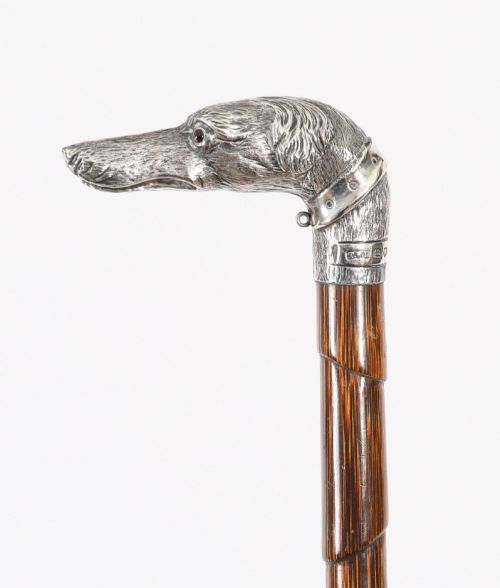
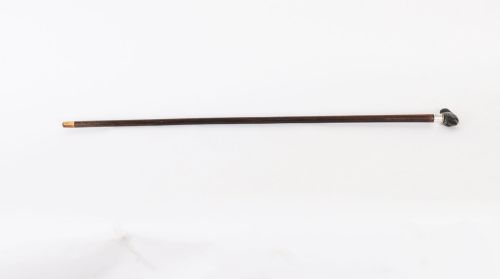
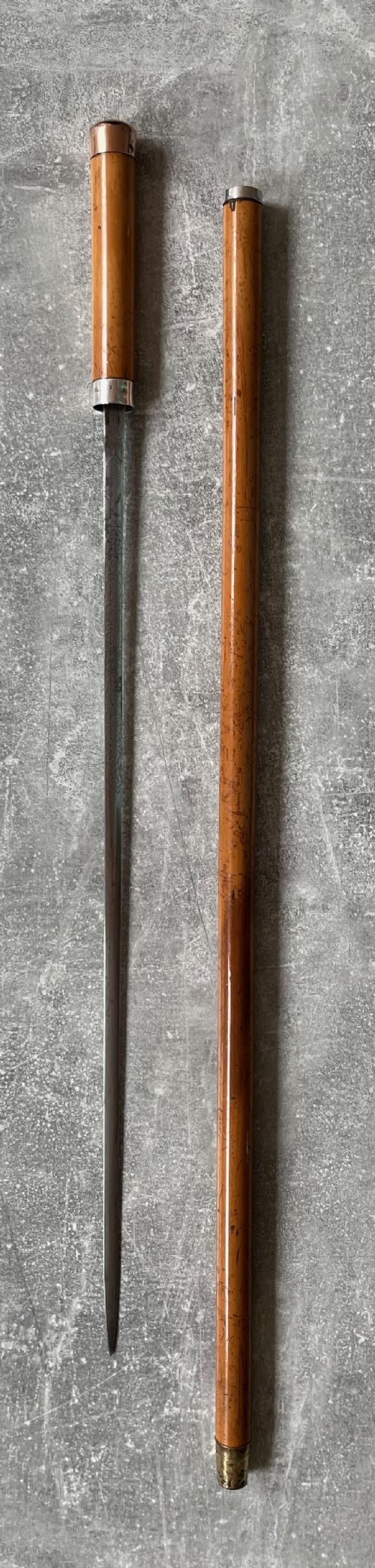
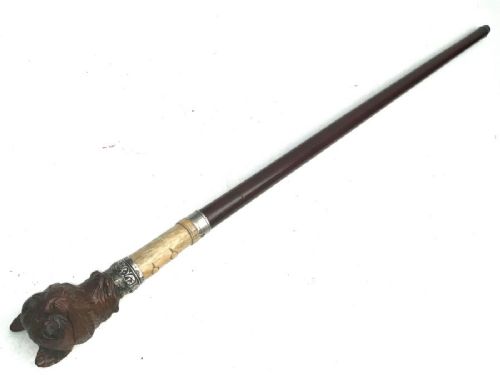
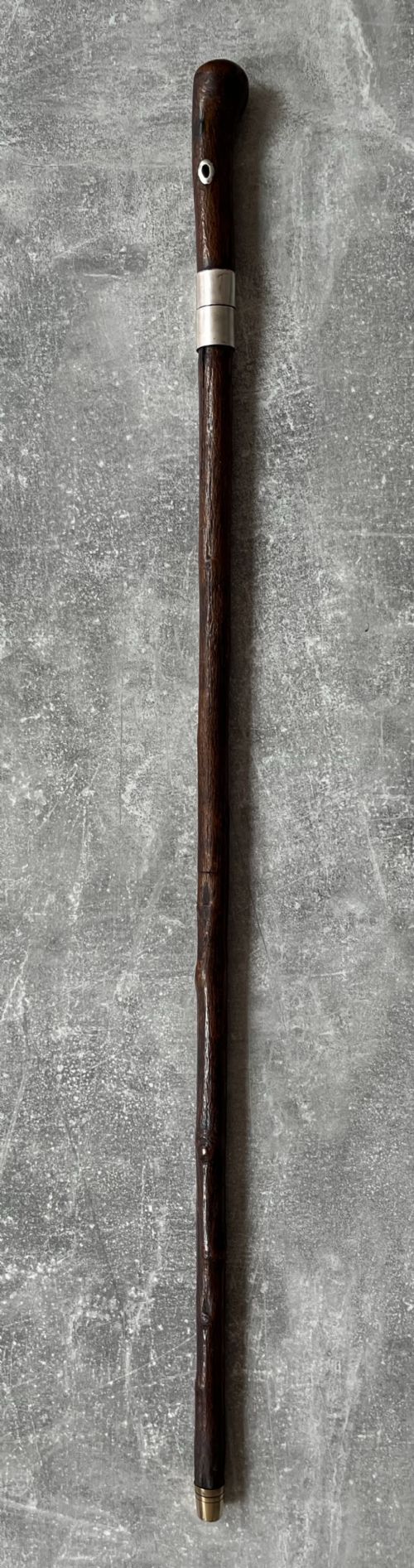
The assortment on this page includes specimens with horn, antler, wood, and novelty animal head handles alongside plain and engraved metal bands. Many examples integrate functional compartments or blades housed securely within the shaft.
Dating ranges from the early nineteenth century through the 1930s, displaying styles from traditional British craftsmanship to Anglo-Indian influence. Buyers encounter numerous variations featuring silver mounts paired with robust natural timbers.
Materials and construction methods
Makers utilised resilient timbers and natural materials such as malacca cane, bamboo, ebonised wood, palm wood, hazel, and hardwood for the shafts. These woods were chosen for straightness and durability during daily use.
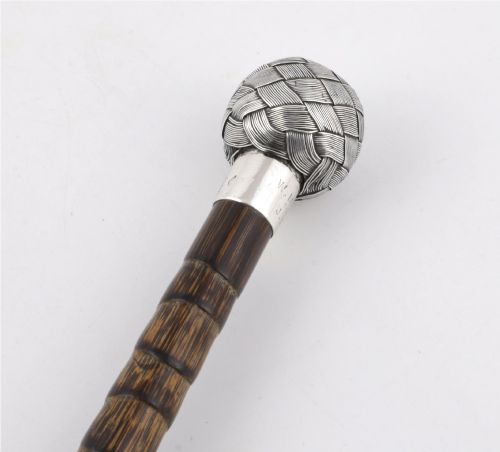
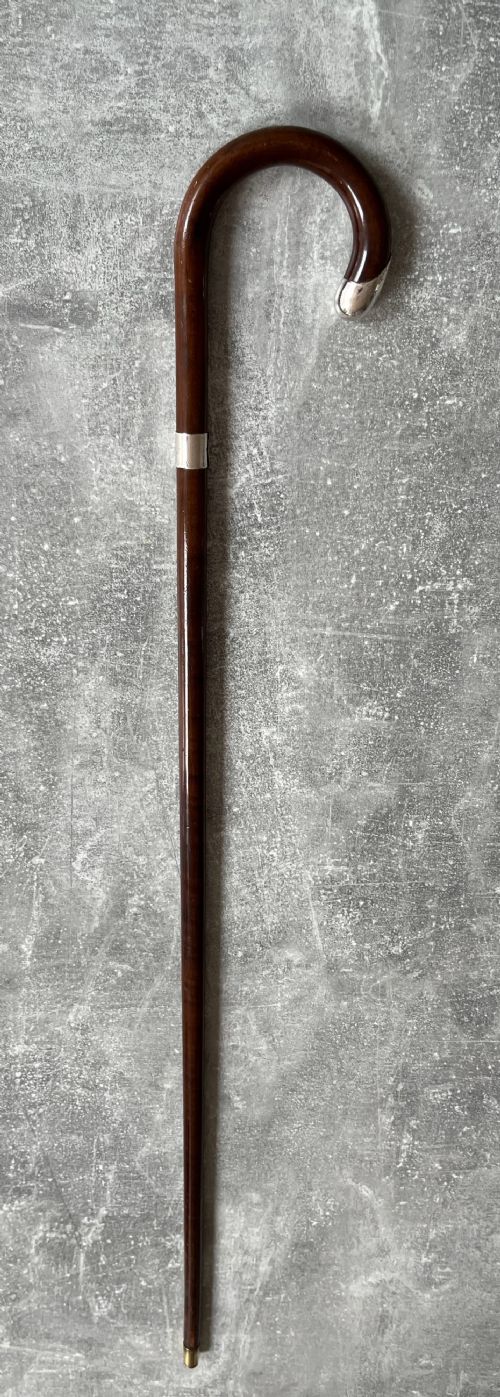
Handles incorporated horn, bone, stag horn, wood, and metal formed into plain crooks, knops, or carved animal heads. Silver collars and mounts were then fitted securely between the handle and the main shaft, often bearing hallmarks or engravings.
Determinants of quality
Quality rests in the precision of the metalwork, the clarity of any hallmarks on the silver band, and the integrity of the join between handle and shaft. Finer examples display detailed hand-engraving on the collar and superior materials like solid horn or seasoned malacca.
The sophistication of integrated mechanisms, such as concealed blades from makers like Wilkinson or hidden snuff box compartments, elevates the standing of an individual cane. Robust construction of the internal fittings ensures the piece functions as intended.
Henry Borlase Stevens·Wilkinson Blade·John Collard Vickery
The Silver Collar Stick Glossary
- Knop
- A rounded knob or ornamental swelling at the top of a walking stick handle. This serves as the primary grip for the user's hand.
- Ebonised
- Wood treated to imitate the dark appearance of ebony. This finish provides a uniform black surface popular in nineteenth-century cane production.
- Hallmark
- An official stamp applied to precious metals indicating standard of purity and origin. Silver collars often bear these assay marks for dating purposes.
Silver Collar Stick: Frequently Asked Questions
What is a silver collar stick?
A silver collar stick is a historical walking cane featuring a decorative metal band situated directly beneath the handle. These items often incorporate carved grips or hidden functional elements.
They reflect the fashion and utility standards of Victorian and Edwardian gentlemen.
How do I date a walking cane?
Dating relies heavily on legible hallmarks stamped onto the silver collar, which reveal the assay office and year of manufacture. Stylistic markers such as Art Deco motifs or Victorian carving styles also help establish the era.
Material choices and historical blade makers provide further chronological context.
Were all sword sticks functional?
Many historical sword sticks housed genuine steel blades produced by notable manufacturers for personal defence or military use. The blades were safely secured within the wooden shaft until released.
Construction quality varied from utilitarian items to bespoke pieces with engraved metalwork.
How should I store a walking stick?
Canes require storage in a vertical position away from direct sunlight and excessive humidity to protect the wood and natural horn components. Proper environmental conditions prevent warping of the shaft and cracking of the handle.
Using a traditional stick stand keeps the pieces secure and stable.