
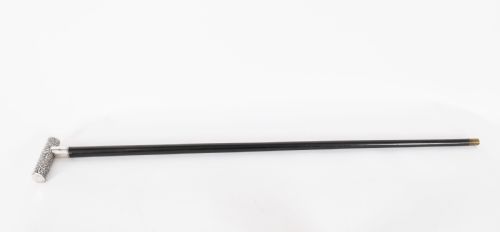
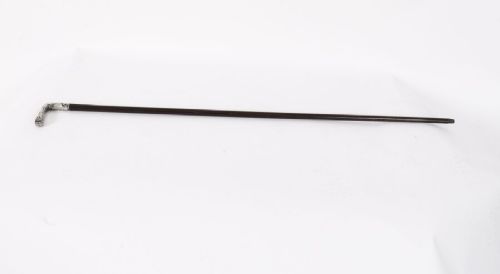
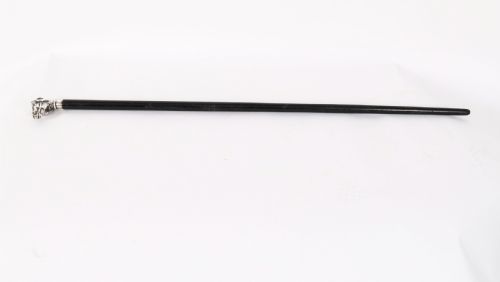
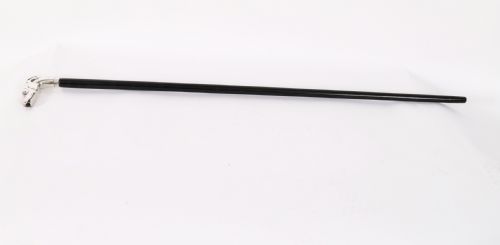


Ebonised Walking Stick
An ebonised walking stick delivers dark, polished contrast, offering a dependable daily support or a distinguished social accessory.
Ebonised Walking Stick
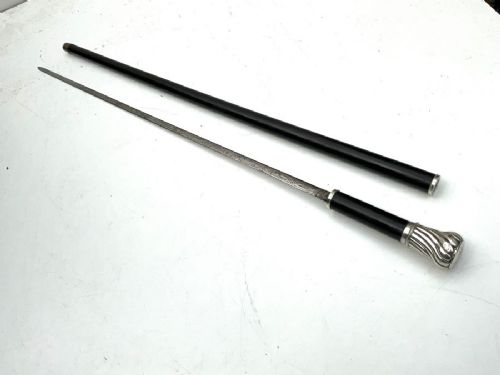
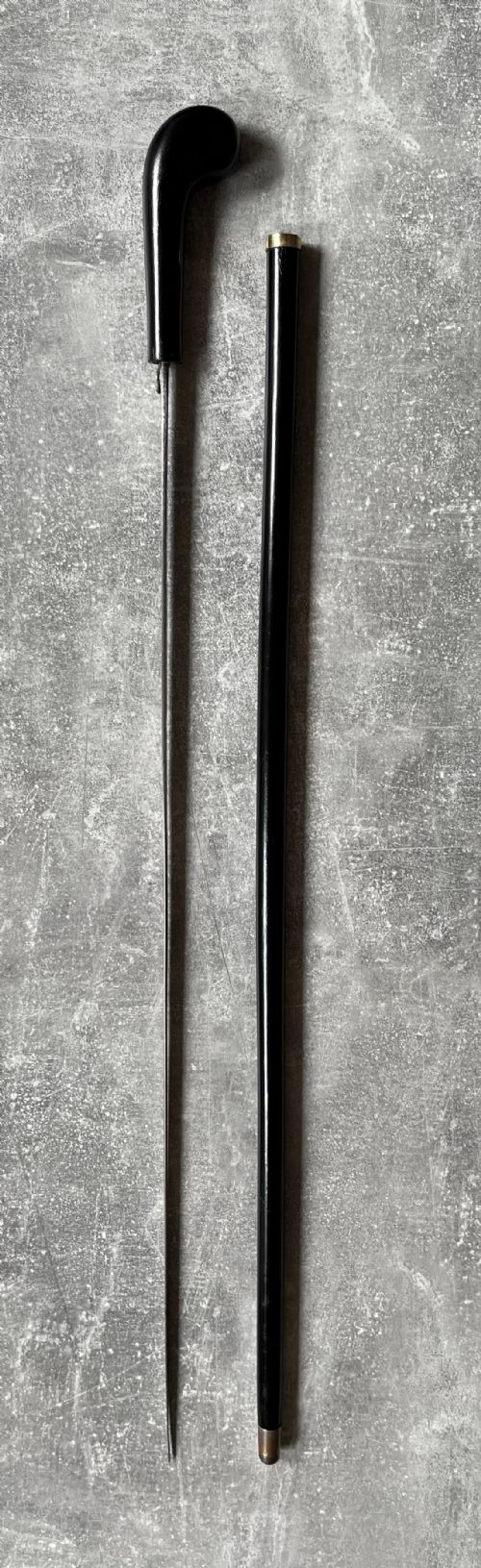
An ebonised walking stick combines the rich, deep appearance of ebony with more accessible underlying woods, producing a sleek and dark shaft suited for formal wear or daily constitutionals. These pieces most frequently emerge from the Victorian and Edwardian eras, spanning the nineteenth and early twentieth centuries.
Buyers encounter standard walking canes alongside specialised forms such as sword sticks, novelty handles shaped like horse heads or greyhounds, and occasional watch opera canes. The evidence shows origins ranging from English and French workshops to Chinese export pieces.
How they were made
The construction typically relies on a timber core treated with a dark stain or finish to achieve the distinctive ebonised surface, paired with mounts cast in silver, sterling silver, brass, or steel. Handles utilise materials such as horn, wood, or detailed metalwork.
Blades forged in Toledo feature in specific sword stick variants, while functional mechanisms like watch faces or hidden compartments demonstrate precision engineering within the handle.
Watch opera canes let owners check the time discreetly during a dull performance.
What varies in quality
Quality rests in the precision of the handle casting, whether formed as a detailed animal head or a chased silver top, alongside the integrity of the ebonised finish on the shaft. Superior examples maintain crisp hallmarks and secure mounts that withstand handling.
The presence of integrated mechanisms, such as functional watch movements or tightly fitted concealed blades, separates standard utility items from higher-status pieces produced by named makers.
Kendall And Sons·Thomas Peter Hewit·John Coakley
The Ebonised Walking Stick Glossary
- Ebonised
- Wood treated to imitate ebony, creating a dense, black, polished finish. This process allowed makers to achieve a luxury aesthetic using domestic timbers.
- Sword stick
- A walking cane concealing a functional blade within the shaft. These pieces often secure with a mechanical catch.
- Opera cane
- A walking stick featuring a watch movement or specialised mechanism built into the handle. They served both timekeeping and social functions.
- Hallmark
- An official stamp applied to precious metals indicating standard and origin. British pieces often display assay office marks and date letters.
- Prunus blossom
- A decorative motif depicting plum flowers, frequently found on Chinese export silver handles. This ornamentation is chased into the metal.
Ebonised Walking Stick: Frequently Asked Questions
How do I care for an ebonised shaft?
Keep the wood away from excessive moisture and direct heat to preserve the dark finish. A soft cloth helps maintain the polished surface without stripping the treatment.
Check the metal mounts periodically to ensure they remain secure on the timber.
Were sword sticks carried openly?
Gentlemen carried these sticks for personal defence during urban walks in the Victorian period. The concealed blade remained hidden until released by a catch or screw mechanism.
Legislation regarding these items varied by region and era.
What is an opera cane used for?
The integrated watch face allowed theatregoers to check the time in dim lighting without drawing attention. These pieces combined utility with discreet social display.
They represent a more intricate class of walking cane.
How can I date my stick?
Silver mounts often bear hallmarks that indicate the assay office and year of manufacture. Stylistic clues in the handle carving also point toward Victorian or Edwardian periods.
Examining construction methods provides further chronological context.