
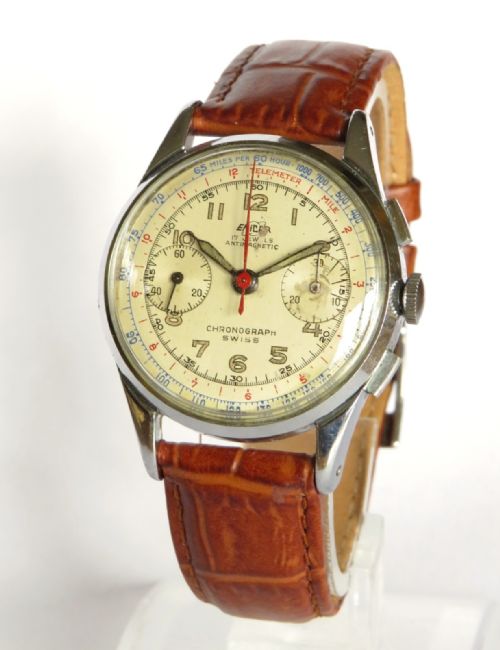


Silver Chronograph Watch
A silver chronograph watch brings mechanical stopwatch complication to the wrist or pocket, offering precise timing heritage from the Victorian era onward.
Silver Chronograph Watch
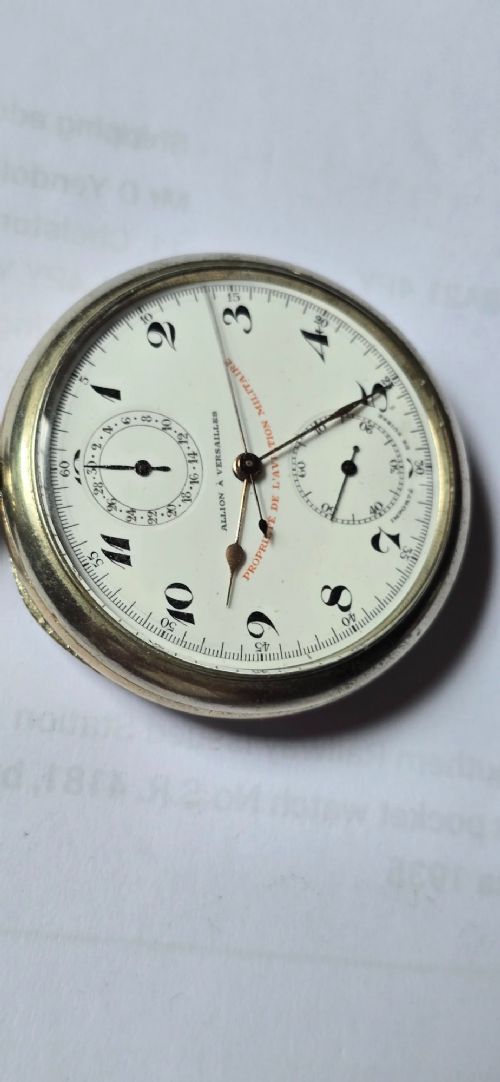
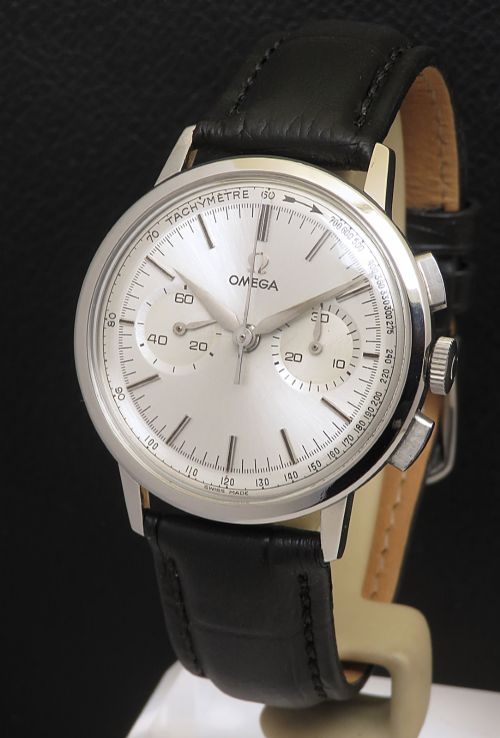
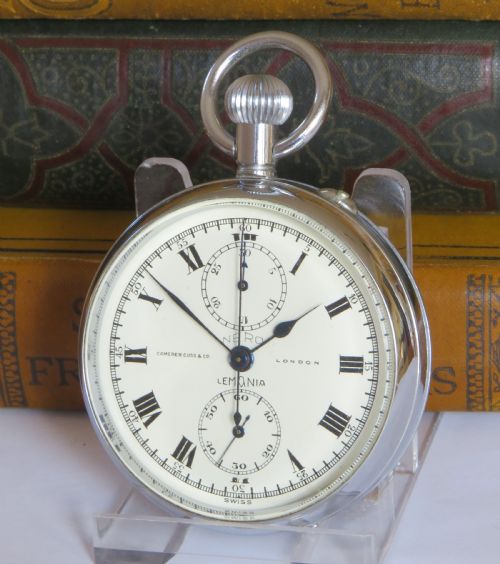
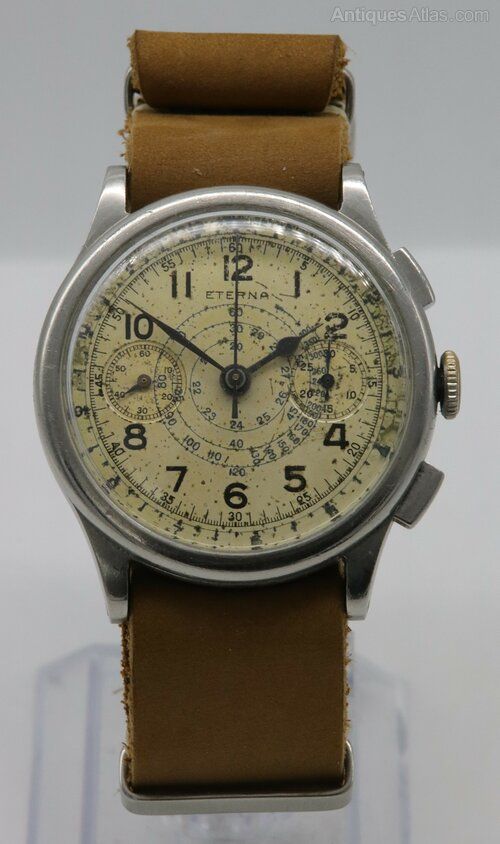
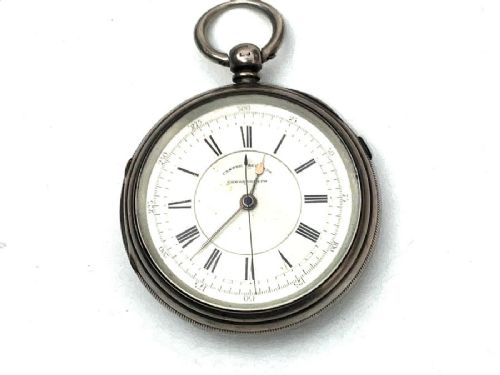
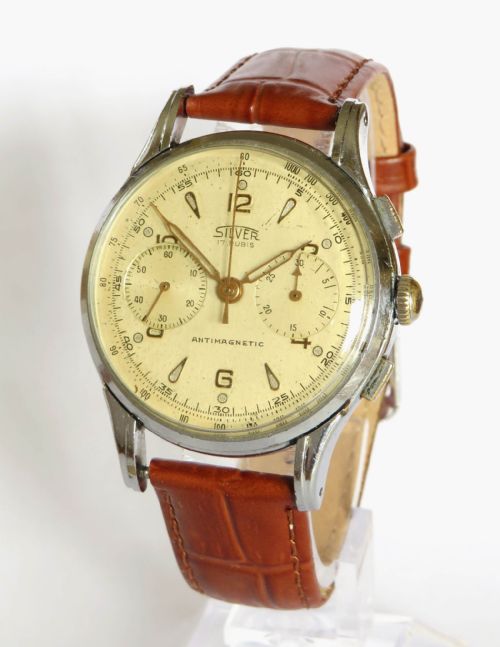
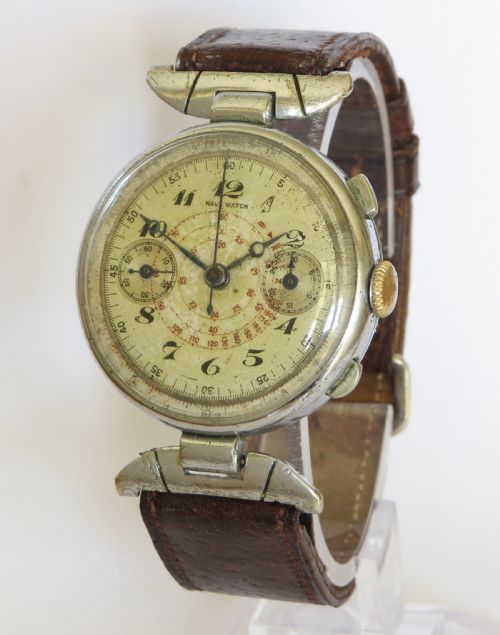
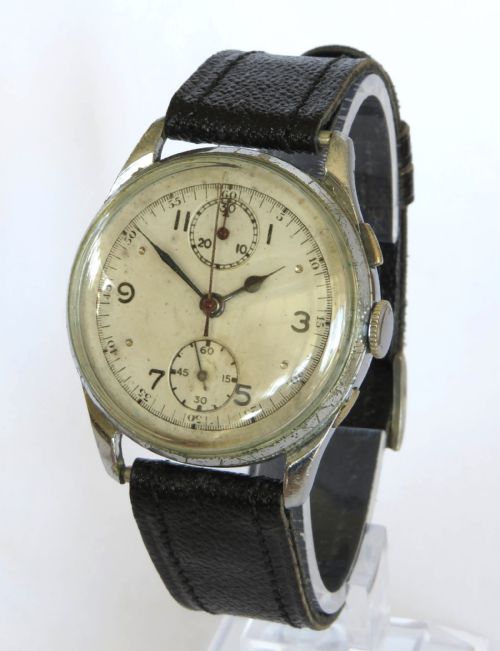
A silver chronograph watch combines standard timekeeping with an independent timing mechanism operated by pushers or a centre seconds hand. Buyers encounter these timepieces primarily as pocket watches from the Victorian period and the early twentieth century, alongside wristwatches spanning the 1930s to the 1960s.
The form factor shifts across the decades from large pocket variants housed in solid silver cases to wristwatches styled in mid-century military, aviation, and dress designs. These pieces originate from British makers, Swiss workshops, and continental houses, recording timing functions for sports, rail travel, and scientific use.
Victorian and Edwardian examples lean heavily toward pocket watch formats featuring heavy sterling silver cases and keyless or fusee movements. Mid-century items present as wristwatches utilising stainless steel, chrome, and silver-toned metals alongside leather straps.
Materials and construction methods
Cases utilise solid silver, chrome plated metal, and stainless steel, paired with protective elements of glass and acrylic over the dial face. Dials incorporate enamel for markings, while straps rely on stitched leather.
Internal movements depend on complex mechanical gearing built by specialised horologists, driving chronograph complications like split-second rattrapante hands and triple calendar displays. Casings often bear hallmarks indicating assay offices such as Chester alongside silver standards.
Listings span from Victorian fusee pocket watches to 1960s Swiss wristwatches, utilising stainless steel, silver, chrome, leather, glass, and enamel.
Distinctions in craftsmanship and condition
Quality rests in the sophistication of the movement, ranging from standard Swiss or British ébauches to high-grade signed calibres by esteemed makers. The precision engineering of the chronograph complication and the crisp reset of the stop mechanism dictate the mechanical tier.
Exterior preservation separates examples, noting the crispness of case hallmarks, the intact state of enamel dials, and the originality of hands and crowns. Solid silver cases retaining sharp engine-turned decoration or plain polished finishes demonstrate superior initial manufacture.
Omega·Guinand·Lemania·Eterna·Breitling·Benrus·Stauffer Co·IWC·LeCoultre·Moeris·Minerva·Lancashire Watch Co·Didisheim·S Smith Son·Invicta·Enicar
The Silver Chronograph Watch Glossary
- Chronograph
- A watch with a display function for measuring elapsed time alongside normal timekeeping. It uses an independent sweep second hand that can be started, stopped, and returned to zero.
- Rattrapante
- A split-second chronograph featuring two overlapping stopwatch hands. One hand can stop to record an intermediate split time while the other continues to measure the total duration.
- Fusee
- A conical pulley mounted on the mainspring barrel of older mechanical watches. It ensures an even distribution of power to the gear train as the mainspring unwinds.
- Enamel
- A glassy substance fused to a metal dial base through high-firing. It provides a durable, glossy surface for painted numerals and chapter rings.
- Ébauche
- An unfinished mechanical watch movement consisting of a plate, bridges, and gear train. Manufacturers finished these basic blanks with their own escapements and balances.
Silver Chronograph Watch: Frequently Asked Questions
How do I operate the chronograph function?
Most vintage chronographs use a top pusher to start and stop the timing hand, and a second pusher or crown integration to reset it back to zero.
Avoid leaving the chronograph running constantly, as this places extra friction on the mainspring power delivery and accelerates mechanical wear.
What is the difference between pocket and wrist models?
Pocket versions predate widespread wristwatch adoption, emerging mostly during the Victorian and Edwardian eras in heavy silver cases meant for waistcoat pockets. Wrist variants developed from the 1930s onward to satisfy demands for active sports, military timing, and aviation.
Both utilise complex gear trains for timing, but wrist versions require miniaturised components to fit smaller case diameters.
How do I date a silver case?
British silver cases carry hallmark stamps that record the assay office, the silver standard, and a date letter corresponding to the exact year of manufacture. Continental and Swiss pieces rely on maker marks, style cues, and movement serial numbers.
Comparing the movement calibre against known production years helps verify the age of the complete watch.
Can I wear a vintage chronograph daily?
These historical timepieces require careful handling due to their age and mechanical complexity. They lack modern shock resistance and water sealing.
Reserve them for gentle wear, keep them away from moisture, and have a specialist service the movement regularly to maintain lubrication.