
Antique Mens Watch
An antique mens watch brings tangible mid-century character to the wrist, offering dependable mechanical timekeeping shaped by military utility and post-war style.
Understanding the antique mens watch
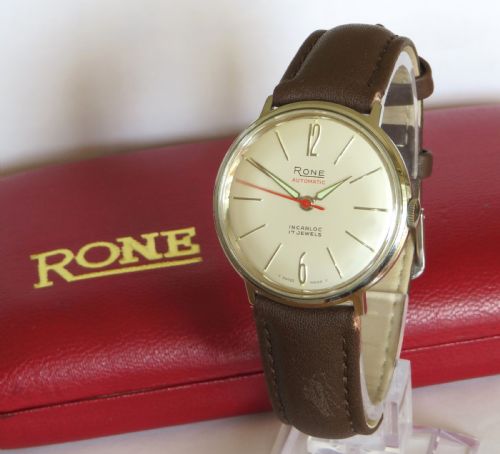
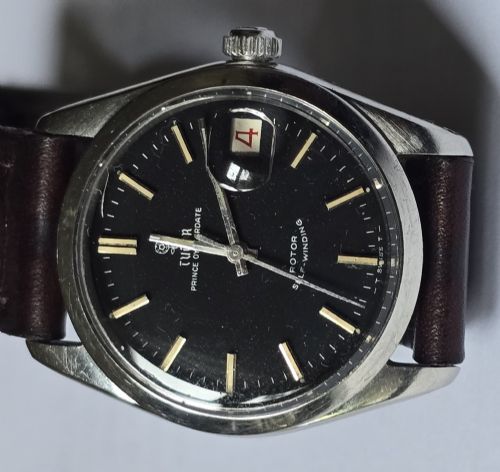
An antique mens watch encompasses mechanical wristwatches produced during the 1940s, 1950s, and 1960s. These pieces reflect mid-century horology, ranging from robust military specification issues to larger dress designs.
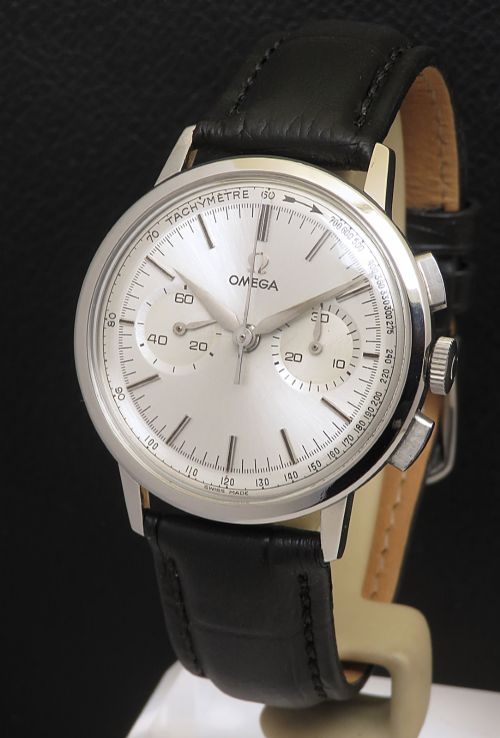
Buyers will most frequently encounter mid-century civilian and military wristwatches on this page. These include utilitarian designs intended for armed forces alongside sophisticated chronographs and calendar complications.
Construction and materials
Watchmakers utilised durable metals such as stainless steel, chrome plate, gold plate, and solid 9ct gold for the cases. These housed precision mechanical movements designed for everyday wear.
Dials were protected by clear glass or acrylic crystals, while straps were fashioned from supple leather to secure the timepiece to the wrist.
Retail Price Guide 2026
Typical UK retail prices for mens watch, calculated from the Sellingantiques database of over a million retail prices indexed since 2003. This retail price guide relies exclusively on Sellingantiques data; no external sources or auction records are used, so the figures do not describe the wider market.
Judging quality and execution
Superior examples exhibit refined movement engineering from established Swiss and British makers, paired with complex complications like chronograph functions and triple-date displays. Simpler time-only pieces rely on the clarity of their dial typography and case proportions.
The integrity of the case metals and the preservation of original dial components distinguish higher-grade items. Pieces retaining their military provenance or specialised case sizes command greater interest among collectors.
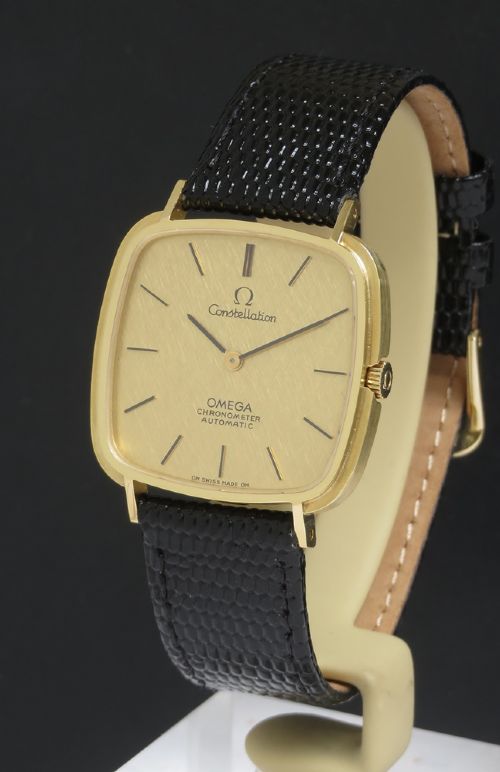
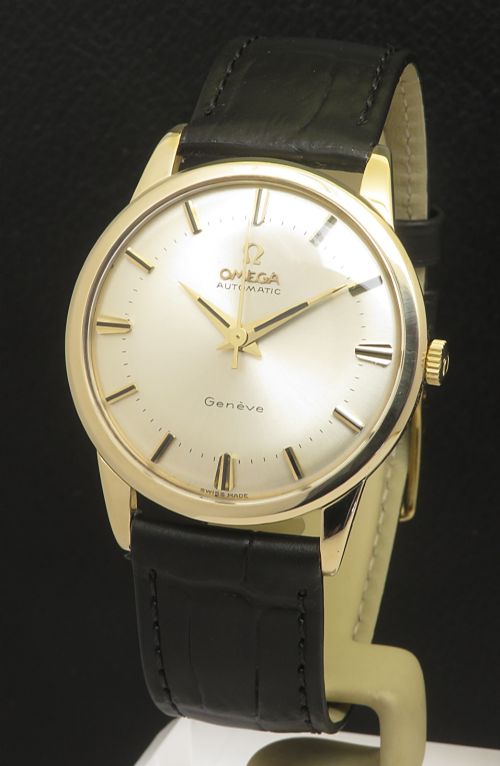
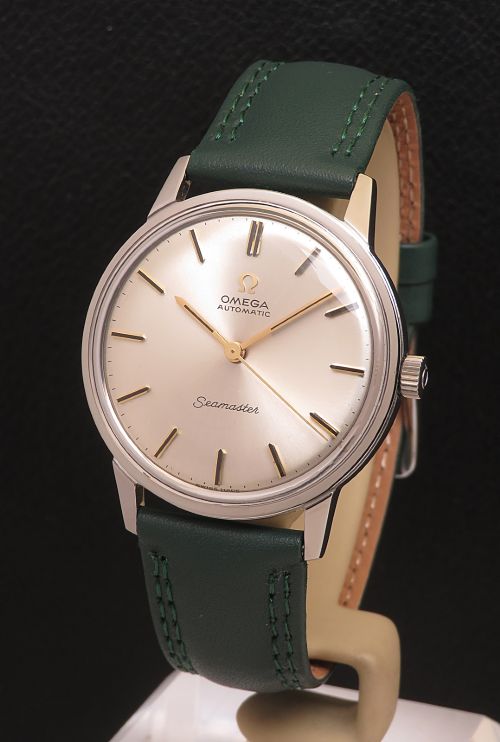
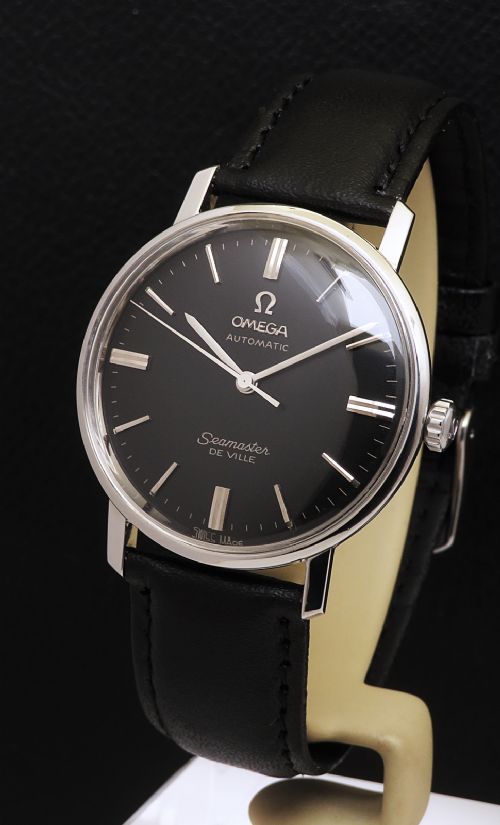
Roamer·Enicar·Dogma Prima·Smiths Deluxe·Omega·Miramar·Beltane
The Antique Mens Watch Glossary
- Chronograph
- A watch with a stopwatch function that has independent sweep seconds hands. This allows the wearer to measure elapsed time alongside regular hours and minutes.
- Acrylic
- A lightweight transparent plastic material utilised for watch crystals prior to the widespread adoption of synthetic sapphire. It offers a characteristic warm distortion when viewed from an angle.
- Military issue
- Timepieces commissioned directly by government armed forces for service personnel. These carry specific case back engravings denoting government department ownership.
- Calibre
- The specific internal mechanical movement manufactured for a watch. Collectors reference calibre numbers to identify the exact technical design created by the horologist.
Frequently Asked Questions
How do I wind a vintage watch?
Most mechanical watches from the mid-century require manual winding via the crown every morning to maintain tension in the mainspring.
Turn the crown gently clockwise until you feel resistance, taking care not to overwind the mechanism.
Are these watches waterproof?
Vintage timepieces lack modern rubber gasket seals and screw-down systems. They cannot withstand swimming, showering, or immersion in water.
Keep these watches away from moisture to protect the delicate internal movement and paper dials from corrosion.
What is a military watch?
Military wristwatches were commissioned for armed forces personnel during active service. They feature high-contrast dials for legibility and robust steel cases.
Engravings on the reverse typically denote government contract numbers or military branch markings.
How accurate are antique watches?
Mechanical watches from the 1940s to 1960s operate via springs and gears rather than quartz crystals. They may gain or lose a small number of minutes each day.
Regular servicing by a professional watchmaker helps maintain optimal timekeeping precision for daily wear.