
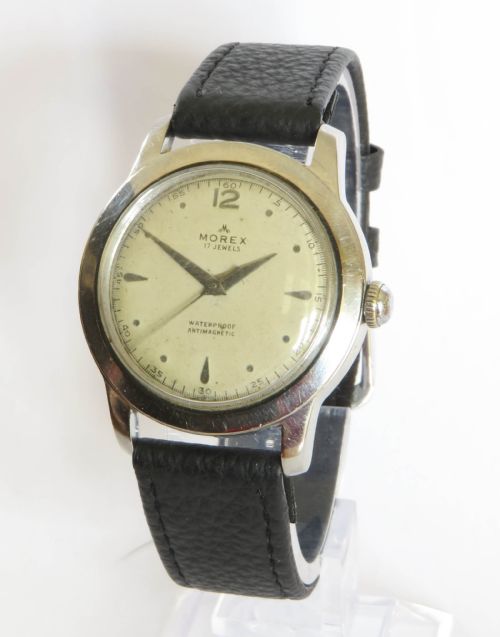
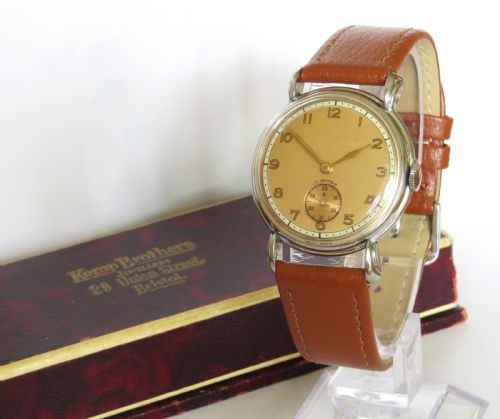

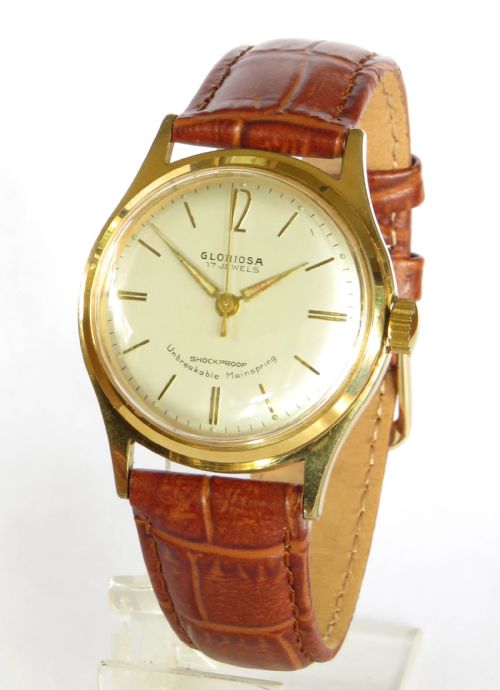
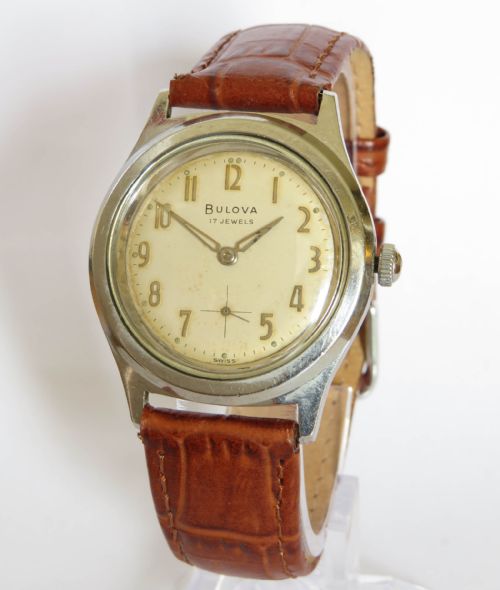


17 Jewels Watch
These 17 jewels watch pieces are wristwatches built with jewelled movements, sought after for their mechanical precision and vintage character.
17 Jewels Watch
When you search for a 17 jewels watch, you are looking at mechanical wristwatches primarily from the 1930s through to the 1960s. These pieces span simple dress styles, chronographs, and specialist travel fob purse watches.
You are most likely to meet mid-century gents wristwatches on this page, hailing predominantly from the 1950s and 1960s. Swiss makers and British firms feature heavily among these stainless steel, gold plated, and solid gold pieces.
The selection ranges from Art Deco square dial models of the 1930s to robust sports and chronograph designs of the later mid-century decades. Each piece reflects the horological standards of its specific period.
How they were made
The cases of these watches utilise materials such as stainless steel, chrome, gold plate, and 9ct gold, paired with glass or acrylic crystals. Dials are often protected by leather straps.
Movements incorporate seventeen functional jewels, typically synthetic rubies, placed at pivot points to reduce friction in the gear train. This mechanical construction requires careful manual winding or automatic operation.
Listings span four distinct periods: the 1930s, 1950s, 1960s, and the 19th Century.
What varies in quality
The standard of a 17 jewels watch is set by the refinement of its movement and the preciousness of its case materials. Solid 9ct gold cases and established Swiss or British signatures elevate a piece above standard plated brass or chrome models.
Complexity also dictates distinction, as chronograph, moonphase, and triple date complications demand greater horological skill than simple time-only dials. Original dial condition and specific maker reputation complete the hierarchy.
Montilier·Seiko·Bulova·Lanco·Smiths·Belair·Invicta·Vogel·Mappin·Longines·Miramar·Avia·Beltane·JW Benson·Chronograph Suisse
The 17 Jewels Watch Glossary
- 17 Jewels
- A mechanical watch movement containing seventeen synthetic rubies to minimise friction on pivot points. This jewel count indicates a fully jewelled watch capable of keeping reliable time.
- Chronograph
- A watch equipped with a stopwatch function alongside the standard time display. These models often feature additional sub-dials.
- Manual Wind
- A timepiece powered by manually turning the crown to tension the mainspring. Most vintage pieces of this era rely on this mechanism.
- Gold Plate
- A base metal core bonded with a thin layer of gold to give the appearance of solid gold. It offers durability at a lower cost.
- Acrylic
- A lightweight transparent plastic used for watch crystals instead of glass. It can be polished to remove minor surface scratches.
17 Jewels Watch: Frequently Asked Questions
What does seventeen jewels mean?
A seventeen jewels movement contains seventeen bearing stones that reduce friction in the gear train. This was the standard count for a fully functional, jewelled mechanical watch.
These tiny synthetic rubies help the metal pivots rotate smoothly, improving both the longevity and the timekeeping accuracy of the movement.
How do I wind a vintage watch?
You wind a manual watch by gently turning the crown clockwise between your thumb and forefinger. Stop immediately when you feel resistance to avoid snapping the mainspring.
Most vintage pieces require daily winding if you wear them regularly, as their power reserve typically lasts around twenty-four to forty hours.
Are these watches waterproof?
Vintage wristwatches from the 1930s to the 1960s are generally not waterproof by modern standards. Gaskets and seals degrade over decades and lose their integrity.
It is best to keep these pieces away from water, heavy rain, and moisture to protect the delicate movement and paper or metal dials inside.
How do I date a vintage watch?
You can date a watch by examining its overall design style, dial typography, case hallmarks, and movement serial numbers. Art Deco styles typically point to the 1930s.
Mid-century modern aesthetics, specific shock-absorber systems like Diashock, and hallmarks for 9ct gold provide further chronological clues regarding the year of production.