
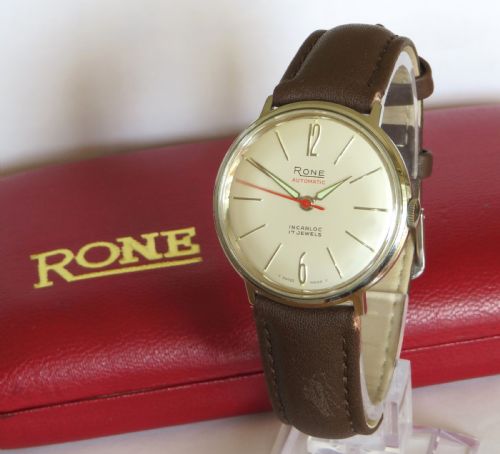
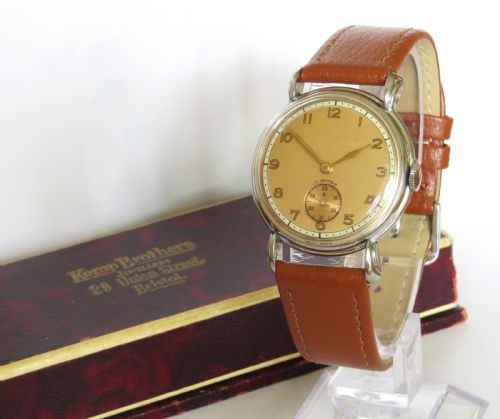
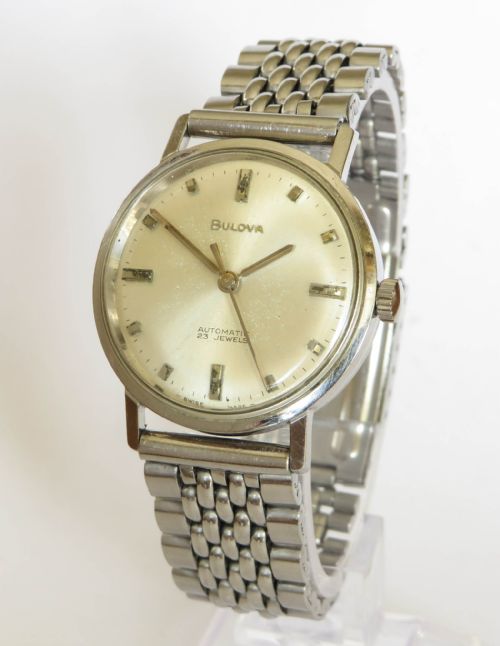
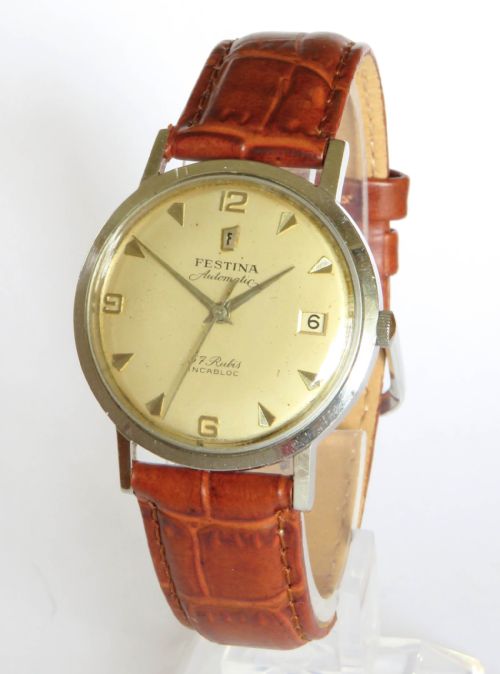
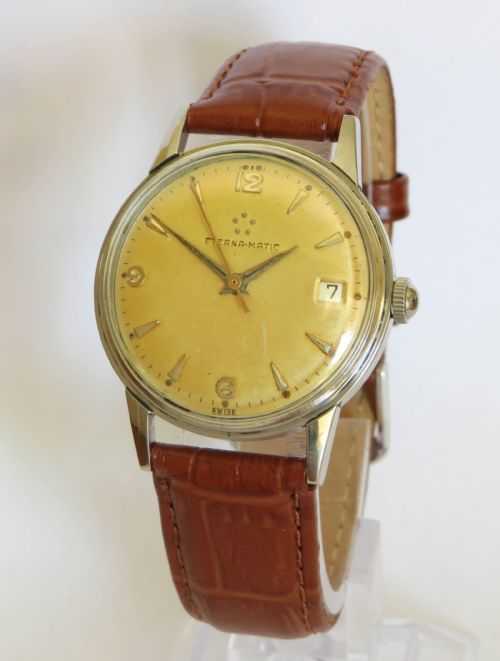
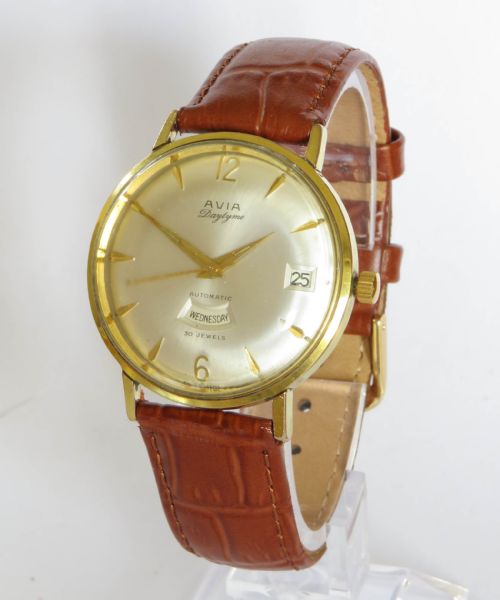
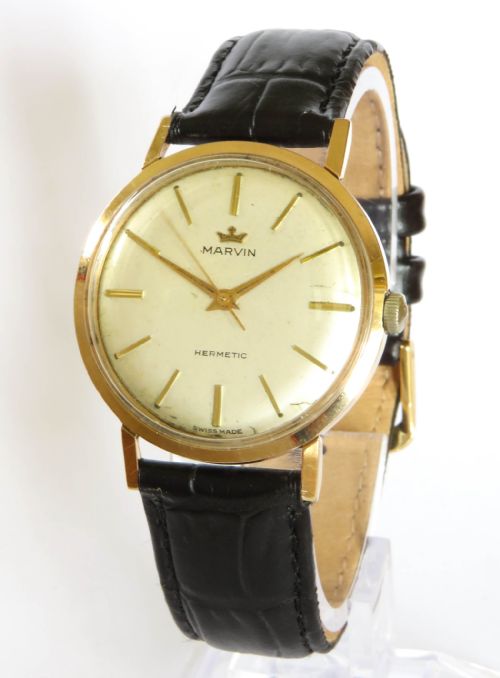
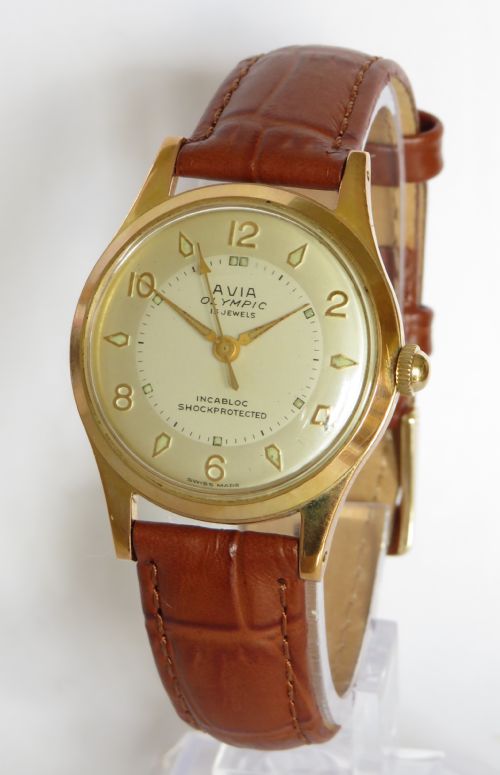


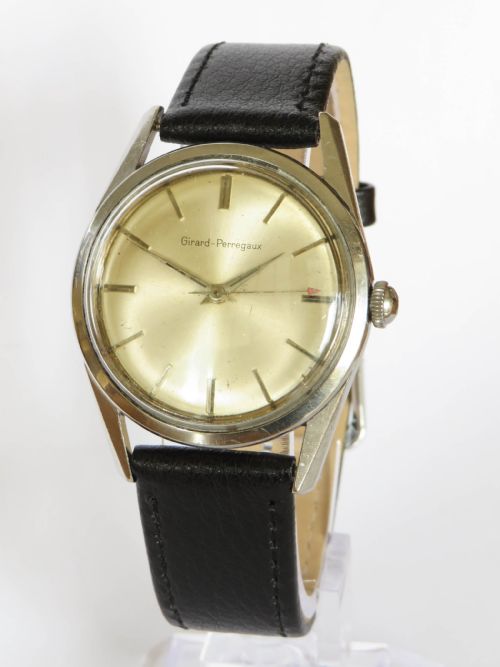


Champagne Dial Watch
A champagne dial watch brings a warm, understated metallic tone to the wrist, offering a distinct alternative to standard silver or white faces.
What They Are
A champagne dial watch covers vintage gents wristwatches featuring a pale, warm golden face. These pieces originate from the 1950s and 1960s, reflecting mid-century modern design sensibilities through clean lines and restrained ornamentation.
The selection centres on mechanical timepieces from Swiss makers such as Omega, Zenith, Girard Perregaux, Marvin, Consul, and Vertex. Buyers frequently encounter standard time-only configurations alongside automatic movements, housed in various metal cases.
How They Were Made
Cases utilise stainless steel, gold plate, or solid metals, paired with glass or acrylic crystals protecting the dial. Dials receive a brushed or metallic champagne finish designed to catch the light subtly.
Movements are mechanical, encompassing manual-wind calibres and automatic mechanisms like bumper automatics. Straps are predominantly constructed from leather to secure the watch to the wrist.
Retail Price Guide 2026
Typical UK retail prices for champagne dial watch, calculated from the Sellingantiques database of over a million retail prices indexed since 2003. This retail price guide relies exclusively on Sellingantiques data; no external sources or auction records are used, so the figures do not describe the wider market.
Listings feature wristwatches exclusively from the 1950s and 1960s, utilising stainless steel, gold plate, leather, glass, and acrylic.
What Varies in Quality
Quality rests on the preservation of the original dial surface and the crispness of the case edges. Unpolished steel or gold-plated cases retain their original factory geometry and sharp lines, distinguishing superior examples from those softened by heavy wear or over-polishing.
The sophistication of the internal movement dictates the tier of the watch. In-house mechanical movements from established Swiss houses command greater regard than generic ébauches due to their engineering complexity and finishing.
Omega·Zenith·Girard Perregaux·Marvin Hermetic·Consul Dermaphile
The Champagne Dial Watch Glossary
- Calibre
- The specific internal movement designation given by the manufacturer. Knowing the calibre helps identify the exact mechanical generation of the watch.
- Bumper automatic
- An early self-winding mechanical movement where the rotor swings back and forth against springs rather than rotating fully. This design provides a distinct tactile pulse on the wrist.
- Acrylic
- A lightweight synthetic material used for watch crystals before sapphire glass became standard. It can be polished easily to remove minor surface scratches.
- Hermetic
- A case construction designed to improve resistance against dust and moisture. These designs often feature secondary inner case backs for enhanced sealing.
Frequently Asked Questions
What is a champagne dial?
A champagne dial is a watch face finished in a pale, warm golden hue that sits between silver and yellow gold in tone. This colour became popular during the mid-century period for dress and everyday watches.
The metallic sheen catches light differently depending on the angle, often featuring a subtle sunburst brushing radiating from the centre. It pairs effectively with both steel and gold-plated cases.
How do I wind a vintage watch?
Manual-wind watches require turning the crown clockwise between your thumb and forefinger until you feel gentle resistance. Do not force the crown past this point, as over-winding can damage the mainspring.
Automatic models wind themselves through the natural movement of your wrist during daily wear. If an automatic watch has stopped completely, give it a few manual turns to jump-start the movement before setting the time.
Are these watches waterproof?
Vintage timepieces should generally be treated as water-resistant at best, regardless of original manufacturer claims. Rubber gaskets and seals degrade over decades, allowing moisture to reach the delicate dial and movement.
It is wise to keep these watches away from swimming, showers, and heavy rain. Even models designated as hermetic require professional gasket replacement before any exposure to water.
How do I change the strap?
You can change a watch strap using a spring bar tool to compress the small metal pins holding the leather band between the lugs. Carefully push the pin inward to release it from the lug hole.
When fitting a new leather strap, ensure the spring bar clicks securely into place on both sides before wearing. Matching the lug width precisely prevents the strap from slipping or damaging the case.