



Silver Art Nouveau Maiden
Silver art nouveau maiden pieces bring the flowing, organic lines of the turn of the twentieth century directly into domestic display.
Silver Art Nouveau Maiden
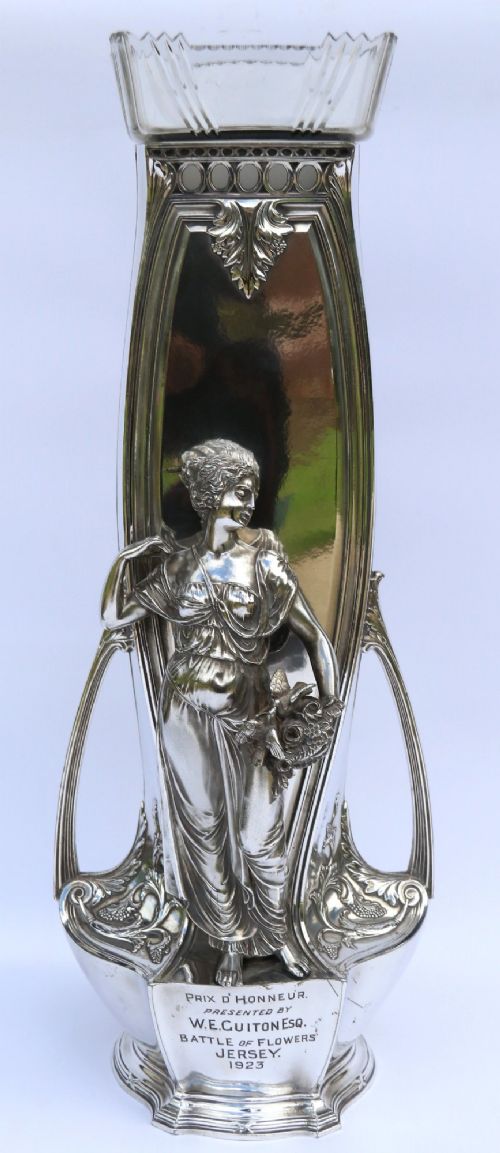
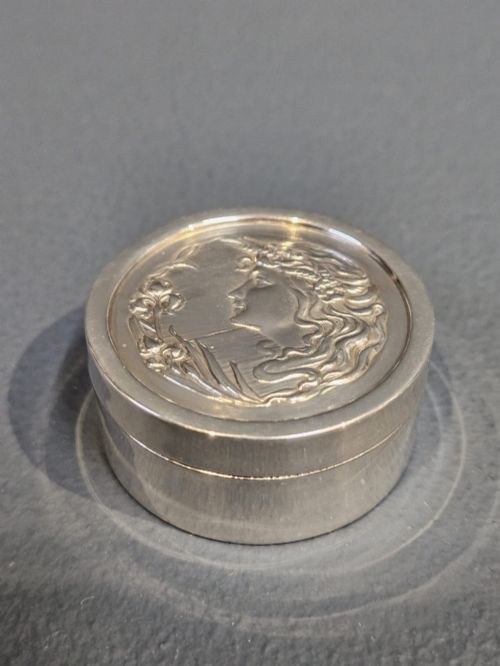
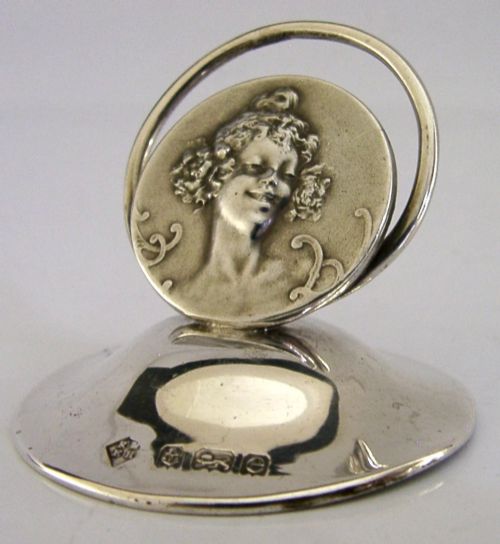
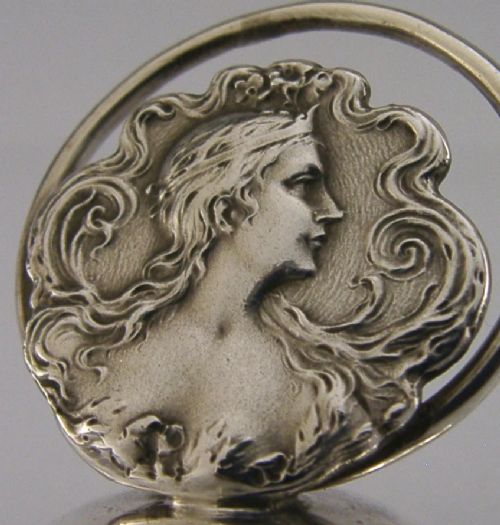
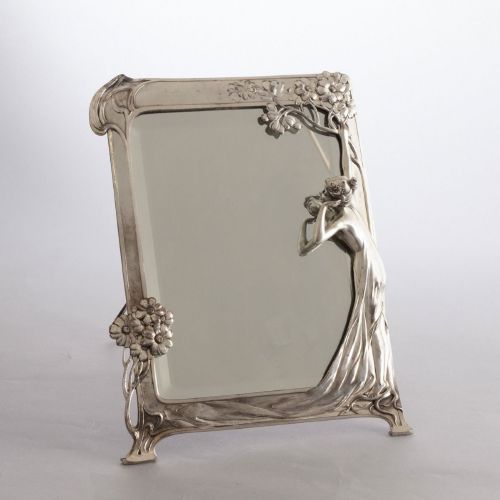
Silver art nouveau maiden items capture the fluid drapery, long hair and natural motifs typical of the decorative arts around nineteen hundred. These pieces span small functional desk items and table accessories like menu holders, card trays and brooches, alongside larger display items such as centrepieces, vases and mirrors.
The objects appearing on this page originate predominantly from the Edwardian era, the Victorian period and the wider nineteenth and early twentieth centuries. Makers utilise these female figures to merge utility with decorative sculpture, often integrating the maiden seamlessly into handles, stems or frames.
The most common forms on this page include sterling silver menu holders from nineteen hundred and four and nineteen hundred and five, alongside numerous pewter and silver-plated items produced by continental firms. Buyers encounter both diminutive personal accessories and substantial table silver designed for formal dining.
Materials and construction methods
The manufacture of these objects relies heavily upon sterling silver, silver plate, pewter and silvered pewter, occasionally paired with ruby glass or clear glass inserts. Artisans cast pewter and Britannia metal into complex figural moulds, capturing the soft contours and asymmetric plant tendrils characteristic of the style.
Sterling silver items such as menu holders involve detailed stamping, chasing and soldered mounts, while plated wares apply a thin layer of silver over a base metal foundation. Glass components, including bowls and decanters, are mouth-blown or moulded to fit snugly within the metallic frames of centrepieces and vases.
Silver Art Nouveau Maiden Retail Price Guide 2026
Typical asking prices for silver art nouveau maiden among the pieces listed under this phrase on Sellingantiques today, from the lower quarter to the upper quarter. They describe what is for sale here now, not the wider market.
Materials documented across the inventory include sterling silver, standard pewter, silvered pewter, Britannia metal, ruby glass, and general metal.
Distinguishing quality in figural works
The integration of glass also dictates overall standard, with intact, original ruby glass liners or matching vessels commanding higher regard than replaced or mismatched elements. Furthermore, clear maker stamps and firm hallmarks provide tangible evidence of superior factory origin and careful period craftsmanship.
WMF·Meyle & Mayer·Alexandre Clerget
The Silver Art Nouveau Maiden Glossary
- Pewter
- A malleable metal alloy consisting mostly of tin, used widely for casting figural tableware and decorative vessels during the art nouveau period. It accepts patination and silvering readily.
- Sterling silver
- A silver alloy containing ninety-two point five percent pure silver by mass, valued for its durability and bright finish in menu holders and brooches.
- Centrepiece
- A large decorative table ornament placed in the middle of a dining table, often taking the form of a figural dish or flower holder.
- Plique-à-jour
- An enamelling technique where enamel is applied in cells without a backing, allowing light to shine through transparent or translucent colour like stained glass.
- Britannia metal
- A specific tin-based pewter alloy often employed as a base metal for silver plating in domestic household objects.
Silver Art Nouveau Maiden: Frequently Asked Questions
What were silver art nouveau maiden items used for?
These pieces served practical and decorative functions in affluent Edwardian and Victorian homes. Smaller examples acted as menu holders, card trays, and desk accessories for formal dining and correspondence.
Larger items functioned as centrepieces, fruit stands, and candlesticks to adorn tables and mantlepieces. The maiden figure served to humanise the domestic interior through organic art.
How do I care for silvered pewter and sterling silver?
Sterling silver requires periodic cleaning with a soft cloth and a gentle, non-abrasive polish to remove tarnish. Avoid harsh chemical dips that strip away delicate highlights.
Silvered pewter and plated items demand even greater care, as vigorous rubbing can wear through the thin metallic coating. Dust gently with a dry brush and store away from damp environments.
How can I tell a menu holder from a card tray?
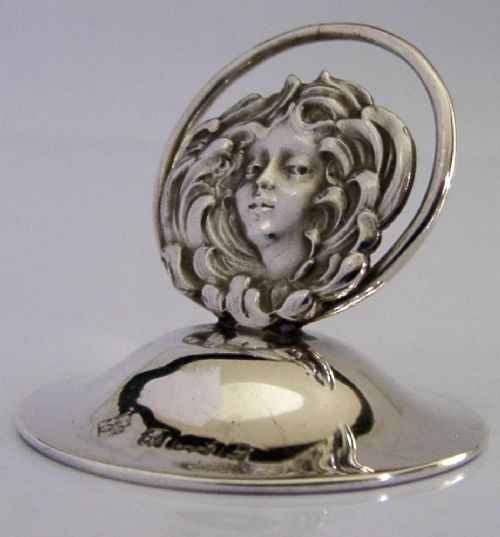
Menu holders feature a small vertical clip, slot or weighted base designed to hold a printed card upright for diners to read. They are generally compact in scale and sit close to the table surface.
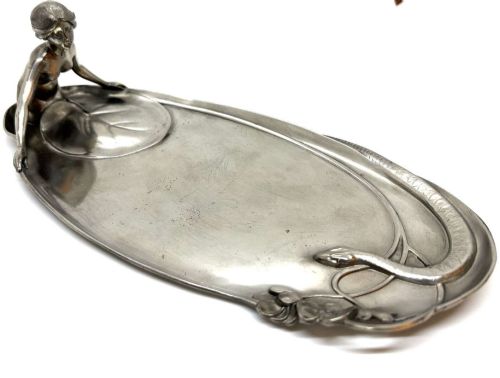
Card trays feature a shallow dish or flat pan meant to receive visiting cards or small personal items. Their proportions are wider and shallower than dedicated menu holders.
What periods do these pieces date from?
The objects on this page date primarily from the late nineteenth century and the opening decades of the twentieth century. This encompasses the Victorian period, the Edwardian era, and the nineteen hundreds.
The height of production coincides with the peak of the art nouveau movement around nineteen hundred. Pieces bearing specific dates typically cluster between eighteen ninety and nineteen twenty.