

Antique Table Place Card Holders
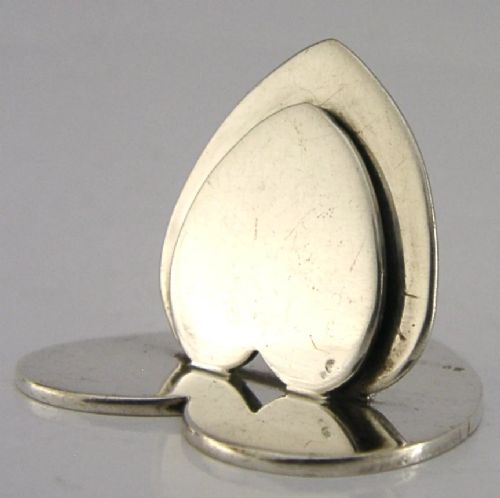
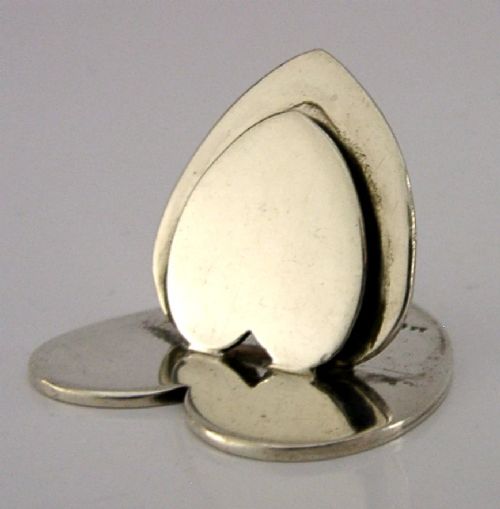
Antique table place card holders bring miniature silver figures, animals and motifs to the dining table.
Antique Table Place Card Holders
When you search for antique table place card holders, you encounter small desk and dining accessories designed to hold name cards or menus during formal meals. The examples on this page span the Victorian, Edwardian and later twentieth-century periods, stretching from the late nineteenth century through to the nineteen-fifties.
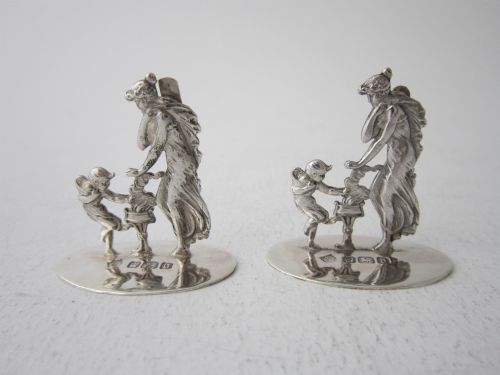
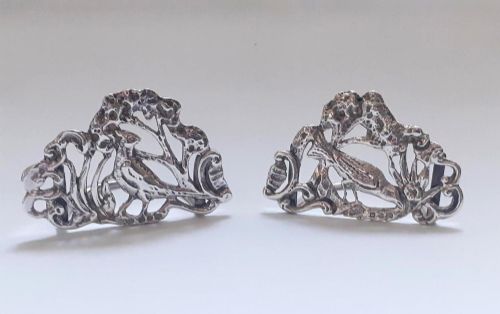
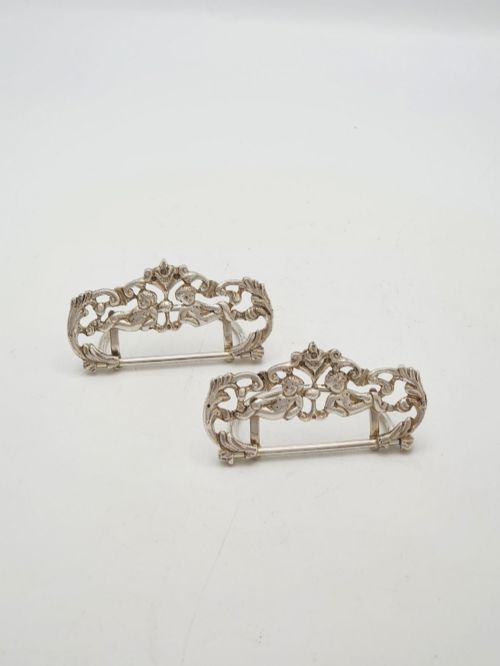
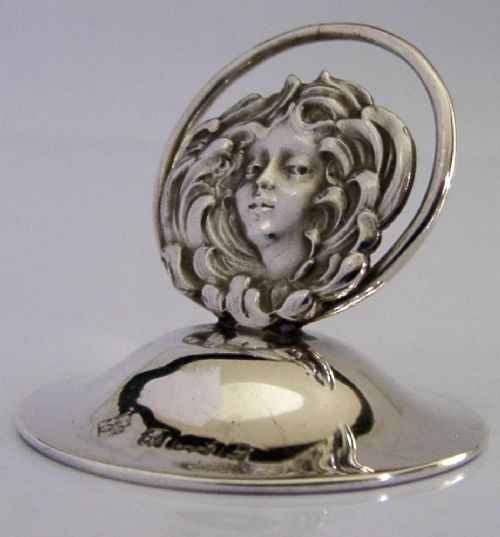
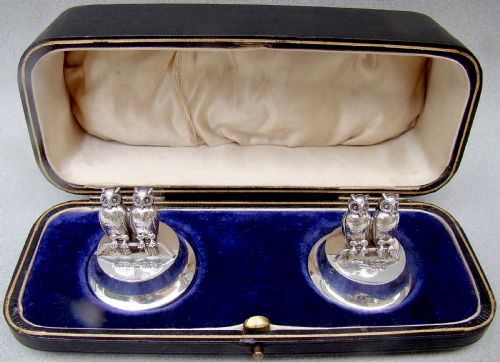
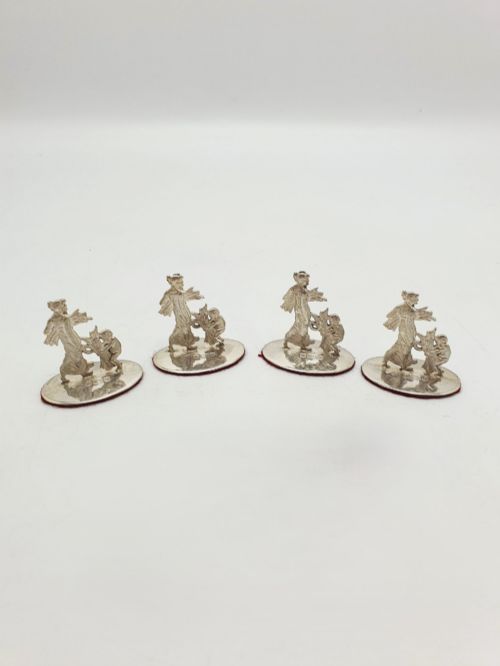
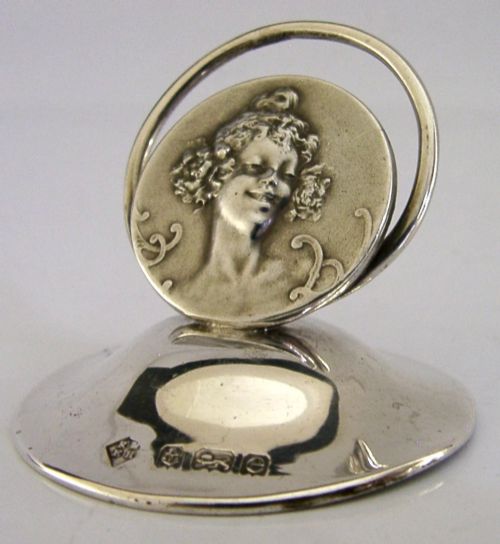
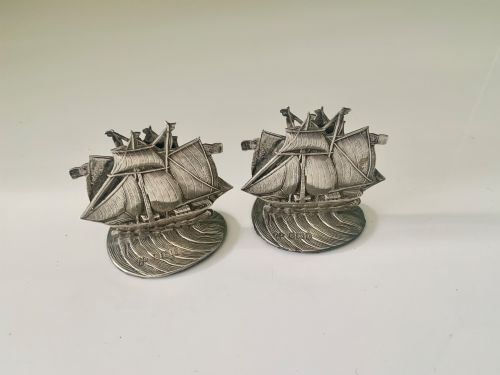
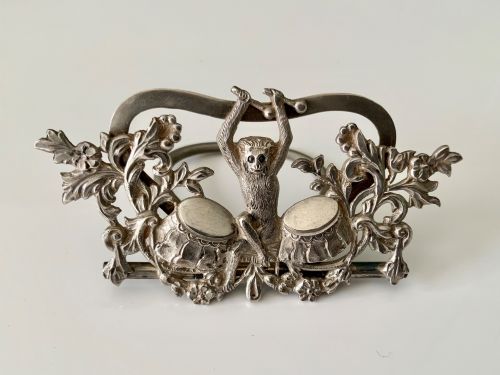
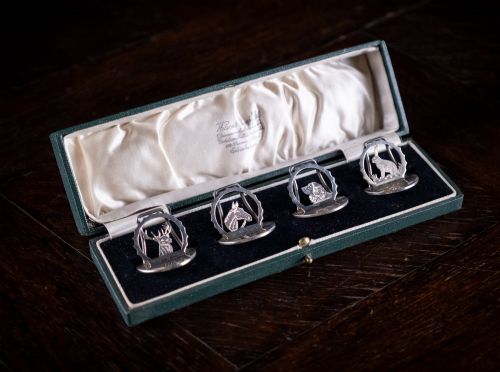
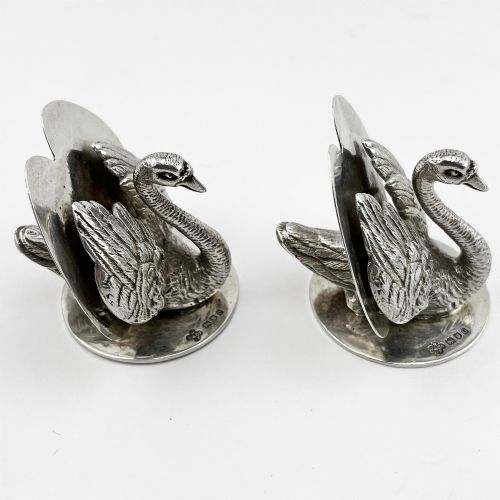
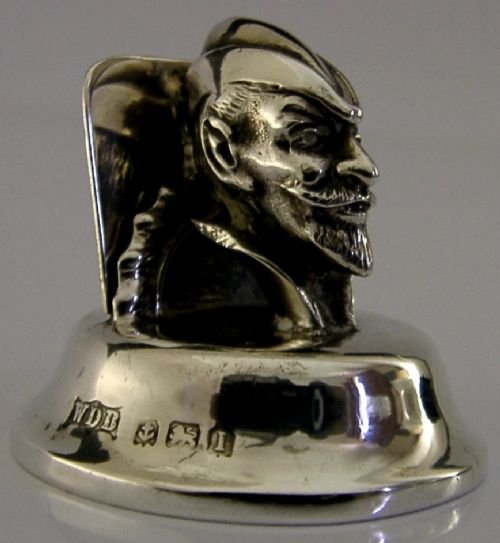
The objects take many forms, appearing as standalone place card holders, menu card holders and combined tableware accessories. Figural designs dominate the selection, showing owls, swans, foxes, horses heads, monkeys, cherubs and human characters such as Maidens and Robin Hood.
Makers also produced military and thematic pieces, including British Military pieces, flag holders, and items with Scottish or Anglo-Indian influences. Sets range from individual pairs to matching sets of four, six, twelve or twenty-four pieces.
How they were made
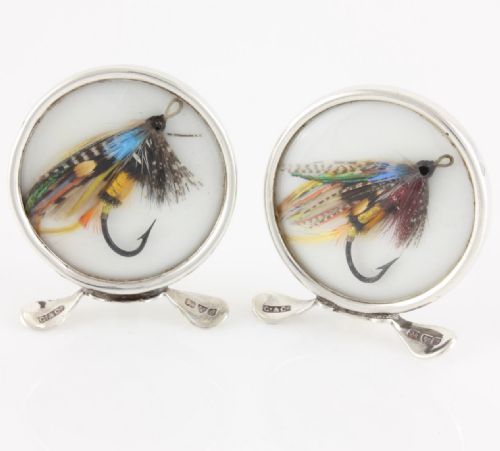
Silversmiths constructed these table accessories primarily in sterling silver and silver plate, frequently incorporating detailed casting and hand-finishing. Many pieces integrate other materials such as enamel for coloured flags or details, alongside structural elements lined with velvet, silk, leather or glass.
Makers utilised techniques like stamping, piercing and repousse work to shape figures and weighted bases. Hallmarks stamped into the silver record the assay office, date letter and maker's mark, tying individual pieces to cities like Birmingham, Chester and London.
Antique Table Place Card Holders Retail Price Guide 2026
Typical asking prices for table place card holders among the pieces listed under this phrase on Sellingantiques today, from the lower quarter to the upper quarter. They describe what is for sale here now, not the wider market.
Listings feature sterling silver and silver plate, incorporating velvet, enamel, silk, leather and glass across Victorian, Edwardian and twentieth-century periods.
What varies in quality
Completeness distinguishes individual items from matched or unmatched sets, especially when dealing with larger groups of four, twelve or twenty-four pieces. The survival of original fitted boxes and intact enamel work further separates standard examples from finer survivals.
Sampson Mordan·Levi and Salaman·A Wilcox·Grey and Co·Asprey·Liberty
The Antique Table Place Card Holders Glossary
- Sterling silver
- A silver alloy containing 92.5 percent pure silver by mass and 7.5 percent other metals, usually copper. This standard alloy provides the durability required for intricate table accessories.
- Silver plate
- A layer of silver applied to a base metal core such as copper or brass. This technique offered a less costly alternative to solid silver for larger dining sets.
- Enamel
- A glassy substance fused to the surface of metal through firing to provide colour and decoration. It appears on flags and decorative panels within this category.
- Assay office
- A body charged with testing the purity of precious metals and stamping items with official hallmarks. Offices in London, Birmingham and Chester feature on these pieces.
- Figural
- Shaped in the form of a human, animal or recognisable object rather than abstract geometric designs. The term describes items modelled as owls, monkeys, cherubs and figures.
Antique Table Place Card Holders: Frequently Asked Questions
What are antique table place card holders?
These small silver objects sat on dining tables to support handwritten place cards or menu cards for guests. Makers formed them into decorative shapes, ranging from animals and birds to human figures and military motifs.
They served a practical purpose in large dining rooms while adding a decorative element to table settings. Collectors today often gather them as figural silver rather than strictly for table use.
How were place card holders used?
Hosts placed them beside each setting at formal dinners to show guests where to sit. The slot or clip held a small card bearing the diner's name.
In addition to individual place cards, similar stands held menus for the meal. Sets were often produced in matching pairs or larger groups to coordinate across a long dining table.
How do I date an antique place card holder?
Dating relies heavily on the hallmarks stamped directly into the silver. These official marks usually include a date letter indicating the exact year of assay, alongside the maker's mark and town mark.
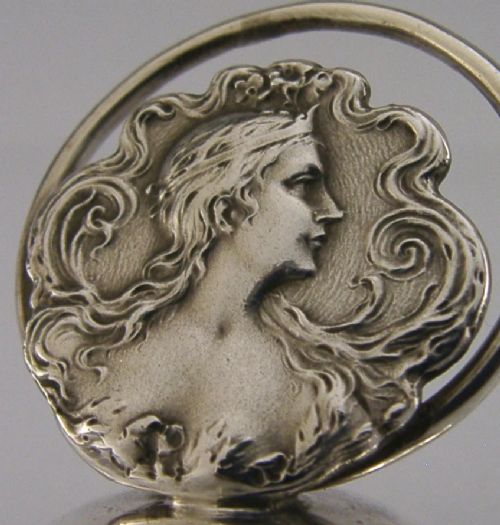
Stylistic clues such as Art Nouveau curves or Edwardian figural subjects also help narrow down the period. Comparing the form and construction to dated examples provides a reliable timeframe.
How do I clean antique silver holders?
Cleaning requires a soft cloth and a gentle silver polish formulated for antiques. Avoid abrasive materials that can wear down thin details or damage enamel inserts.
If the piece incorporates velvet, silk or leather lining, keep moisture away from those areas during cleaning. Proper storage in dry conditions prevents rapid tarnishing between uses.