


Edwardian Silver Place Card Holders
Edwardian silver place card holders are miniature table ornaments crafted to seat guests, bringing intricate figural charm and period elegance to formal dining.
Edwardian Silver Place Card Holders
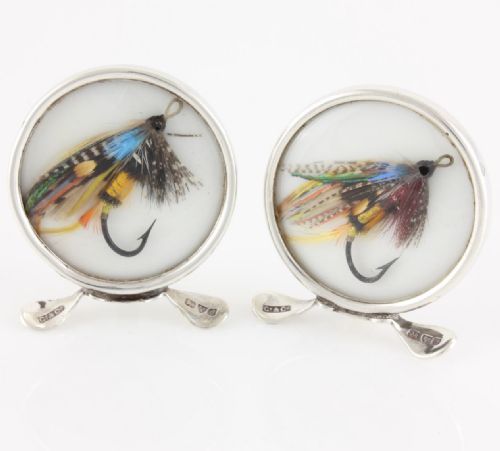
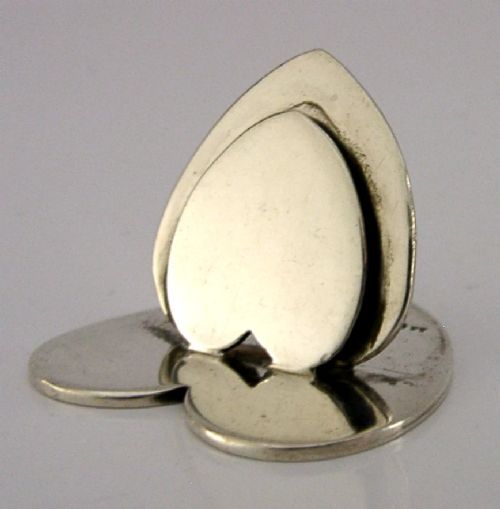
Edwardian silver place card holders encompass table accessories designed to hold name cards and menus during formal meals. The selection centres heavily on Edwardian pieces, alongside related examples from the Art Nouveau, Art Deco and George V periods.
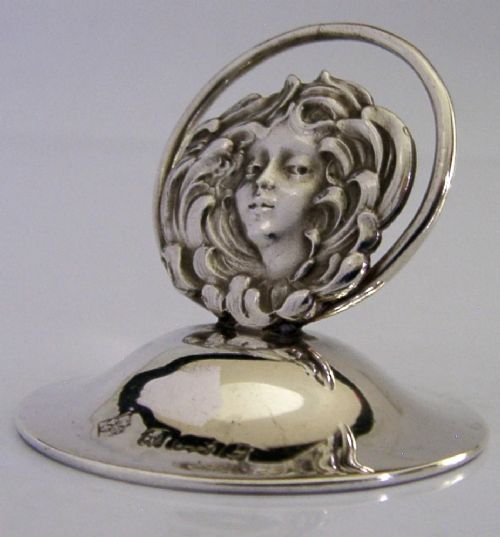
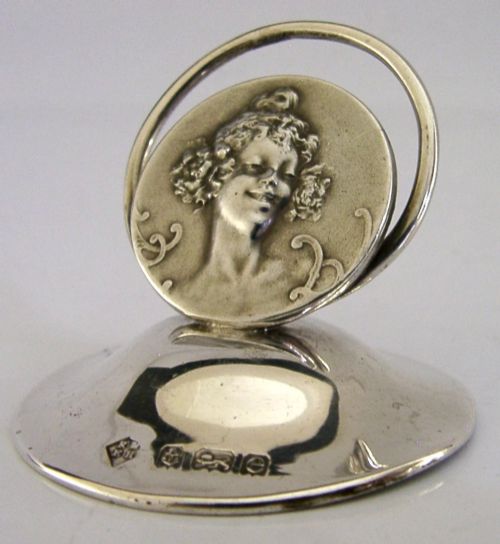
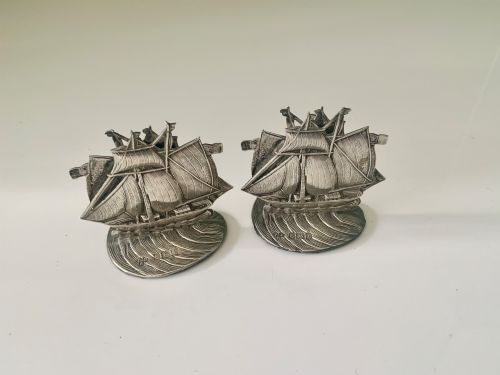
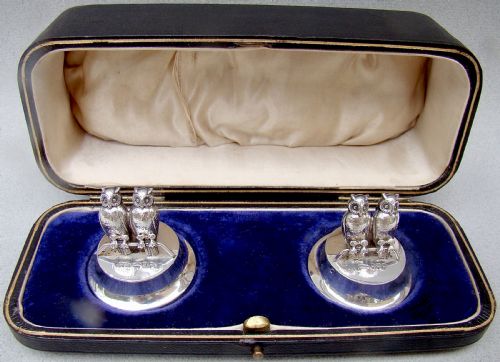
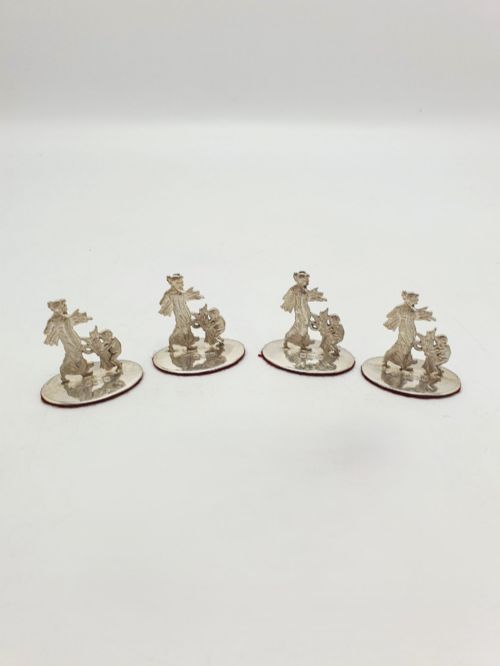
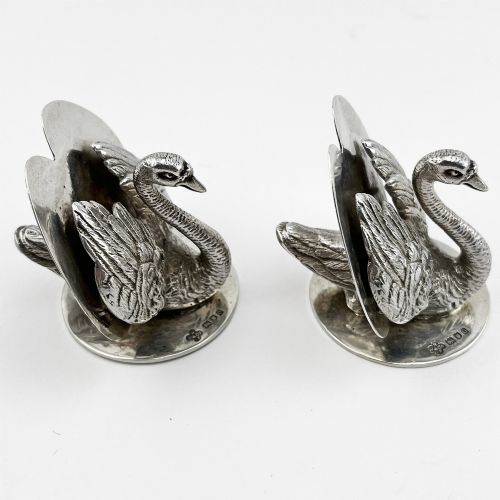
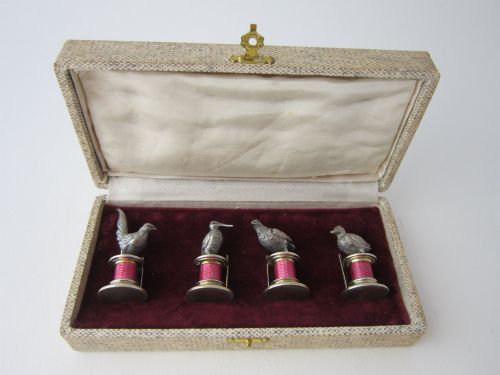
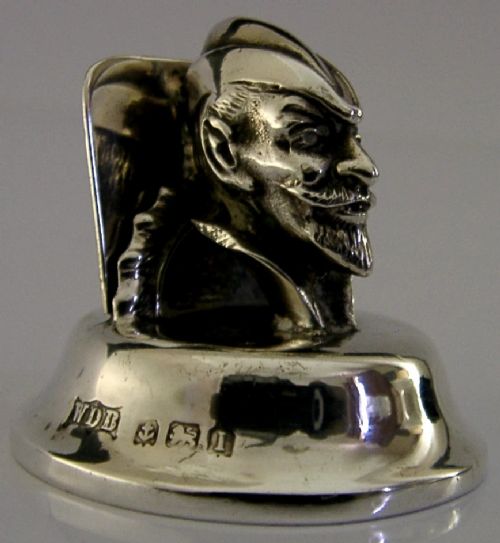
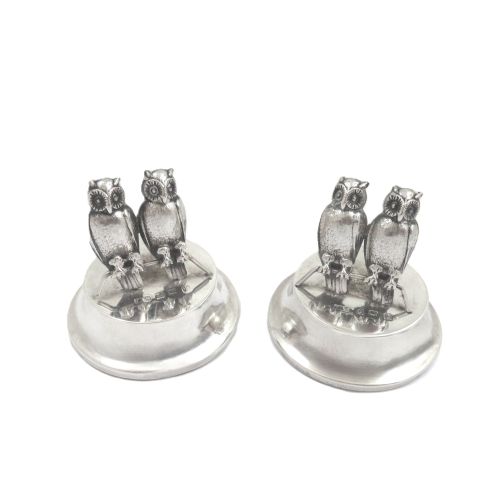
The forms span individual markers and matched sets, often shaped as animals, birds, nautical themes and figural subjects. These range from owls and swans to galleons, maidens and literary characters like Alice in Wonderland.
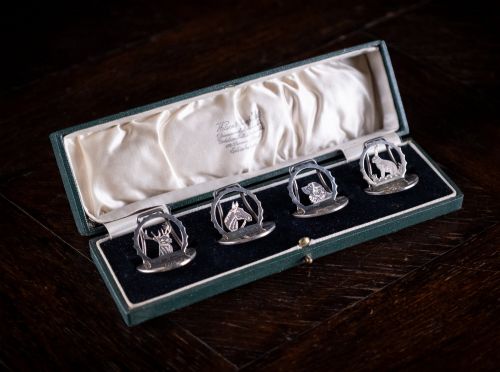
Makers produced these items in sterling silver, frequently pairing the metal with enamel, glass, velvet, silk, leather or feathers. They appear both singly and in fitted presentation boxes.
How They Were Made
Silversmiths utilised sterling silver, shaping the metal through casting, stamping and hand-chasing to achieve detailed figural forms. Enamel was applied to surfaces for vibrant colour, requiring careful kiln firing.
Makers incorporated textiles such as velvet, silk and leather within fitted presentation cases and backing components. Glass and feathers also appear in specific designs, adding texture and realism to animal and themed subjects.
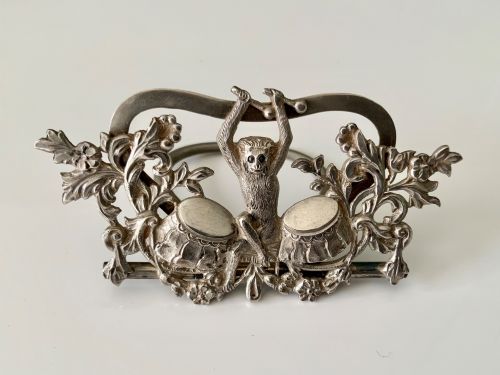
Dinner guests could find themselves seated next to a silver monkey playing drums, a tiny sentry box or an owl staring across the soup spoons.
What Varies in Quality
Quality rests in the crispness of the casting and the depth of the hand-finishing on figural subjects such as birds, animals and characters. Sharp details in feathers, fur and facial expressions distinguish superior pieces from softer pressings.
The presence of undamaged coloured enamel, original fitted boxes and clear hallmarks adds distinct merit. Maker marks from notable workshops also elevate the standing of a set.
Levi & Salaman·A. Wilcox·Grey & Co.·Sampson Mordan·Liberty
The Edwardian Silver Place Card Holders Glossary
- Sterling silver
- A silver alloy containing 92.5 percent pure silver by mass and 7.5 percent other metals, usually copper. This standard composition provides the durability required for intricate table accessories.
- Hallmark
- An official stamp applied by an assay office indicating the purity of the metal, the maker and the year of production. These marks allow collectors to date pieces precisely.
- Menu holder
- A tabletop accessory designed to display a meal schedule or list of courses. They share construction methods and decorative styles with place card holders.
- Enamel
- A glassy substance fused to the surface of metal through firing for decoration and colour. It appears on selected pieces to highlight flags or decorative motifs.
Edwardian Silver Place Card Holders: Frequently Asked Questions
How were place card holders used?
Hosts placed these small silver stands on dining tables to indicate where each guest should sit during multi-course meals. They held paper cards bearing the attendee's name alongside matching menu cards.
Dining rooms of the period relied on such accessories to maintain formal seating arrangements. They doubled as decorative conversation pieces between courses.
What themes are common?
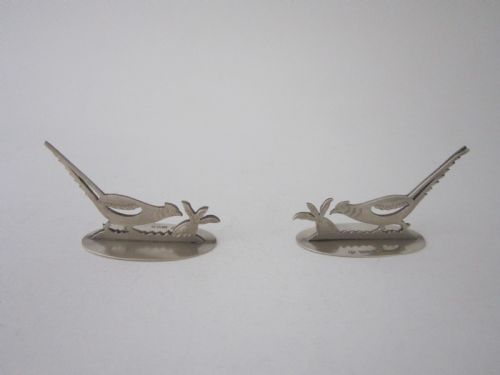
Animals and birds dominate the designs, featuring owls, swans, grouse and monkeys playing drums. Nautical motifs like galleons and sentry boxes also appear.
Figural subjects extend to mythological figures, literary characters and patriotic flags. This variety reflects the playful yet formal tastes of Edwardian dining culture.
How do I date these pieces?
Assay office hallmarks stamped onto the silver provide the exact year of manufacture and the town where the piece was tested. Maker marks help confirm the workshop.
Stylistic cues such as Art Nouveau curves or Edwardian proportions offer a secondary guide. Original boxes often reinforce the period context.
How do I care for silver holders?
Gentle dusting with a soft cloth preserves the metal surface without wearing down fine chasing and engraved details. Avoid harsh chemical dips that strip away desirable patination.
Pieces with enamel or textile elements require extra caution to prevent moisture damage. Storage in dry, lined compartments keeps them safe.